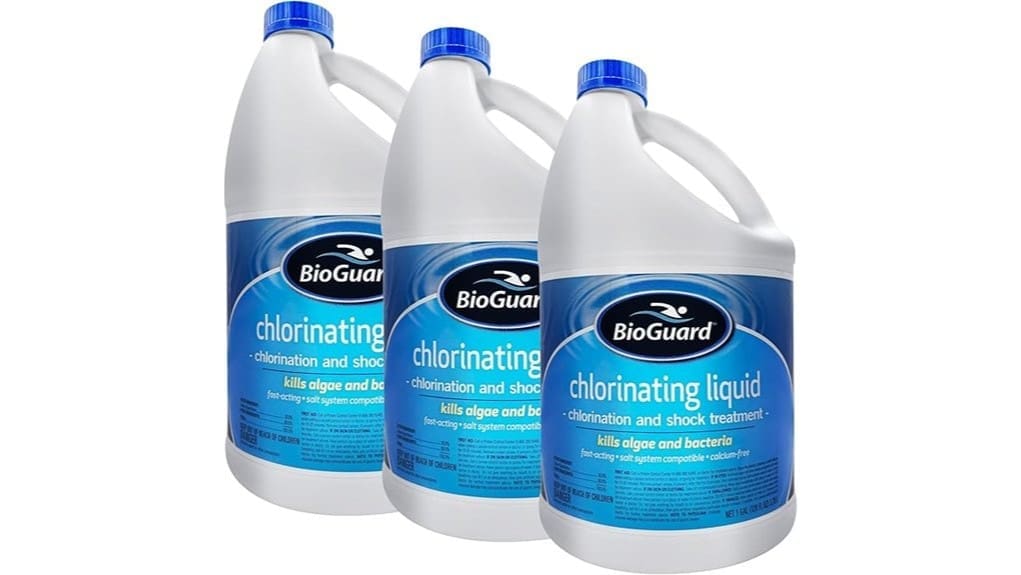
You’ll get concentrated, ready-to-use liquid chlorine that quickly raises free chlorine to kill bacteria, clear cloudy water, and knock down algae while reducing chloramines and odor. It’s aimed at pool managers or homeowners who need consistent, measurable dosing for midsize to large pools and prefer bulk buying for lower per-gallon cost. Handle with gloves and eye protection, avoid mixing with acids, and dose at dusk with the pump running. Continue for full usage, testing, and purchase guidance.
Some Key Takeaways
- Concentrated liquid chlorine in a 3-pack raises free chlorine quickly for shock treatment and algae control.
- Best for midsize-to-large or multiple pools needing bulk volume and consistent, measurable dosing.
- Use with chemical-resistant gloves, eye protection, and never mix with acids; add at dusk with pump running.
- Test free chlorine before, immediately after, and 24–48 hours post-dose to confirm target ppm and decay.
- Compare price per gallon, storage needs, and alternatives (tablets/granules) before buying the 3-pack.
Which Problems Does BioGuard Chlorinating Liquid (3-Pack) Solve?
Restore and maintain proper sanitizer levels with BioGuard Chlorinating Liquid (3-Pack); it’s designed to quickly raise chlorine in pools and spas to eliminate bacteria, algae, and organic contaminants that standard routine dosing can miss. You’ll target cloudy water, bacterial spikes, and visible algae blooms with a measured shock that supports algae prevention protocols. You’ll reduce chloramine formation to improve odor control and minimize swimmer irritation when levels are restored promptly. You’ll follow label dosage and safety standards to avoid overdosing, monitor free chlorine and pH, and document treatments so recurring contamination sources are identified and mitigated. Regular shock treatments are an essential part of pool maintenance routines to keep outdoor pools safe and inviting.
Quick Verdict: Who Should Buy This 3-Pack and Why?
If you manage a midsize to large pool or several smaller pools and want a reliable, standards-driven approach to shock treatment, this 3-pack of BioGuard Chlorinating Liquid gives you concentrated, ready-to-use chlorine so you can quickly raise free chlorine to target levels and reduce bacterial and algal risk without mixing powders. You should buy it if you prioritize consistent, measurable sanitation, need bulk volume for frequent or seasonal maintenance, or oversee multiple sites where handling ease and compliance matter. It’s also suitable for budget buyers who want predictable dosing and lower per-gallon cost versus single bottles or repeated small purchases. Many homeowners also choose chlorine tablets for ongoing maintenance because chlorine tablets provide steady, long-lasting sanitization.
How to Use BioGuard Liquid Shock Safely and Effectively
When handling BioGuard Chlorinating Liquid, follow strict safety and dosing steps so you minimize exposure risks and achieve reliable sanitation results every time. You’ll wear chemical-resistant gloves, eye protection, and avoid inhaling fumes; never mix with acids or other sanitizers. Calculate dose from label based on pool volume and current free chlorine; add at dusk with pump running to distribute. For proper storage, keep containers upright in a cool, ventilated area away from sunlight and incompatible materials. If a leak or spill occurs, isolate area, use absorbent material, ventilate, and consult the product spill response guidance immediately. For best results when opening your pool each season, consider using recommended pool opening chemicals as part of your initial treatment plan.
Performance Check: Sanitation, Chlorine Boost, and Real User Results
After you’ve handled dosing and storage safely, it’s time to verify that BioGuard Chlorinating Liquid actually delivers on sanitation and chlorine boost goals in real-world use. You’ll test free chlorine before treatment, immediately after, and 24–48 hours later to confirm target ppm and decay rate. Watch pH and temperature; inadequate control increases disinfection risk. Note stabilizer interaction if using cyanuric acid—liquid chlorine raises free chlorine but won’t alter CYA, which affects effective sanitizer levels. Real-user reports show predictable ppm jumps and rapid pathogen reduction when dosed per label; inconsistent results usually trace to dosing errors or poor water balance. Keep simple at-home test kits on hand to maintain safe pool water and accurate dosing with test kits.
Buying Guide: Price, Pack Size, Alternatives, and Warranty
Because buying the right chlorine product affects both safety and long-term cost, you’ll want to weigh price per gallon, pack size, and warranty terms before you buy BioGuard Chlorinating Liquid (3-Pack). Assess price comparison against single 128 fl oz units and competing brands; calculate cost per gallon and factor shipping and storage impact. The 3-pack reduces handling frequency but increases upfront exposure risk—store securely and check expiration. If you need alternatives, consider stabilized granules or tablets for different dosing precision. Review warranty details via the manufacturer link and confirm Amazon’s 30-day return window for added consumer protection. Maintain balanced pool pH to ensure clearer, safer water and maximize chlorine effectiveness by monitoring regularly with pool pH testing.
Some Questions Answered
Is This Liquid Safe for Vinyl and Fiberglass Pool Surfaces?
Yes — you can use it on vinyl and fiberglass, but you’ve got to be cautious. Surface compatibility is generally good for these materials, yet you should follow dilution and application rates and perform material testing on a small, inconspicuous area first. Maintain proper chlorine levels, avoid prolonged contact with undiluted liquid, and adhere to manufacturer standards and safety data. That minimizes risk and preserves finish and structural integrity.
Can I Mix It With Other Pool Chemicals Immediately?
No, you shouldn’t mix it with other chemicals immediately. When using pool shock, you’ll need to wait and follow chemical compatibility guidelines to avoid dangerous reactions and equipment damage. Add the liquid separately, circulate for at least 30 minutes to an hour, then test chlorine and pH before introducing other treatments. Always follow label instructions and safety standards, use PPE, and consult manufacturer guidance if you’re unsure about sequencing or stabilizers.
What Is the Shelf Life After Opening a Bottle?
You should expect about 6–12 months of usable strength after opening if you store it properly. Keep the bottle sealed, upright, in a cool, shaded area away from heat and sunlight; those storage conditions slow the degradation timeline. Check chlorine levels before each use because potency declines over time. If you notice discoloration, strong odor changes, or reduced shock performance, dispose of the bottle per local hazardous-waste rules.
Are There Shipping Restrictions for Air Transport?
Yes — you’ll face restrictions: air transportability for liquid chlorine shock is limited and often prohibited or requires special handling. You’ll need hazardous packaging, proper labeling, and compliance with IATA/ICAO Dangerous Goods rules and carrier-specific policies. Don’t assume standard parcel service; declare the material, use UN-rated containers, include MSDS information, and secure a shipper’s declaration if allowed. Prioritize regulatory compliance to avoid fines, delays, or refusal.
Does It Discolor Swimwear or Pool Liners?
Yes — if you overuse it or leave high chlorine levels for long, you’ll see color fading and fabric weakening. You should follow dosing standards, test chlorine regularly, and rinse swimwear after exposure. For liners, avoid prolonged contact at elevated chlorine concentrations and monitor pH and free chlorine to minimize chemical stress. Keep records of treatments and adhere to manufacturer safety guidelines to reduce discoloration and material degradation risks.