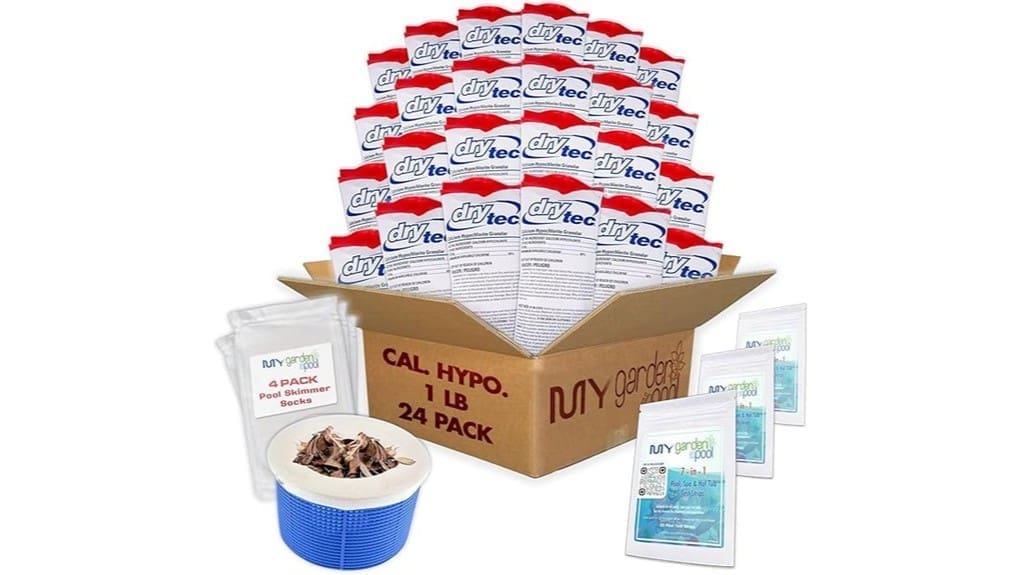
You’ll get 24 one‑pound tubs of 68% calcium hypochlorite shock, four reusable skimmer socks, and 60 test strips for quick diagnostics. You’ll dose by pool volume to raise free chlorine rapidly; granules dissolve predictably and clear algae and organics without long cloudiness. Handle and store carefully—gloves, eye protection, dry cool ventilated area—and never mix with other chemicals. It’s a cost‑effective kit for proactive owners and pros; keep going to see detailed dosing, safety, and performance notes.
Some Key Takeaways
- Contains twenty-four 1‑lb tubs of 68% active calcium hypochlorite for predictable, fast shock chlorination.
- Granules dissolve reliably and raise free chlorine sharply within an hour when dosed per instructions.
- Includes four reusable skimmer socks that protect filters and capture debris, improving clarity and equipment longevity.
- Comes with a 60‑count 7‑in‑1 test strip vial for quick checks of pH, alkalinity, chlorine, bromine, and hardness.
- Powerful oxidizer offers cost and dosing efficiency but requires strict dry storage, PPE, and careful handling to avoid hazards.
What’s in the Drytec 24-Pack and Who It’s Best For
While the Drytec 24-pack centers on 24 one-pound tubs of 68% active-calcium hypochlorite shock, the kit also includes practical extras you’ll use: a four-pack of reusable skimmer socks to catch debris and a 60-count vial of 7‑in‑1 test strips for pH, alkalinity, free chlorine, bromine, and hardness checks. You’ll find the pack contents focused on routine shock dosing, debris management, and quick diagnostics. You’ll appreciate the technical simplicity: concentrated chlorine for rapid oxidization, cloth socks to protect filters, and multi-parameter strips for spot checks. Target users are residential pool owners and maintenance pros needing efficient, cost-effective treatment supplies. Proper shock dosing helps prevent algae and maintain safe chlorine levels in backyard pools.
How the 68% Calcium Hypochlorite Shock Performs in Real Use
Having covered what’s in the kit and who it’s for, let’s look at how the 68% calcium hypochlorite performs in real use. You’ll notice fast chlorination: the granules dissolve predictably and free chlorine rises sharply within an hour when applied per instructions. Algae and organic contaminants break down quickly, restoring clarity without prolonged cloudiness. Shock longevity is solid for routine maintenance; residual disinfecting action holds for days depending on bather load and sunlight. You’ll still test levels and reapply after heavy use, but for regular weekly shocks this formula delivers reliable, repeatable results with minimal fuss and consistent efficacy. Homeowners should also follow pool safety guidelines when handling and storing calcium hypochlorite.
Safety, Storage, and Dosing Tips for Pool Owners
Because calcium hypochlorite is a strong oxidizer, handle and store it with caution: wear gloves and eye protection, keep packs dry and sealed, and never mix the granules with acids or other chemicals. Store packs in a cool, ventilated area away from organics and metals; label containers and keep out of reach of children. Use proper ventilation when opening and dosing to avoid inhalation. Follow dosage: for shock, dose based on pool volume and 68% active chlorine—calculate pounds per 10,000 gallons to reach target free chlorine. Remember Chlorine incompatibilities: never combine with other sanitizers; add to water, not water to chemical. For homeowners, choosing purpose-built, ventilated chemical storage containers helps keep granules dry and reduces the risk of accidental reactions.
How This Kit Compares on Value and Convenience
If you’re weighing cost against convenience, this kit delivers practical value by bundling concentrated 68% calcium hypochlorite shock, reusable skimmer socks, and multi‑parameter test strips so you don’t buy those items separately. You’ll realize cost savings from bulk 1 lb shock packets and a 60‑count strip supply that reduces per‑test expense. Time savings come from consolidating shock treatment, debris capture, and testing into one routine trip to the pool rather than multiple product runs. Materials and dosing guidance are straightforward, minimizing user error. For maintenance-focused owners, the kit optimizes operational efficiency without compromising chemical strength or testing capability. It also helps improve overall pool water clarity when used with the right filter powder and regular maintenance.
Final Verdict: Pros, Cons, and Who Should Buy It
Now that you’ve seen how the kit balances cost and convenience, here’s the bottom line: this bundle gives you high‑strength 68% calcium hypochlorite shock in bulk, reusable skimmer socks, and multi‑parameter test strips—so you’ll get professional‑grade sanitization, debris control, and routine monitoring without sourcing parts separately. Pros: concentrated chlorine reduces dosing frequency; skimmer socks protect equipment; 7‑in‑1 strips simplify diagnostics. Cons: handling and storage demands due to high‑strength calcium hypochlorite; potential calcium buildup in hard water. Who should buy it: proactive pool owners focused on cost‑effective maintenance, mindful of budget considerations and environmental impact through reusable accessories. Remember to winterize exposed plumbing and treat lines with antifreeze to keep pool pipes safe during cold months.
Some Questions Answered
Are the Skimmer Socks Machine Washable and How Many Uses Do They Last?
Yes — the skimmer socks are machine washable and designed for a long reusable lifespan. Wash on a gentle cycle with mild detergent, avoid bleach and fabric softeners, and air-dry to preserve fibers. Each sock typically lasts for dozens of uses under normal pool conditions; lifespan varies with debris load and maintenance frequency. Inspect for thinning or holes and replace when filtration protection or fit degrades to maintain performance.
Can Calcium Hypochlorite Shock Be Used in Saltwater Pools?
Yes — you can use calcium hypochlorite shock in saltwater pools, but you’ve got to manage Saltwater compatibility issues. It’ll raise free chlorine quickly and isn’t stabilized, so Chlorine stabilization won’t occur; you’ll need to monitor and maintain stabilizer (cyanuric acid) levels separately if desired. Don’t add it directly near cell or equipment, avoid high localized concentrations, and test total alkalinity, pH, and calcium hardness after shocking to keep chemistry balanced.
Do These Test Strips Expire and How Should They Be Stored?
Yes — the test strips have expiration dates, and you should follow storage conditions carefully. Keep strips sealed in their original container, away from heat, humidity, and direct sunlight. Store at room temperature (typically 15–30°C/59–86°F) and close the lid tightly after each use. Don’t touch pads with wet or dirty hands. Discard strips past the printed expiration date, since accuracy degrades and results can become unreliable.
Will the Shock Affect Pool Heater or Other Equipment Warranties?
Yes — using shock can affect warranties if you violate manufacturer specs. You’ll avoid warranty concerns by following equipment compatibility guidelines: use recommended chlorine types/concentrations, avoid overdosing near heaters or pumps, and rinse spilled chemicals. Keep records of tests and doses to prove proper use. If in doubt, check your heater/pump manual or contact the manufacturer to confirm that calcium hypochlorite shocks won’t void coverage for your specific model.
Is This Kit Safe to Ship Internationally With Current Regulations?
No — you’ll face restrictions. Calcium hypochlorite is regulated as dangerous goods, so you’ll need hazmat labels and detailed customs paperwork, and many carriers or countries prohibit or restrict shipment. You should verify destination-specific rules, obtain proper SDS, declare quantity and packaging, and use a certified hazmat shipper. Skimmer socks and test strips are fine, but the chlorine packs trigger strict handling, documentation, and potential permit requirements.