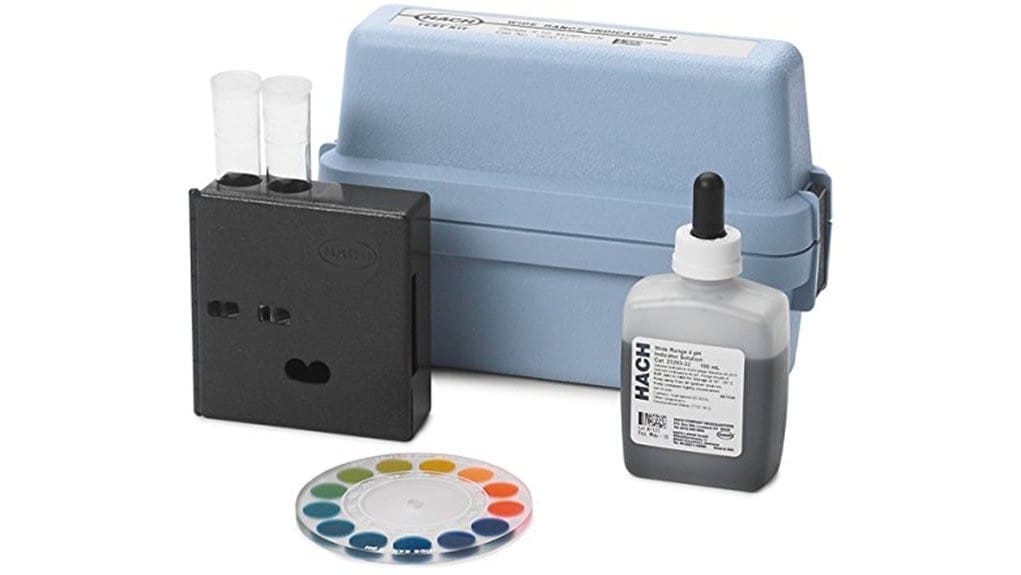
You’ll get a portable, low-cost color-disc comparator that measures pH 4.0–10.0 at 0.5 pH resolution and runs about 300 tests per kit without instruments. It’s fast, simple to use, and suited for field screening, wastewater checks, aquaculture, and teaching labs. Expect subjective color matching and limited precision versus electrodes, but reliable routine monitoring if you follow setup and calibration steps. Continue for practical setup, stepwise use, and performance details.
Some Key Takeaways
- Portable, color-disc comparator yields quick pH readings across 4.0–10.0 with 0.5 pH resolution, ideal for field screening.
- Kit includes reagent, color disc, comparator box, two viewing tubes, and instructions for up to 300 tests per kit.
- Simple procedure: add reagent, mix, wait, insert tube, rotate disc to match color under consistent lighting.
- Strengths: low cost, durable, high throughput, and suitable for environmental, wastewater, aquaculture, and educational use.
- Limitations: subjective color matching, limited resolution versus meters, no digital logging, and not laboratory-grade precision.
What the Hach pH Test Kit Model 17N Measures and Who It’s For
Although the Hach pH Test Kit Model 17N uses a simple color-disc comparator, it measures pH across a broad range (4.0–10.0) with 0.5 pH resolution, giving you rapid, field-capable determinations for many sample types. You’ll obtain objective pH values suitable for routine water quality screening and basic process control. The kit’s visual matching and calibrated disc let you perform up to 300 tests without instrumentation. You’ll use it for environmental monitoring, wastewater checks, aquaculture, and educational labs where portability matters. The method suits on-site field sampling and quick verification; it’s not intended for high-precision laboratory titration.
What’s in the Box and First-Time Setup
Before you run your first test, unpack the kit and verify each component against the inventory: indicator reagent, color disc, comparator box, two viewing tubes, instructions, and carrying case. Inspect reagent bottle for seal integrity and expiry date, confirm color disc rotates freely and comparator optics are clean. Use unboxing tips: photograph contents, record lot number, and store components in the provided case. For first-time setup, rinse viewing tubes with deionized water and let air-dry; calibrate by confirming disc alignment per instructions. Add these checks to your maintenance checklist for routine inspection and reagent replacement scheduling. Homeowners who enjoy outdoor spaces should consider using digital pool testers to reliably monitor water chemistry for safe and pleasant swimming digital pool testers.
How to Run a pH Test With the Color-Disc Comparator (Step‑by‑Step)
When you’re ready to measure pH with the Hach 17N color-disc comparator, follow a controlled sequence to guarantee accurate, reproducible results: Collect a representative aliquot, observe sample preservation protocols, and fill a clean viewing tube to the mark. Add the specified drops of indicator, cap, and invert gently to mix; wait the recommended reaction time. Place the tube in the comparator, align the color disc, and view against the comparator window under consistent lighting. Rotate the disc until the closest match appears and record the pH value based on color interpretation. Rinse tubes between samples to prevent cross-contamination. For consistent pool maintenance, also test chlorine regularly to maintain proper sanitization levels with chlorine tablets.
Performance Overview: Accuracy, Range (4.0–10.0), Speed, and Test Capacity
Because the Hach 17N uses a color-disc wide range indicator, you’ll get clear pH readings across its specified 4.0–10.0 range with a laboratory-style, 0.5 pH resolution; the visual method yields rapid results suitable for routine field or bench monitoring and supports up to 300 tests per kit. You’ll confirm accuracy through simple accuracy verification against buffers; results won’t match high-precision electrodes but meet routine monitoring requirements. Response time is immediate after reagent addition and disc matching, enabling high test throughput. The kit handles diverse sample matrices, maintains consistency across repeats, and requires minimal user calibration. This makes it a practical choice for homeowners maintaining pool water clarity and balance.
Pros, Cons, and Whether the Model 17N Is Worth Buying
Although the 17N isn’t aimed at laboratory-grade electrode precision, it delivers reliable, repeatable pH determinations across 4.0–10.0 with 0.5 pH resolution, making it well suited for routine field and process monitoring; you get immediate visual results, straightforward operation, and up to 300 tests per kit. You’ll appreciate low purchase and operating cost versus electronic meters; a focused cost analysis shows consumables and replacement discs keep lifecycle expense minimal. Pros: portability, simplicity, broad applicability, durability. Cons: limited resolution, subjective color matching, no digital logging. User testimonials confirm suitability for routine checks; buy if you need robust, low-cost screening. Many homeowners use simple test kits to keep pool water safe and enjoy their outdoor spaces.
Some Questions Answered
Can the Reagents Expire or Degrade With Improper Storage?
Yes — reagents can expire or degrade with improper storage. You’ll compromise reagent stability if you expose chemicals to heat, light, moisture, or contamination; storage conditions must follow manufacturer recommendations. You should keep reagent containers sealed, store at specified temperatures, and avoid direct sunlight and freeze–thaw cycles. If reagents show color changes, precipitation, or off-odors, you should discard them and replace to maintain accurate, reliable pH results.
Are Replacement Reagents and Tubes Readily Available?
Yes — replacement availability is good: you can obtain reagent packs and viewing tubes through Hach and authorized supplier networks. Check Hach’s catalog number 147011 cross-references or contact local distributors for part numbers and lead times. Maintain inventory records and order spares proactively, since reagents can expire and tubes may wear. Technical support from suppliers can confirm compatibility and provide MSDS, storage guidance, and shipment options.
Is the Kit Safe for Testing Potable Drinking Water?
Yes — you can use the kit for potable drinking water testing. You’ll follow safe handling procedures, avoid contaminating samples, and rinse tubes between tests. The reagents are compatible with typical water matrices, but check material compatibility for unusual chemistries (strong oxidizers or organics). The color-disc comparator provides reliable readings within 4.0–10.0 pH; maintain clean equipment and replace reagents as specified to guarantee accuracy and safety.
How Does Temperature Affect Color Comparison Accuracy?
You should expect temperature to slightly shift color matches, so you’ll need temperature compensation and careful technique. Cooler or warmer samples change indicator response and can cause subtle hue shifts; prolonged exposure increases colorimetric fading, reducing contrast. You’ll avoid errors by equilibrating samples to a consistent temperature, reading promptly after reagent addition, and using the comparator under uniform lighting. Calibrate procedures to your field temperature range for best accuracy.
Can the Kit Be Used for Continuous Monitoring or Only Spot Tests?
You can only use the kit for spot tests; it’s not designed for continuous monitoring. The color-disc visual method provides discrete readings and lacks sensors for long term logging or integration with remote telemetry. For continuous automated data collection, you’ll need an electronic pH probe with logging capabilities and telemetry outputs. Use the 17N for routine manual checks, then correlate those readings with electronic monitoring systems if you require ongoing trend data.