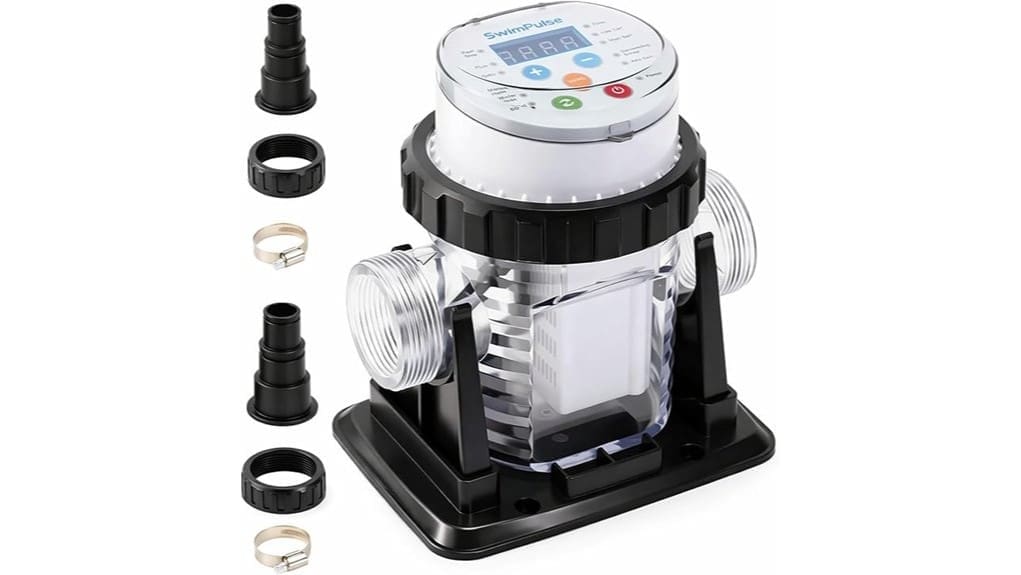
If you own an above-ground pool up to 10,000 gallons and want a budget-friendly, low-maintenance salt chlorinator, the SwimPulse SPMA10 is a solid choice. It keeps chlorine steady with automatic salt calibration, a built-in timer, and energy-efficient cells. Installation is quick, daily checks are simple with LED alerts, and the self-cleaning cell cuts down on manual scaling. Check warranty and return terms—keep going and you’ll get full setup, care, and buying tips.
Some Key Takeaways
- SwimPulse SPMA10 suits above-ground pools up to 10,000 gallons, offering affordable salt chlorination with low upfront cost.
- Automatic salt calibration and self-cleaning cell maintain stable chlorine levels and reduce manual chemical handling.
- Built-in timer, LED indicators, and alerts simplify daily operation and match output to filtration cycles.
- Quick installation attaches to pump return line; input pool size and one-touch start enable fast setup.
- Monthly salt checks, quarterly cell inspections, and seasonal storage preserve durability and warranty compliance.
Who Should Consider the SwimPulse SPMA10 Saltwater Chlorinator?
If you own an above-ground pool up to 10,000 gallons and want to simplify sanitization, the SwimPulse SPMA10 is worth considering. You’ll find it suits budget conscious homeowners who want reliable, low-maintenance sanitation without high upfront costs. If you’re exploring saltwater conversion for easier chemical management, the SPMA10’s automatic salt and chlorine detection and one-touch controls streamline setup and upkeep. You’ll appreciate quick installation, a built-in timer, and a self-cleaning cell that reduces manual maintenance. It’s aimed at owners of foldable or fixed above-ground pools who want consistent sanitization with minimal hands-on time. Many homeowners value preserving their outdoor living spaces by choosing systems that reduce upkeep and chemical handling.
Quick Performance Summary: How the SPMA10 Handles Pools Up to 10,000 Gallons
Having established who benefits most from the SPMA10, here’s how it performs in practice for pools up to 10,000 gallons. You’ll find consistent sanitation: the generator maintains chlorine levels reliably, killing bacteria without harsh chemical handling. Its automatic salt calibration keeps salinity within the ideal range, reducing manual testing. Runtime control and efficient cell design deliver noticeable energy savings compared with continuous-run systems, especially when you program the built-in timer to match filtration cycles. Expect straightforward monitoring via LEDs and prompt alerts for high/low salt. Overall, the SPMA10 balances effectiveness and convenience for typical above-ground pools up to its rated capacity. It’s a strong fit for homeowners looking to upgrade their outdoor space with saltwater systems that simplify pool care.
Installation and Daily Operation: Setup, Timer, and Automatic Salt/Chlorine Monitoring
Often the SPMA10 installs in minutes: you input your pool size, attach the included adapter, connect the unit to your pump return line, and secure the self-cleaning cell in place. Follow a brief installation checklist: verify power off, confirm pipe compatibility, tighten fittings, and run a leak test. Use the built-in timer to set 1–12 hour cycles that match pump runtime and swim patterns. Rely on automatic salt and chlorine monitoring to adjust output and trigger alerts for high/low salt levels. For daily monitoring, glance at the LED panel and one-touch start to confirm normal operation. Consider pairing the unit with a variable speed pump to maximize energy efficiency and quiet operation.
Real-World Durability and Maintenance: Self-Cleaning Cell, Alerts, and Long-Term Care
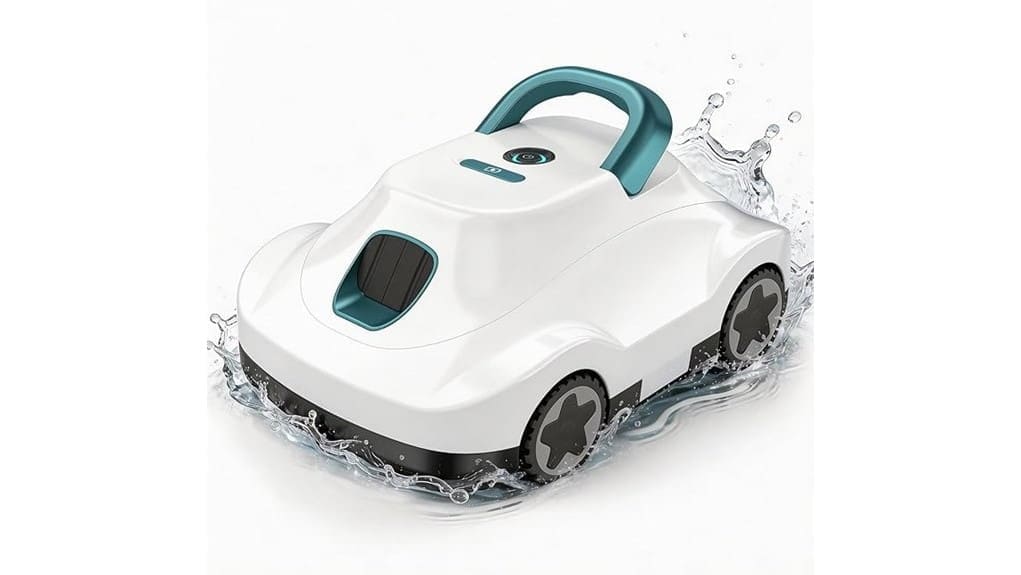
After you’ve got the SPMA10 running on its timer and confirming salt levels via the LED panel, ongoing durability and maintenance become what keeps performance steady. You’ll rely on the self-cleaning cell to reduce manual scaling, but checking cell longevity is still important; inspect cell plates periodically for wear. Follow a clear maintenance schedule: monthly salt checks, quarterly cell inspections, and winter storage steps. Heed the unit’s alerts for high/low salt and error codes to prevent damage. Rinse connections to aid corrosion prevention and keep spare replacement parts accessible so you can minimize downtime and extend service life. Consider pairing your chlorinator with a robotic pool vacuum to maintain debris-free water and reduce strain on the system.
Buying Advice and Support: Warranty, Returns, Compatibility, and When to Choose This Model
While you compare options, focus on warranty terms, return windows, and compatibility so you’ll avoid surprises down the line. Check SwimPulse’s warranty registration steps immediately after purchase to guarantee coverage, and confirm the retailer’s 30-day return window for trialing performance. Use a compatibility checklist: pool type (above-ground foldable or fixed), capacity (up to 10,000 gallons), and electrical/setup requirements. Consider seasonal storage procedures to protect the unit off-season and preserve the self-cleaning cell. Choose the SPMA10 if you want simple installation, automated salt/chlorine monitoring, and a compact, budget-friendly system backed by clear return and warranty policies. Keep your above-ground pool warm all season long with proper heater pairing and insulation strategies to maximize efficiency and comfort, especially when using above-ground pool heaters.
Some Questions Answered
Does the Unit Require a Specific Salt Type or Brand?
No, you don’t need a specific brand, but you should use the correct salt type: food grade vs industrial grade matters. You’ll want plain, clean sodium chloride (no additives, iodine, or anti-caking agents). For Salt sourcing, buy pool or food-grade salt labeled “99%+ pure” from reputable suppliers or retailers. Avoid industrial salts with impurities that can damage the cell and void warranties; always check manufacturer recommendations.
Can the Chlorinator Be Used With a Pool Heater or Solar System?
Yes — you can use it with Compatible heaters and with Solar integration. You’ll connect the chlorinator inline with your pool circulation system so it sees water heated by a heater or solar loop. You should make sure flow and temperature remain within the unit’s specs, and avoid bypassing the cell. Check your heater/solar manufacturer’s guidance and SwimPulse’s manual for recommended temperature limits and plumbing arrangements to prevent damage and make sure proper sanitization.
Is Any Extra Plumbing or Specialized Tools Needed for Installation?
No, you won’t need extra plumbing or specialized tools for installation. The unit includes hose adapters and a simple adapter for common above-ground hookups, so you’ll just size hoses and fittings to your pump return. You will need to meet basic power requirements—standard household power outlet within reach—and follow the quick setup steps. Installation’s designed to be quick and tool-light, typically doable in minutes by one person.
Does the System Work in Cold or Near-Freezing Temperatures?
No, it isn’t designed to operate in freezing conditions. You’ll get limited winter performance because salt cells and electronics can be damaged by ice and very low temperatures. You should shut down, drain, and winterize the unit before temperatures approach freezing. For ice prevention, remove the cell, store it indoors, and follow manufacturer winterizing steps. That protects the system and preserves warranty coverage during cold months.
Are Replacement Cells or Parts Readily Available Separately?
Yes — replacement availability is generally good; you can buy replacement cells and parts separately from the manufacturer or retailers. You’ll want to check SwimPulse’s parts listings and third-party sellers for stock. Cost transparency varies: some sellers list clear prices, while others require inquiry for quotes. You should compare sources, confirm compatibility with model SPMA10, and review warranty or return terms to avoid unexpected charges.