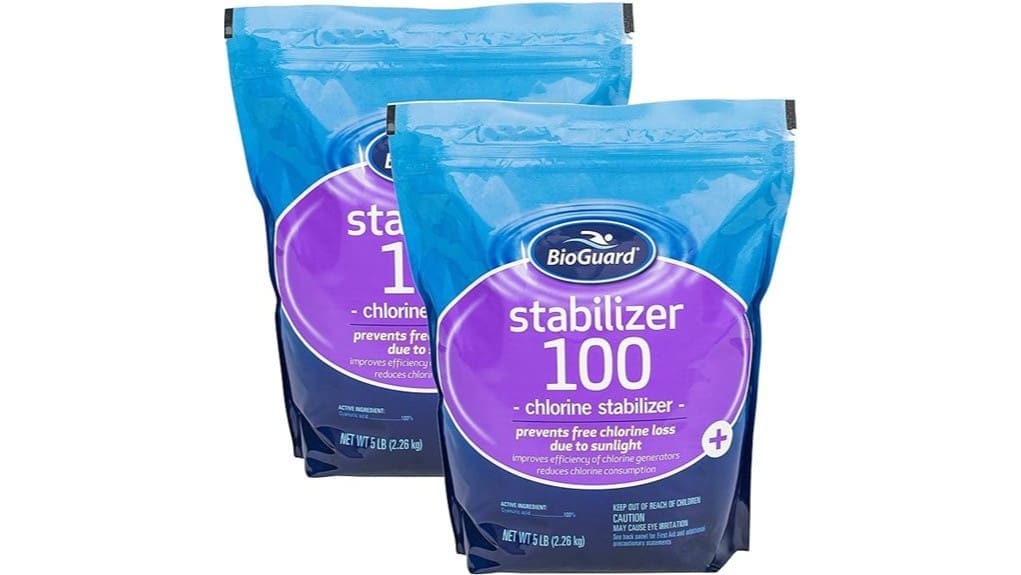
You’ll add BioGuard Stabilizer 100 (granular cyanuric acid) to outdoor chlorinated pools to cut sunlight-driven chlorine loss and keep free chlorine steadier. Measure pool volume, calculate needed CYA rise, and feed slowly through the skimmer with the pump running, retesting between small additions. Wear gloves and eye protection, avoid inhaling dust, and store sealed and cool. Don’t over-stabilize; monitor CYA and chlorine regularly, and continue below for full usage, dosing, and safety details.
Some Key Takeaways
- Granular, fully soluble cyanuric acid designed for outdoor chlorinated pools to reduce sunlight-driven chlorine loss.
- Supplied as two sealed 5-lb tubs (model 23481BIO‑2), providing 160 fl oz equivalent per pack.
- Feed slowly through the skimmer with pump running, adding small amounts over several days and retesting CYA between doses.
- Benefits include measurable chlorine savings and lower maintenance, but overdosing risks over-stabilization and reduced chlorine efficacy.
- Wear gloves/eye protection, avoid inhalation, store sealed and dry, and use only in outdoor chlorinated systems.
What BioGuard Stabilizer 100 Is and Who It’s For
BioGuard Stabilizer 100 is a granular, totally soluble cyanuric acid product you add to outdoor chlorinated pools to prevent sunlight-driven chlorine loss. You’ll use it when you need steady free chlorine levels to reduce dosing frequency and simplify pool maintenance. Measure pool volume, calculate required cyanuric acid increase, and feed very slowly through the skimmer per label instructions. Monitor CYA and free chlorine regularly; keep CYA within recommended ranges to avoid reduced chlorine efficacy. Follow safety precautions: wear gloves and eye protection, avoid inhalation, and store sealed. Proper use supports swimmer safety and reliable sanitation. This product is ideal for homeowners who maintain outdoor pools and want to minimize chlorine depletion from sun exposure.
Quick Verdict: Does It Actually Save Chlorine and Money?
Having kept CYA steady and free chlorine monitored as described above, you’ll see whether Stabilizer 100 really cuts chlorine use and cost. Follow dosing instructions, feed slowly via skimmer, and track weekly free chlorine. You’ll observe measurable chlorine savings when sunlight is the primary loss factor; document before-and-after consumption for a clear money comparison. Check residuals more often during heavy use or heat. Consider user testimonials as supportive but verify with your own logs. For seasonal performance, reduce dosing in cool months and retest at spring startup. Prioritize safety: avoid over-stabilizing and maintain recommended CYA ranges. Boosting pH naturally with ingredients like baking soda can help maintain healthier water and reduce chemical adjustments when used alongside proper stabilizer dosing, so consider natural pH methods as part of your maintenance routine.
Key Specs, Ingredients, and Packaging Details (5 Lb × 2, Cyanuric Acid)
Because you’ll be handling a concentrated pool chemical, read the label and wear gloves and eye protection when measuring and feeding the granular, totally soluble cyanuric acid supplied in two 5‑lb containers (model/part 23481BIO‑2, UPC 017541661126). You’ll get two sealed plastic tubs, 5 lb each, 160 fl oz equivalent per pack. Ingredient: cyanuric acid (stabilizer). Purpose: sunlight protection to reduce chlorine degradation and extend pool longevity. Storage: keep dry, cool, locked away from children and incompatible chemicals. Disposal: follow label/regulatory guidance. Handle slowly, avoid dust inhalation, and keep containers tightly closed when not in use. Homeowners should use stabilizers as part of an overall pool maintenance routine to keep chlorine effective and water balanced.
How to Use BioGuard Stabilizer 100 Safely and Effectively in Outdoor Pools
Now that you know the product details and safety basics, you’ll prepare and add Stabilizer 100 in a controlled, step-by-step way to protect chlorine from sunlight. Test total chlorine and cyanuric acid first. Wear protective gear and avoid skin contact to prevent skin irritation. With pump running, pour measured granules slowly into the skimmer inlet per label; maintain skimmer safety by keeping the lid closed and filter operating. Use gradual feeding—add small amounts over several days, retesting CYA between additions. Record doses and CYA targets. If accidental contact occurs, rinse immediately and seek medical advice for persistent irritation. Consider using pool opening chemical kits to ensure you have all necessary supplies for a safe and effective start-up, including a stabilizer product for proper chlorine protection.
Pros, Cons, and When to Buy (Compatibility, Dosage Tips, and Value)
When you choose BioGuard Stabilizer 100, you’ll get a concentrated, totally soluble cyanuric acid formula that reliably preserves free chlorine in outdoor pools. You’ll see pros: reduced chlorine loss, lower maintenance, and clear instructions for feeding slowly through the skimmer. Cons: not for indoor pools, can over-stabilize if overdosed, and requires monitoring. For compatibility, use only with chlorinated outdoor systems. Follow dosage adjustments based on pool volume and current CYA; increase slowly and retest. Consider seasonal timing—add in spring before heavy sun exposure. Buy when you need sustained residual chlorine and predictable, measured dosing. This product pairs well with digital pool testers for quick, accurate readings of chlorine and CYA levels to maintain optimal balance with digital accuracy.
Some Questions Answered
Can It Be Used With Saltwater Chlorine Generators?
Yes — you can use it with saltwater chlorine generators, but you’ll follow precautions. Add cyanuric acid slowly via the skimmer, monitor cyanuric levels to stay within manufacturer-recommended range, and avoid over-stabilization. You’ll perform regular generator maintenance, clean electrodes, and check cell performance since high stabilizer levels can affect chlorine production and sensor readings. Test water frequently, adjust dosing based on results, and document all maintenance actions for safety.
How Long Does One 5 Lb Container Typically Last?
One 5 lb container typically lasts one full season for an average-sized pool when you follow recommended dosing. You’ll calculate required cyanuric acid based on pool volume, then add slowly through the skimmer. For seasonal usage, test CYA monthly and adjust as needed. Application frequency is usually once at season start and supplemental doses only if tests show decline; always wear gloves and eye protection during handling.
Is It Safe for Pool Liners and Automatic Chlorinators?
Yes — you can use it; it’s pool safe, liner friendly, automatic compatible, and equipment safe when dosed correctly. You’ll feed granules slowly through the skimmer per label, avoid dumping near vinyl seams, and keep stabilizer levels within recommended ppm. You’ll test cyanuric acid regularly, dilute if overdosed, and pause use if you detect liner discoloration or chlorinator clogging. Follow manufacturer PPE and handling steps.
Does It Affect pH or Require Additional Balancing Chemicals?
No — it won’t directly change pH stability, but you should monitor and manage overall chemistry. You’ll add cyanuric acid, which has minimal immediate pH effect, yet chemical interactions can influence chlorine activity and alkalinity. Test pH, total alkalinity, and free chlorine after feeding slowly through the skimmer. If readings drift, adjust with standard pH increaser/decreaser or alkalinity buffers. Wear gloves and eye protection during handling.
Can Cyanuric Acid Levels Be Reduced Once Too High?
Yes — you can lower cyanuric acid if it exceeds upper limits. First, test CYA to confirm levels. For removal methods, partially drain and refill the pool gradually, monitoring CYA after each refill until safe. Avoid chemical “neutralizers” unless manufacturer-approved. Work with proper PPE, follow local discharge rules, and balance pH and chlorine after refilling. If unsure, consult a pool professional to make certain safe, compliant reduction.