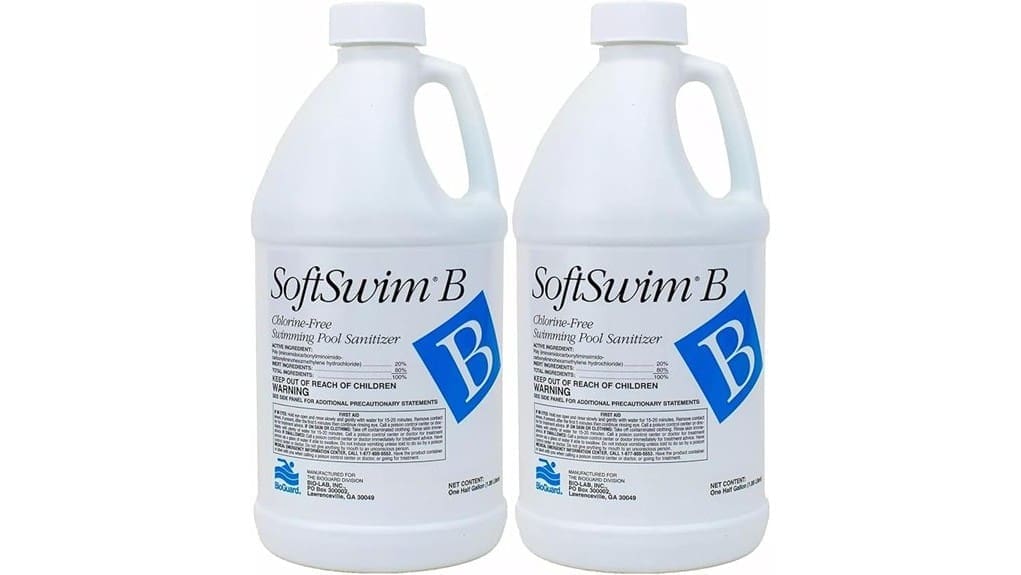
If you want a chlorine-free sanitizer that’s gentle on skin and eyes, BioGuard SoftSwim B is a UV-stable biguanide liquid meant for pools under 25,000 gallons and used as step 2 in the SoftSwim program. It won’t swing pH, resists sunlight degradation, and yields silky water when dosed correctly with at least 12 hours’ circulation daily. You’ll need careful dosing, regular monitoring, and enzyme complements for best results — keep going to learn practical setup and maintenance tips.
Some Key Takeaways
- BioGuard SoftSwim B is a UV-stable, chlorine-free biguanide sanitizer designed for family pools and sensitive swimmers.
- Two 1/2-gallon pack treats pools under 25,000 gallons and fits standard dosing stations.
- Produces soft, silky water and maintains pH stability when used per the SoftSwim regimen.
- Requires correct dosing, monitoring of biguanide residuals, and ≥12 hours/day pump circulation for efficacy.
- Higher upfront cost than chlorine but lowers pH swings; pair with enzyme treatments and regular shocks for best results.
Quick Verdict and Who SoftSwim B Is Best For
While it’s designed as step 2 in the SoftSwim program, SoftSwim B is best if you’re running a chlorine-free regimen and want a UV-stable, gentle sanitizer that won’t alter pool pH. You’ll find it suits family pools and homes with sensitive swimmers because biguanide chemistry is proven to be gentle on eyes, skin, and hair while resisting sunlight degradation. Use cautiously: it requires correct dosing and at least 12 hours/day circulation for efficacy and is intended for pools under 25,000 gallons. If you need clear, soft water without chlorine’s side effects, this is a practical, evidence-backed option. It pairs well with natural enzyme treatments for maintaining clarity and reducing organic load in outdoor pools natural enzyme treatments.
Key Specs at a Glance: Size, Chemistry, and Pool Compatibility
Because SoftSwim B comes as two 1/2-gallon liquid units (483.84 fl oz total), you’ll get enough biguanide-formulated, chlorine-free sanitizer for most residential pools under 25,000 gallons when dosed per the SoftSwim program. You’ll note the active agent is a UV-stable biguanide that won’t alter pool pH and is marketed for gentle, soft water. Pool compatibility includes in-ground and above-ground systems with good circulation and bottom drains; manufacturer recommends running the pump at least 12 hours/day. Check bottle dimensions for storage and dosing space; the pack (Model 22858BIO-2) fits standard shelving and dosing stations. Many homeowners with saltwater above-ground pools find SoftSwim B works well alongside proper circulation to maintain water clarity.
Real-World Performance: Water Feel, Clarity, and pH Stability
If you follow the SoftSwim regimen and dose SoftSwim B as directed, you’ll typically notice noticeably softer-feeling water and stable clarity without the pH swings you get from chlorine-based sanitizers. In practice, the biguanide formulation delivers a silky texture that many users report as improved swimmer comfort; it resists UV breakdown and helps maintain pH stability so you won’t chase constant acid or alkali adjustments. Visual clarity tends to remain high when circulation and filtration meet recommendations. Be cautious: results depend on proper dosing, routine filtration, and compatibility with the full SoftSwim program components. Natural enzyme-based products can also complement non-chlorine systems by helping break down organic contaminants and maintaining overall water balance natural enzymes.
How to Use SoftSwim B Safely and Effectively in Your SoftSwim Program
When you start using SoftSwim B in your SoftSwim program, follow the manufacturer’s dosing and handling instructions closely to guarantee safe, effective sanitation and to protect swimmers and equipment. Measure dose per pool volume and add to return line with pump running; follow dosage guidelines on the label and avoid overdosing. Wear gloves and eye protection, store upright in cool shade, and keep container sealed. Monitor residual biguanide levels and water chemistry regularly; maintain recommended circulation (≥12 hours/day). If you detect cloudy water or irritations, suspend use and consult the label or a professional for corrective steps. Consider adding a spring opening kit to prepare your outdoor pool for seasonal startup and ensure all equipment is functioning before treatment.
Pros, Cons, and Buying Considerations (Price, Alternatives, and Final Recommendation)
Although SoftSwim B offers clear advantages for swimmers seeking a chlorine-free option, you should weigh those benefits against practical downsides before buying. You’ll appreciate gentle, pH-stable biguanide chemistry, UV resistance, and suitability for pools under 25,000 gallons, but you must run your pump ≥12 hours/day and follow the SoftSwim regimen strictly. For price comparison, the two 1/2-gallon pack often costs more upfront than basic chlorine; factor long-term convenience and fewer pH adjustments. Consider alternative sanitizers like bromine or salt systems if budget or maintenance style differs. Recommendation: choose SoftSwim B if comfort and simplicity outweigh higher initial cost. Homeowners who enjoy using their outdoor spaces should also consider proper shock treatment timing to maintain pool clarity and swimmer comfort.
Some Questions Answered
Is Softswim B Compatible With Saltwater Pools?
No, SoftSwim B isn’t recommended for saltwater pools; you’ll face salt chlorine generator interaction issues. SoftSwim B’s biguanide chemistry isn’t designed for salt systems and saltwater electrolysis effects can degrade performance or confuse sanitizer control. If you use a salt chlorine generator, stick with compatible chlorine-based programs. Consult your pool professional and manufacturer guidance before mixing chemistries to avoid corrosion, reduced efficacy, or equipment damage.
Can I Mix Softswim B With Chlorine or Bromine?
No — you shouldn’t mix SoftSwim B with chlorine or bromine. Chemical incompatibility can cause loss of sanitizer efficacy and produce unwanted residual byproducts. Stick to the SoftSwim program and avoid concurrent halogen dosing; if you’ve used chlorine or bromine, drain or fully neutralize before switching. Follow manufacturer guidance and test water frequently to confirm sanitizer levels and avoid reactions that could harm swimmers or damage equipment.
How Long Does a Single Treatment Remain Effective?
A single treatment typically maintains effective residual persistence for about 5–7 days under proper circulation and load; you’ll see reduced efficacy sooner with heavy bather load or sunlight. You should monitor levels regularly and run the pump at least 12 hours daily to prevent microbial rebound. If contamination or high use occurs, reapply sooner. Follow the SoftSwim program dosing and test frequently to make certain continued protection and water clarity.
Is Softswim B Safe for Pool Heaters and Vinyl Liners?
Yes — SoftSwim B is heater safe and liner friendly when used as directed. You’ll avoid chlorine-related corrosion and fading because the biguanide formula is non-chlorine and pH-stable, reducing stress on heaters and vinyl. Still, you should follow manufacturer dosing, maintain proper circulation (≥12 hours/day), and avoid mixing with oxidizers or incompatible chemicals. If you have a specific heater or liner warranty, check its compatibility to be certain.
Does Softswim B Require Special Storage Temperatures?
Yes — you should store SoftSwim B at stable temperatures: store coolly, avoid freezing and keep dry. Don’t expose it to prolonged heat or direct sunlight; ultraviolet shielding helps, but extreme temperature swings can reduce effectiveness. Keep containers sealed, upright, and protected from moisture. These precautions preserve the biguanide-formulated sanitizer’s stability and performance, so you’ll maintain reliable, gentle pool sanitation and minimize degradation risks.