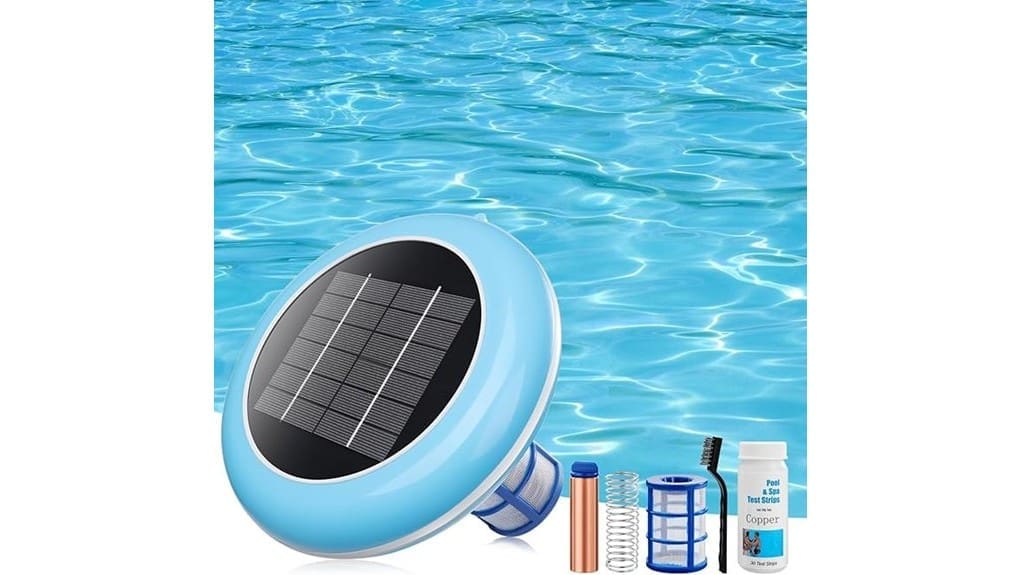
You’ll get a solar-powered floating copper ionizer that passively releases ions from a 326 g anode to suppress algae and biofilms in pools up to ~45,000 gallons. It steadies dissolved copper to cut free-chlorine demand by roughly 85%, improving clarity as particulates settle and filtration removes organics. Install for full sun, test copper weekly, brush the anode biweekly, and replace annually (or sooner). Below are details on performance, limits, maintenance, and costs.
Some Key Takeaways
- Solar-powered floating copper ionizers steadily release copper ions to reduce algae and biofilm without wired power.
- Typical units suit pools up to ~45,000 gallons; larger pools need supplemental methods for effective copper levels.
- Proper pH and weekly copper/free-chlorine testing prevent staining and maintain about 85% reduced chlorine demand.
- Maintenance includes biweekly anode brushing, annual (or 1–2 quarter) anode replacement, and winter indoor storage.
- Salt and freshwater pools are compatible if materials resist corrosion; monitor fittings for galvanic action in saltwater.
How the Solar Copper Ionizer Works and What It Promises
Because it relies on solar energy, the floating copper ionizer generates a low-voltage current that releases copper ions into your pool water, which bind to and inactivate algae and many bacteria, reducing the need for free chlorine by about 85%. You place the ABS/stainless float and 326 g copper anode on the surface; solar charging powers the circuit, producing steady ion dispersion. Copper ions act as biostatic agents, disrupting microbial membranes and biofilm formation. You’ll perform biweekly brushing and periodic anode replacement per manufacturer guidance. Device materials and passive operation minimize maintenance while sustaining controlled copper release for pools up to 45,000 gallons. These systems are popular with homeowners looking to enhance outdoor spaces while reducing chemical use.
Real-World Performance: Sanitation, Chlorine Reduction, and Water Clarity
When you deploy the solar copper ionizer in a typical above-ground or inground pool, it delivers measurable reductions in free chlorine demand and visible algae growth by maintaining a low-but-effective concentration of dissolved copper ions. You’ll observe roughly an 85% drop in chlorine consumption under test conditions, reducing oxidant dosing while copper provides continuous biostatic action. Data-driven users report improved biofilm control on surfaces and faster algae prevention compared with chlorine-only regimens. Water clarity increases as particulate-bound organics settle and are removed by filtration. Monitor copper and free chlorine with test strips to maintain target ranges and prevent staining. Natural enzyme treatments can complement ionization by breaking down organics and reducing maintenance when used alongside copper-based sanitation.
Installation, Routine Maintenance, and Lifespan of the Copper Anode
Having seen how the ionizer lowers chlorine demand and improves clarity, you should follow specific installation and maintenance steps to keep copper levels effective and avoid staining. Install the floating unit per manual, ensuring unobstructed solar exposure and secure coil spring to prevent loss. Test copper weekly with provided strips; adjust runtime or supplemental chlorine if levels exceed recommended range. Brush the 326 g copper anode every two weeks to remove oxide, which indicates activity. Plan for annual replacement despite longer anode life in some models; manufacturer suggests replacement every 1–2 quarters as alternative. For winter storage, dry and store indoors to prevent corrosion. Also consider choosing the right filter cartridges to complement ionization and maintain overall water clarity.
Compatibility, Pool Size Limits, and Safety for Fresh and Salt Pools
Although designed for both fresh and saltwater systems, you should match the ionizer’s capacity and materials to your pool type and volume to guarantee safe, effective operation. You’ll be limited to about 45,000 gallons; using it in larger bodies reduces copper ion concentrations below effective levels. Material compatibility matters: ABS, copper, and stainless resist corrosion in salt pools, but monitor fasteners and fittings for galvanic action. Test copper levels regularly and maintain pH to optimize biocidal action. Solar operation avoids wiring, yet nearby electrified equipment can cause electrical interference; isolate sensors and follow grounding guidelines to make certain accurate performance and safety. Consider adding a UV sanitizer to complement the ionizer for enhanced pool sanitation.
Cost, Savings Estimate, Common Issues, and Should You Buy It?
After confirming your pool size, materials compatibility, and monitoring plan from the previous section, you can assess cost and savings more accurately. Expect a mid-range retail price; perform a price comparison against salt systems and cartridge filters. Energy savings are inherent due to solar operation, lowering electrical costs versus powered ionizers. Factor in repair frequency: brush anode biweekly, replace it every 1–2 quarters; that recurring cost affects lifecycle expense. Resale value is modest—buyers value reduced-chemical upkeep but not cosmetic wear. Should you buy it? If you prioritize reduced chlorine use, low operating energy, and routine maintenance fits your schedule, yes. Many homeowners also pair ionizers with natural enzymes to help maintain clearer, healthier water while further reducing chemical reliance.
Some Questions Answered
Can Pets or Wildlife Be Harmed by the Ionizer Floating Device?
Yes — you shouldn’t expect direct harm to pets or wildlife from the ionizer under normal use. You’ll reduce chemical exposure (pet safety) by lowering chlorine, and copper levels released are low for large pools. However, you’ll monitor copper concentration and avoid animals drinking treated water; elevated copper can affect sensitive species (wildlife impact). Test water regularly, follow dosage and replacement guidelines, and keep small animals from nibbling components.
Does the Unit Interfere With Pool Covers or Automatic Cleaners?
No — the unit generally won’t interfere with pool covers or automatic cleaners when used properly. Its float design maintains cover compatibility and minimizes cleaner obstruction; keep it away from active cleaner paths and secure it before closing a cover. Evidence-based practice: position at pool edge during automated cleaning, remove or tether under solid covers, and inspect for entanglement. Regular checks and following manufacturer placement guidance prevent interference and prolong device life.
Are Replacement Parts Widely Available After Warranty Expires?
Yes — replacement cartridges and copper anodes remain reasonably obtainable after warranty expiry. You’ll find OEM spares through the manufacturer and numerous third party alternatives online; verify dimensions (326 g anode spec) and material compatibility. Suppliers and pool retailers stock coil springs, nets and brushes. Expect variable lead times and quality; check reviews and test strips for performance. Keep records of part fitment to make certain reliable long-term maintenance and water chemistry control.
How Does the Unit Perform in Shaded or Low-Sun Environments?
In shaded or low-sun conditions you’ll see reduced output: the solar panel supplies less power, so ion release drops and purification slows. The unit doesn’t include battery backup, so performance directly follows ambient light. Expect slower copper ion dispersion and longer clearing times; keep regular brushing and monitor test strips. For persistently low light, supplement with periodic manual cleaning or consider an ionizer model with battery backup to maintain consistent ion release.
Can the Ionizer Be Used During Pool Parties or Heavy Swimmer Activity?
Yes — you can use it during pool parties and heavy swimmer activity. The unit provides party safe operation by continuously releasing copper ions that persist despite agitation, so swimmer impact on sanitizer levels is limited. You’ll still monitor free chlorine and circulation; heavy bather loads may require supplemental dosing. Maintain recommended anode care and test strips to verify residuals. Device performance is evidence-based for typical recreational use up to specified pool capacity.