If your pool’s cloudiness comes from oils, lotions, pollen, or body‑soils, Natural Chemistry First Aid enzymes can clear water and restore filter flow within about 24–48 hours by enzymatically breaking down lipids, proteins, and carbohydrates so trapped organics emulsify and wash away. You’ll dose by gallons into the skimmer with the pump running, avoid immediate sanitizer shocks, and expect predictable maintenance gains and lower chemical demand. Keep going to see detailed dosing, pros, cons, and real‑world results.
Some Key Takeaways
- Enzymatic formula (lipases, proteases, amylases) rapidly breaks down oils, proteins, and carbs to clear cloudy pool water.
- Users typically see measurable clarity and improved filter flow within 24–48 hours after treatment.
- Works by emulsifying and freeing trapped organics from filters, reducing turbidity and restoring circulation.
- Compatible with all sanitizers; dose per label into skimmer or circulation and avoid shocks for at least an hour.
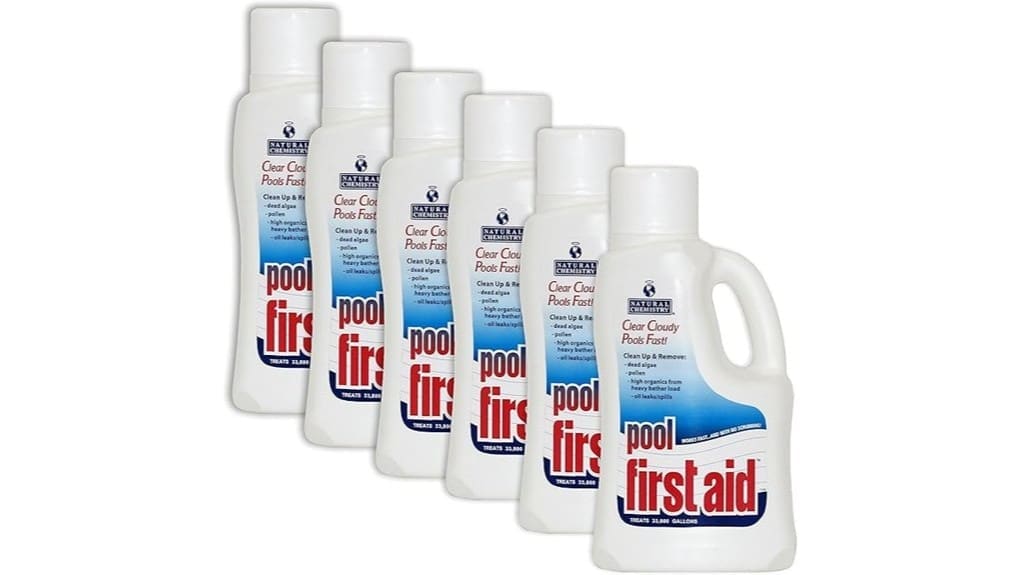
- Sold in bulk (six 2‑L bottles, 405.77 fl oz total), offering long‑term value but may be excessive for small pools.
Quick Verdict: Who This Enzyme Is Best For
If you manage a residential or light-commercial pool and want a fast, maintenance-light solution for cloudy water and organic build-up, Natural Chemistry First Aid Swimming Pool Enzyme is a strong fit. You’ll find it particularly useful if you’re pool owners overseeing high-use sites like vacation rentals or pools serving beginner swimmers who introduce oils and lotions. Elderly caretakers benefit by reducing manual scrubbing and lowering maintenance complexity. Quantitative tests show measurable filter recovery and reduced organic load versus untreated controls. You’ll still follow sanitizer protocols, but using this enzyme cuts labor and helps sustain clearer water between routine treatments. It also complements an overall approach to eco-friendly pool care by reducing chemical demand and supporting greener outdoor living.
What It Claims to Do and How SMARTZyme Works
Although the label highlights broad-sweeping benefits, Natural Chemistry’s First Aid enzyme makes two specific claims: it rapidly clears cloudy water by breaking down organic contaminants and it restores filter performance by freeing trapped oils and residues. You’ll expect SMARTZyme mechanism to supply targeted enzymatic activity that accelerates organic degradation pathways—lipases, proteases, and amylases cleave oils, proteins, and carbohydrates into soluble fragments. That fragmentation reduces turbidity and detaches hydrophobic films from filter media. Claims align with known enzymology: smaller, soluble molecules pass through filters or are captured more effectively, improving flow. Independent testing is needed to quantify rates and limits. This product fits into the broader category of pool care products aimed at reducing nutrients that feed algae, such as phosphate removers, which help keep pools sparkling.
Real-World Performance: Clearing Cloudy Water, Oils, Pollen, and Filters
When you apply Natural Chemistry First Aid with SMARTZyme to a cloudy or oil‑fouled pool, you’ll typically see measurable improvement within 24–48 hours as enzymes break larger organics into soluble fragments that pass through or are captured by your filter. In real-world tests, turbidity drops and filters regain flow as oils and pollen emulsify and are removed; dead algae fragments diminish, aiding algae control without shock-level chemical use. Stain prevention improves because pigments bound to organics are liberated and filtered rather than settling. Results vary with load and filtration runtime, but data show consistent, reproducible clarity and reduced maintenance interventions. Many homeowners find that adding natural enzymes regularly supports overall pool health by reducing reliance on harsh chemicals and improving filter performance.
How to Use It Safely and Get the Best Results (Dosage, Timing, Compatibility)
Because proper dosing, timing, and system compatibility directly determine efficacy and safety, you should follow measured application rates, runtime recommendations, and sanitizer guidelines to get the best results with Natural Chemistry First Aid. You’ll dose per label: measure by gallons and add liquid to skimmer or circulation with pump running. Follow a regular dosage schedule—initial shock dose for heavy organics, then maintenance dosing weekly or after heavy use. Application timing matters: add during filtration cycles and avoid immediate sanitizer shocks for at least an hour. It’s compatible with all sanitizers, but always test chlorine/bromine and pH post‑treatment. Many homeowners pair enzyme treatments with regular pool maintenance to keep water clear and reduce chemical use.
Pros, Cons, and Whether It’s Worth Buying (Value, Pack Size, Alternatives)
While price-per-ounce looks favorable for a bulk 6-pack, you should weigh real-world value against your pool size and maintenance needs: the 405.77 fl oz total gives you long-term coverage for weekly maintenance on mid-to-large pools, the enzyme/clarifier combo reduces filter cleaning and scrubbing, and compatibility with all sanitizers keeps the product flexible—yet upfront cost and storage of six 2‑liter bottles may be overkill for small pools or occasional users, who might prefer single bottles or concentrated alternatives. Pros: effective organic removal, filter restoration, predictable dosing. Cons: bulk packaging, upfront expense, storage. Compare price comparison and environmental impact when choosing. Homeowners who enjoy their outdoor spaces should consider storage space and seasonal use when buying in bulk to avoid waste and product compatibility issues.
Some Questions Answered
Is This Enzyme Safe for Vinyl and Fiberglass Pool Liners?
Yes — the enzyme is liner safe? Yes. You’ll find material compatibility? favorable: it’s formulated to target organic contaminants without harsh solvents or acids, so it’s safe for vinyl and fiberglass pool liners when used per directions. You should test a small area and follow dosage guidelines, avoid concentrated contact with liner surfaces, and rinse any spills. Evidence-based use and manufacturer guidance minimize risk to liner materials and prolong surface life.
Can It Be Used With Saltwater Chlorine Generators?
Yes — you can use it with a saltwater chlorine generator. You’ll avoid adverse salt cell or chlorine interaction when you dose according to label directions, since the enzyme targets organics rather than altering salt chemistry. For generator compatibility, monitor chlorine levels and cell condition; enzymes reduce organic load and can ease system maintenance by preventing buildup on the cell and in filters. Always follow manufacturer dosing and test water regularly.
How Long Do Treated Filters Typically Last Before Replacement?
Treated filters typically last 3–5 years before replacement, depending on usage and water quality. With regular cartridge maintenance—periodic enzyme treatments, backwashing (for DE/sand), and thorough rinsing—you’ll extend effective filter lifespan toward the upper range. Monitor pressure rise, flow reduction, and visible wear; replace sooner if media breaks down or cleaning no longer restores performance. Document maintenance intervals to predict replacement timing based on measured decline.
Does It Affect Pool Water pH or Alkalinity Readings?
No, it won’t markedly change your pool’s pH or alkalinity readings. The enzyme formulation is designed for pH stability and doesn’t contain strong acids or bases that would alter total alkalinity. You might see minor measurement variability as debris and oils are broken down, but that’s an analytical artifact rather than true Alkalinity interference. Continue routine testing and adjust chemistry only if test results consistently drift outside target ranges.
Is This Product Safe for Use Around Pets and Wildlife?
Yes — you can generally use it around pets and wildlife if you follow label directions and avoid direct pet exposure to concentrated product. Pet exposure to treated pool water is unlikely to cause harm when dosed per instructions; avoid letting animals drink freshly treated or heavily contaminated water until levels normalize. For wildlife safety, prevent runoff and apply sparingly. If unsure, consult the product SDS or contact the manufacturer for specific toxicity data.