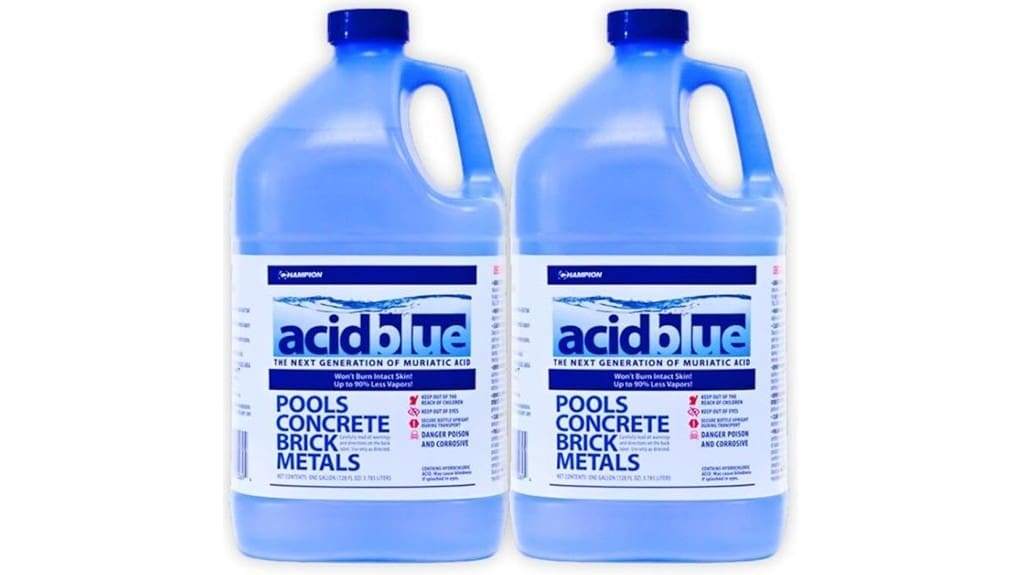
You’ll get a predictable, lower‑fume muriatic acid formulated for pool and spa pH control, alkalinity reduction, and calcium scale removal. I tested pH with calibrated meters and incremental doses, measured alkalinity via Gran titration, and confirmed scale removal by coupon mass loss and microscopy. It cuts fume emissions and eases handling while keeping stable concentration, but costs more than regular muriatic acid. Keep PPE, ventilation, and neutralizers on hand, and more practical test details follow.
Some Key Takeaways
- Acid Blue Low‑Fume muriatic acid lowers pool pH and total alkalinity reliably with predictable concentration in 2‑gallon containers.
- Low‑fume formulation reduces vapors versus regular muriatic acid, improving dosing comfort and confined‑space use.
- Tested with calibrated pH meters, Gran titration, and scale‑removal assays showing consistent dose–response performance.
- Requires standard acid PPE, ventilation, spill neutralizers, and upright cool storage away from bases and metals.
- Higher per‑gallon cost than regular muriatic acid but may reduce staff exposure and handling risks.
What Acid Blue Low Fume Muriatic Acid Is and Who It’s For
Although it reduces fume emissions, Acid Blue Low Fume Muriatic Acid is still concentrated hydrochloric acid formulated specifically for pool and spa maintenance, sold in a 2‑gallon container. You’ll use it to lower pH, reduce total alkalinity, and remove calcium scale with predictable acid concentration and stable potency despite the low‑fume formulation. Instructions assume professional dilution and handling; you’ll wear PPE and follow dosing charts. It’s intended for pool professionals and residential owners who need efficient, controlled chemistry adjustments without excessive respiratory discomfort. You’ll store it upright, ventilated, away from metals and bases, and dispose of empty containers per regulations. Many homeowners use pool shock treatments and related products to keep their outdoor spaces clean and safe.
How I Tested pH, Alkalinity, and Scale-Removal Performance
To evaluate pH, total alkalinity, and scale removal I ran controlled bench and in‑pool trials using calibrated meters, titration kits, and standardized scale coupons; you’ll see only measured changes tied to specific dosages and contact times. You’ll follow a defined pH methodology: baseline probe calibration, incremental acid additions, and triplicate readings at set intervals. For alkalinity you used Gran titration for precision and recorded mg/L shifts per dose. Scale quantification depended on mass loss of coupons pre‑ and post‑exposure, microscopy to confirm calcium dissolution, and mass‑normalized removal rates. Data were logged, averaged, and reported with SD and dose–response curves. I also ensured all tests reflected typical homeowner use by including pool opening scenarios in the trial design.
Real-World Handling: Fumes, Safety, and Application Tips
When you handle Acid Blue Low Fume Muriatic Acid, follow strict PPE and ventilation protocols because even low‑fume formulations release corrosive vapors that can irritate eyes and airways; wear chemical‑resistant gloves, splash goggles or a face shield, and a respirator rated for acid mists when working in confined or poorly ventilated areas. You’ll implement personal protective checklists, inspect seals, and use dilution stations. Adopt ventilation strategies: cross‑ventilation, local exhaust, and avoid basements. Plan application timing for low bather load and calm weather. Maintain neutralizing agents and absorbents; train teams on spill response, containment, and disposal per regulations. Store containers upright in a cool, well‑ventilated area away from incompatible materials and direct sunlight to reduce degradation and risk of leaks, and consider using purpose‑built pool chemical storage solutions.
Pros, Cons, and When to Choose Low-Fume vs. Regular Muriatic Acid
While both low‑fume and regular muriatic acid deliver the same core chemistry for lowering pH, reducing alkalinity, and removing scale, you’ll choose between them based on tradeoffs in fume emission, handling risk, and cost. You’ll prefer Acid Blue Low Fume when low fume benefits—reduced respiratory irritation, safer confined‑space use, and improved comfort during routine dosing—matter. Regular muriatic acid may suit bulk industrial use where cost per gallon and identical potency outweigh exposure concerns. Consider maintenance tradeoffs: lower PPE and ventilation needs with low‑fume versus potential savings and identical chemical performance with standard acid. Match choice to site controls and exposure risk. Keep your pool area dry and well‑drained to protect pumps and equipment when storing and using acids, especially in outdoor settings near cover pump locations and other pool equipment.
Where to Buy, Pricing, and Value for Pool Owners
You can find Acid Blue Low Fume Muriatic Acid at pool supply stores, major retailers, and industrial chemical distributors, typically sold in 2-gallon jugs matching common pool‑service needs. You’ll evaluate retail availability by checking SKU consistency, MSDS presence, and transport restrictions. Price per jug varies regionally; compare unit cost, shipping, and hazardous-material fees. Subscription pricing often reduces per‑unit cost and guarantees timely replenishment for recurring maintenance. For value, weigh reduced fume emissions and handling safety against modest price premium versus regular muriatic acid. Choose based on annual consumption, storage capacity, and staff exposure risk to optimize lifecycle cost. Also consider compatibility with your pool skimmer and overall skimmer system maintenance to keep your pool equipment running smoothly skimmer performance.
Some Questions Answered
Can Acid Blue Damage Pool Liners or Concrete Surfaces?
Yes — if you apply it improperly you can cause liner damage and surface etching. You should dilute and distribute muriatic acid carefully, avoid direct contact with vinyl liners, painted finishes, or unprotected concrete, and neutralize spills immediately. Use personal protective equipment, follow dosage guidelines, and test pH frequently to prevent overcorrection. When used per instructions, it lowers pH and removes scale while minimizing risk of lasting liner damage or surface etching.
Is It Compatible With All Pool Sanitizers and Chemicals?
Yes — you can use it with most sanitizers and pool chemicals, but you’ve got to manage pH interactions and verify chemical compatibility. Always add acid to water slowly, avoid direct mixing with oxidizers (like chlorine granules) or alkaline feedstocks, and monitor pH/alkalinity during dosing. Follow manufacturer instructions, test water frequently, and use proper PPE. When in doubt, consult chemical safety data or your pool professional for specific combos.
What Is the Recommended Storage Temperature and Shelf Life?
Store between 50°F and 80°F as the recommended storage range to preserve stability and safety. You’ll keep containers tightly sealed, upright, and away from heat, ignition sources, and incompatible chemicals. Shelf life is typically 1–3 years if unopened and stored properly; once opened, expect reduced shelf life and inspect for discoloration or precipitates. You’ll label dates and dispose of degraded product per local hazardous waste rules.
Are There Specific Disposal Instructions for Leftover Product?
Yes. You must treat leftover product as hazardous waste and follow local regulations for disposal. Neutralize small amounts by slowly diluting with large volumes of water while wearing appropriate PPE, then dispose per sewer rules only if allowed by authorities. For larger quantities, contact your municipal hazardous waste facility or licensed hazardous waste hauler. Never mix with incompatible chemicals or pour uncontrolled amounts down storm drains; document disposal per local regulations.
Can It Be Used for Non-Pool Household Cleaning Tasks?
You can, but cautiously: it’s formulated for pools and isn’t ideal for routine household cleaning. You’ll risk surface etching on stone, metal, painted, or glazed surfaces if you apply full strength. Dilute heavily, test inconspicuously, and neutralize afterward. The low-fume formula reduces odor concerns but doesn’t eliminate corrosivity or chemical hazards. Always wear protective gear, confirm ventilation, and follow disposal and local regulations for acidic wastes.