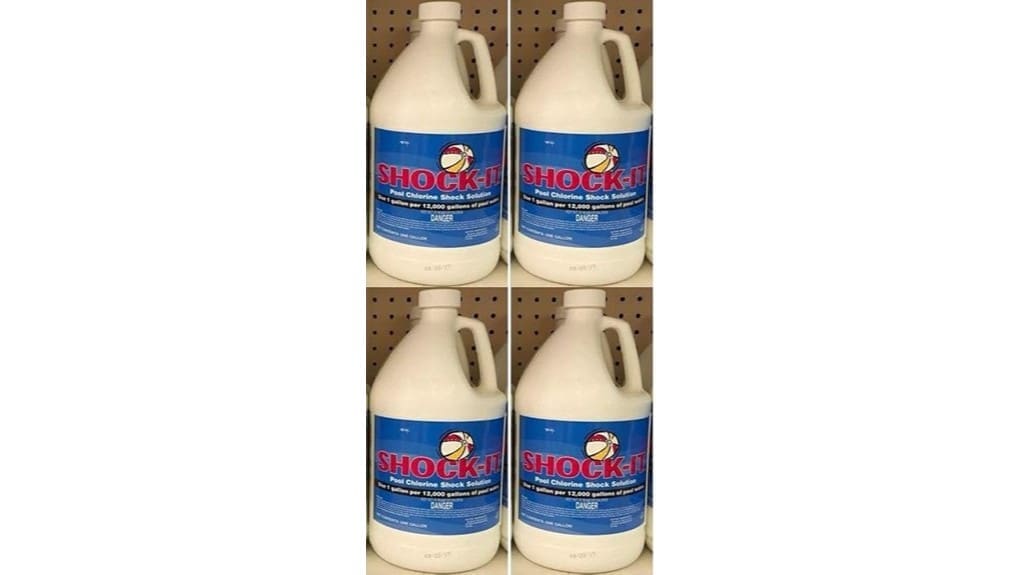
You’ll get a case with four gallons of EPA‑registered, 12.5% sodium hypochlorite that gives predictable, fast free‑chlorine shock for commercial pools when dosed and ventilated correctly. You’ll add to the deep end with the pump on, maintain pH 7.2–7.6, and monitor residuals until they stabilize in 24–48 hours. Use chemical‑resistant PPE, eyewash access, and secure, cool storage away from acids and organics. Keep going to learn practical dosing and safety specifics.
Some Key Takeaways
- One case contains four gallons of ready-to-use 12.5% sodium hypochlorite for fast, predictable pool shock and routine sanitation.
- NSF/ANSI 60 certification and EPA registration ensure consistent formulation and safe potable-contact margins for commercial use.
- Liquid format dissolves immediately with minimal lag, simplifying dosing and reducing labor versus tablets or calcium hypochlorite.
- Use with pump running, add to deep end over 15–30 minutes, maintain pH 7.2–7.6, and retest residuals until stable.
- Requires chemical-resistant PPE, upright ventilated storage away from acids/organics, and a spill response plan due to strong oxidizer hazards.
What This 1-Case Liquid Chlorine Is and Who It’s For
This 1-case liquid chlorine is a ready-to-use, commercial-grade sanitizer containing 12.5% active sodium hypochlorite in four-gallon containers, made in the USA and EPA-registered (No. 42177-82). You’ll find it NSF/ANSI 60 certified and formulated to avoid clouding water. It’s intended for facility managers overseeing commercial pools and related sanitation tasks requiring concentrated, no-mix chlorine. You’ll apply it directly for shock, closings, or targeted disinfection; handle with chemical-resistant PPE, proper ventilation, and secure storage per label instructions. Use dosing controls and monitoring to maintain safe free chlorine levels and prevent corrosive or health hazards. It’s a practical option for homeowners and professionals who want to keep pools sparkling using shock treatment products for outdoor spaces.
Real-World Performance: Sanitation, Shocking, and Seasonal Use
When you need fast, reliable disinfection—whether for routine sanitation, heavy shock treatment, or end-of-season closure—this 12.5% liquid chlorine delivers concentrated free chlorine in a ready-to-use form that’s easy to dose and monitor. You’ll apply measured doses to achieve target free chlorine levels quickly; test frequently to confirm residuals. Shock duration depends on initial load, cyanuric acid, and temperature; typical stabilization occurs within 24–48 hours. For algae control, maintain elevated free chlorine until spores are inactive and filter/clean debris. The liquid format minimizes dissolution lag, giving predictable kinetics for commercial sanitation and seasonal shutdowns. This product is a practical choice for homeowners preparing to open pools for the season, especially when considering pool opening routines.
Safety, Handling, and Storage for Commercial 12.5% Liquid Chlorine
Because liquid chlorine is a high-strength oxidizer that can cause severe corrosion, respiratory irritation, and chemical burns, you must follow strict safety, handling, and storage protocols for the 12.5% commercial product. You should wear personal protective equipment: chemical-resistant gloves, splash goggles, face shield, and resistant clothing; make certain eyewash and safety shower access. Store upright in cool, ventilated, non-combustible area away from organics, acids, and heat sources; secure containers to prevent tipping. For transport, use secondary containment and proper labeling. Implement a written spill response plan with absorbents, neutralizers, and trained responders; ventilate and evacuate if vapors appear. Consider using locked, ventilated storage to keep chemicals secure and reduce accidental exposure.
How to Use One 4‑Gallon Case: Dosing, Timing, and Water-Care Tips
Although you’ll be handling a commercial-strength oxidizer, you can dose a 4‑gallon case (12.5% available chlorine) safely and effectively by following precise measurements, timing, and circulation protocols. Calculate required free chlorine increase: 12.5% equals 125,000 ppm‑gallons per gallon factor; use pool volume to derive gallons needed for target ppm (e.g., raise 10 ppm). Add product to deep end with pump running, distribute over 15–30 minutes. Maintain pH 7.2–7.6 for chlorine stability. For pool algae, apply higher breakpoint chlorination and retest every hour until residual holds 2–5 ppm; wait 24 hours before swimming. For reliable results when maintaining outdoor pools, use simple test kits designed for homeowners.
Value Comparison: Cost, Certifications (NSF/ANSI 60), and Alternatives
Now that you’ve handled dosing and timing for a 4‑gallon case, you’ll want to compare value factors—cost per effective chlorine delivered, NSF/ANSI 60 certification benefits, and viable alternatives—to pick the best option for your operation. You should perform a price comparison using delivered active chlorine (12.5% strength) per gallon, factoring transport, storage, and waste disposal. NSF/ANSI 60 certification guarantees potable-contact safety margins and consistent formulation. Because it’s ready-to-use and non-clouding, this commercial product reduces labor and dilution errors versus alternative formulations like hypochlorite tablets or calcium hypochlorite powder, which vary in concentration and handling risk. For homeowners who enjoy their outdoor spaces, choosing products that work well with phosphate removers can help maintain clear, healthy pool water and reduce algae issues.
Some Questions Answered
Can This Liquid Chlorine Be Used in Saltwater Pools?
Yes — you can use this liquid chlorine in saltwater pools for shock and sanitation, but you should monitor saltwater compatibility and corrosion concerns. You’ll apply the ready-to-use 12.5% solution per manufacturer dosing, avoid prolonged contact with metal components, and rinse fittings if splashed. Use proper PPE, follow NSF/ANSI 60 guidelines, and test pool chemistry frequently to prevent corrosion-related damage and maintain safe, balanced chlorine levels.
Does the Product Ship During Hot Weather Without Degrading?
Yes — the product ships during hot weather but you’ll need shipping stability and temperature precautions. You should expect commercial-grade 12.5% liquid chlorine to tolerate transit if packaged per EPA and NSF requirements, but avoid prolonged exposure above recommended temperatures. Insist on insulated or ventilated transport, expedited delivery, and clear labeling. Monitor containers for bulging or leaks on receipt, and store immediately in a cool, shaded, well-ventilated area.
Is This Container Compatible With Automatic Chemical Feeders?
Yes — you can use this container with many automatic chemical feeders, but verify pump compatibility and use proper feeder adapters. You’ll want to confirm the feeder’s materials resist 12.5% sodium hypochlorite and that flow rates match the ready-to-use liquid. Install compatible feeder adapters and check seals, fittings, and backflow prevention. Follow NSF/ANSI 60 guidance and manufacturer specs to prevent corrosion, leakage, or dosing errors during commercial sanitation operations.
What Is the Shelf Life Once the Case Is Opened?
You should use opened liquid chlorine within 30–45 days for optimal strength; potency declines thereafter. Store at cool, stable storage temperature (ideally 50–70°F), out of direct sunlight, and keep containers tightly sealed to minimize off-gassing. Inspect regularly for container corrosion and leaks; if you see rusting, bulging, or unusual odor, discard per local hazardous-waste rules. Label open date and rotate stock to guarantee safety and effectiveness.
Are There Bulk Discount Options for Recurring Purchases?
Yes — you can get volume discounts and subscription savings for recurring purchases. You’ll enroll in a program that scales price per case based on order quantity, and you’ll lock subscription savings with scheduled deliveries to maintain supply. The program’s technical terms specify minimum order tiers, lead times, and handling requirements to preserve product stability; follow storage and usage guidelines to guarantee safety and consistent disinfection performance.