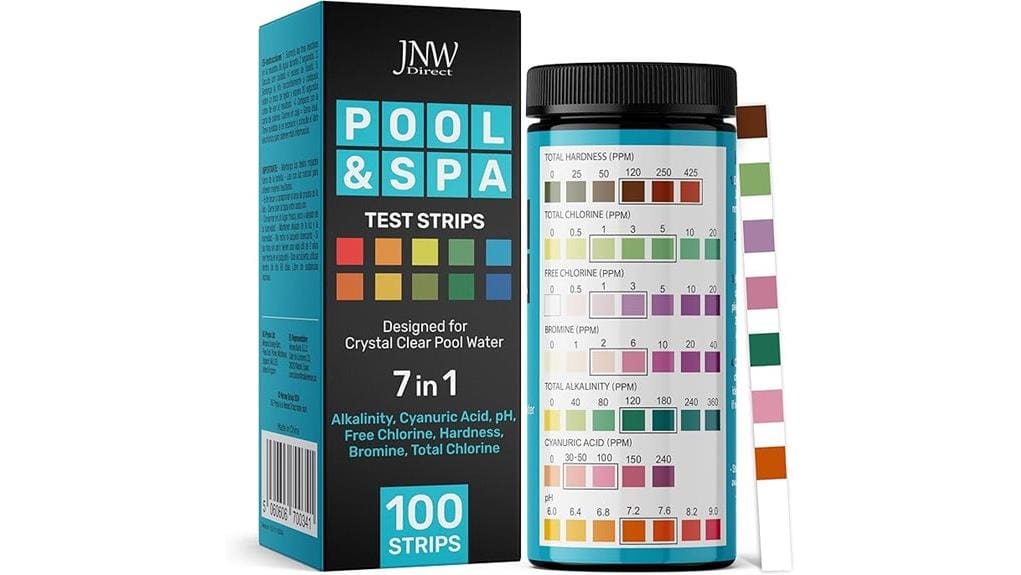
If you want a reliable, affordable way to keep your pool or spa balanced, the JNW 7‑in‑1 strips are a solid choice. You’ll get clear, repeatable results for free chlorine, bromine, pH, alkalinity and hardness with a quick 2‑second dip and 30‑second read. They’re cost‑effective (100 strips plus an e‑book), easy to store, and good for twice‑weekly checks. Keep the vial sealed and you’ll get consistent performance — more details follow below.
Some Key Takeaways
- Reliable, affordable 7-in-1 strips give clear readings for chlorine, pH, alkalinity, hardness, bromine, and two additional parameters.
- Quick 2-second dip and 30-second read time deliver consistent, repeatable results when procedure followed.
- Best for routine home and shared-pool maintenance; not as granular as digital meters or lab tests.
- Store vial tightly closed, dry, and use strips within 90 days of opening for accurate results.
- Cost-effective 100-strip kit plus e-book supports twice-weekly testing and trend tracking for balanced water.
Quick Verdict : Is the JNW 7-in-1 Worth Buying?
Bottom line: yes — the JNW 7-in-1 strips give you a reliable, affordable way to keep pool and spa water balanced. You’ll find clear, consistent readings for chlorine, pH, alkalinity, hardness and more, so maintenance feels straightforward and shared. Cost effectiveness is evident: 100 strips and an e-book mean fewer trips to the store and lower testing costs over a season. User satisfaction scores high for ease and repeatable accuracy when you dip for two seconds and wait 30. Store them properly and test twice weekly, and you’ll belong to a group that trusts simple, effective pool care. These strips are a handy complement to other digital pool testers for homeowners who enjoy their outdoor spaces.
What the JNW 7-in-1 Tests and What’s in the Box
If the quick verdict sold you on the idea, here’s what you’ll actually get and what each strip checks for: the jar contains 100 7-in-1 test strips plus a color chart and a complimentary e-book, and each strip measures free chlorine, bromine, pH, total alkalinity, hardness, and two additional common parameters (so you can monitor sanitizer levels, water balance, and calcium content in one go). You’ll appreciate the straightforward packaging design and clear chart. Ingredient sourcing isn’t detailed on the jar, but the included e-book addresses quality expectations. This kit’s contents suit groups who care about reliable, shared pool upkeep. The company also focuses on helping homeowners keep their outdoor spaces safe with simple pool water test kits and related products.
How to Use the Strips for Reliable Results (Step-by-Step)
When you want consistent, actionable readings, follow a simple, repeatable routine: remove a strip, dip it into water for 2 seconds, hold it horizontally to avoid cross-contamination, then wait 30 seconds before comparing the pads to the included color chart. Use a pre rinse technique by briefly flushing the sample area or dipping the strip twice if surface contaminants worry you. Note timing variations—don’t read early or long after 30 seconds, as colors shift. Record results, discard used strips, and reseal the container. Repeat under similar conditions each test to build reliable trend data and shared confidence. Regular testing helps homeowners keep pool water clear and enjoy their outdoor spaces.
Accuracy, Frequency, and Real-World Performance
Although no test method is perfect, JNW’s 7-in-1 strips deliver consistently precise readings for free chlorine, bromine, pH, alkalinity, and hardness when you follow the dipping and timing procedure; you’ll see reliable results that match expected chemical changes and allow you to correct imbalances quickly. You should test at least twice weekly to catch trends and limit measurement drift. In field comparison with handheld meters and lab samples, the strips track closely for routine maintenance though they lack meter-level granularity. They suit shared pools and hot tubs where consistent, easy checks help your group maintain safe, balanced water without fuss. For many homeowners, pairing regular testing with simple pool clarifiers can help keep water clear and stable, especially when treating outdoor spaces.
Storage, Shelf-Life, Extras, and Final Buying Recommendation
Because proper storage directly affects test reliability, keep your JNW strip vial tightly closed and out of moisture and light to preserve accuracy. You should use strips within 90 days of opening and store them in a cool, dry place; the packaging design is functional and compact for shared pools. Extras include a complimentary e-book that helps you and your friends maintain balanced water. Readings stay dependable if you follow dip-and-wait steps and test twice weekly. Overall, these strips offer affordable, accurate checks and a sense of community care—factor in prompt customer support response time if you value reliable service. Many homeowners find that opening pools with the right pool chemicals and testing routine makes seasonal startup smoother.
Some Questions Answered
Can These Strips Test Combined Chlorine (Chloramines)?
No — these strips don’t directly measure combined chlorine, so they won’t provide explicit combined chlorine detection. You’ll get free chlorine readings; to assess chloramines you’ll need to compare total chlorine (not provided) or use a test that reports combined chlorine. Be aware of chloramine interference when interpreting free chlorine results. Use supplemental testing or professional kits for accurate combined-chlorine assessment, and test regularly so your pool community stays safe and comfortable.
Are the Strips Safe to Use in Saltwater Pools?
Yes — you can use them in saltwater pools; they offer saltwater compatibility for routine checks. You’ll get accurate chemical readings for free chlorine, pH, alkalinity, hardness and bromine, though very high salt levels can sometimes affect pads. They don’t rely on electrodes, so electrode interference isn’t a concern. You’ll feel confident testing twice weekly and storing strips properly to keep results reliable and consistent for your pool community.
Do They Measure Cyanuric Acid (Stabilizer) Levels?
No, they don’t detect cyanuric acid; cyanuric detection isn’t included. You’ll get reliable readings for chlorine, bromine, pH, alkalinity, hardness and other common parameters, but stabilizer accuracy isn’t covered. If monitoring cyanuric is important to you, consider a separate test kit or digital reader that specifically measures stabilizer levels. That way you’ll maintain confidence and belonging in your pool-care routine with complete chemical oversight.
Can I Purchase Replacement Color Charts Separately?
Yes — you can often buy replacement charts separately from the manufacturer or retailers. You’ll want to verify color accuracy before relying on readings, since lighting and print batches can shift hues. If you’re unsure, request a sample or compare the new chart with fresh strips in known-control water. That way you’ll feel confident the replacement charts match your strips and help you maintain shared standards for safe, balanced water.
Are the Test Strips Biodegradable or Recyclable?
No — the strips themselves aren’t biodegradable or recyclable; they contain treated pads and small plastics. You can still reduce impact: keep the container’s biodegradable packaging if provided and follow recycling instructions for the outer carton or plastic cap where local facilities accept them. Use strips sparingly, store properly to avoid waste, and share the complimentary e-book tips with your pool group to cut overall consumption and feel connected to others managing water responsibly.