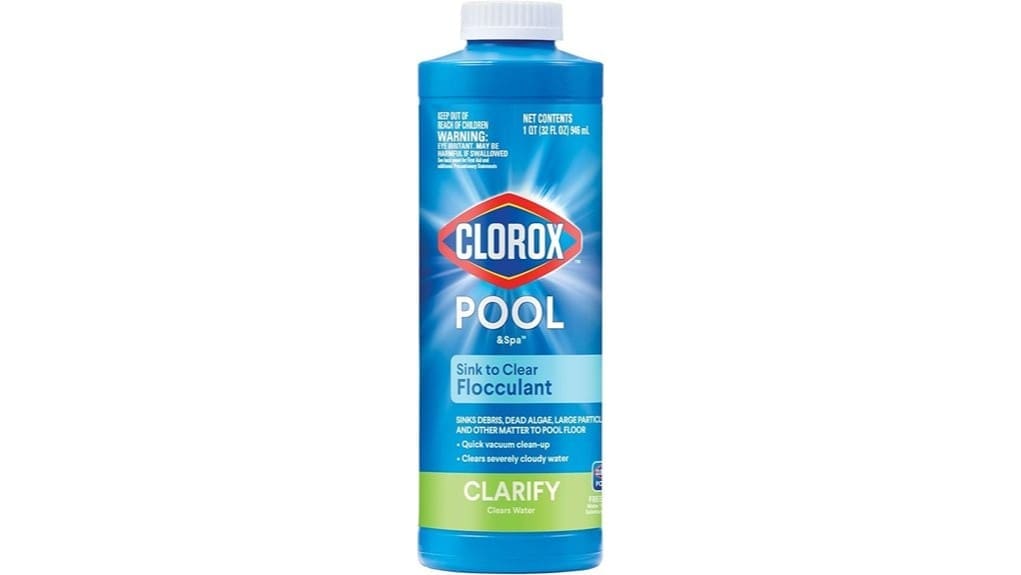
You’ll get a concentrated, non‑foaming algaecide that rapidly knocks down green algae and leaves a residual to deter regrowth when dosed per label. Use routine maintenance doses for prevention and higher treatment doses for active blooms, test and adjust pH and chlorine first, and circulate 8–12 hours after application. It’s saltwater‑safe, vinyl‑friendly when diluted, and pairs well with shock and brushing; keep PPE on and follow label instructions to optimize results and learn practical application tips.
Some Key Takeaways
- Effective concentrated algaecide that quickly reduces green algae and provides residual protection when dosed per label.
- Non-foaming formula compatible with saltwater generators and most pool surfaces, including vinyl when diluted and circulated.
- Requires pH and free chlorine adjustment before use, with overnight circulation and brushing for best results.
- Higher treatment doses needed for active blooms; routine maintenance dosing helps prevent regrowth but adds recurring cost.
- Safe handling precautions recommended (gloves, eye protection, no mixing), and best used alongside shock, clarifiers, and sanitizers.
What Clorox Pool&Spa Algaecide Is and When to Use It
Think of Clorox Pool&Spa Algaecide as a targeted chemical tool you add when algae appear or to stop them before they start. You get a concentrated liquid formulated to kill green algae and provide residual protection across pool surfaces. You’ll rely on its compatibility with all pool types and non‑foaming profile for predictable results. Understand the algae lifecycle to time interventions: treat early motile stages for faster eradication and schedule preventive doses during warm, nutrient‑rich periods. Application timing matters for efficacy and for integrating with sanitizer cycles. You’ll join a community focused on clear water and reliable maintenance outcomes. Many homeowners combine regular algaecide use with routine pool maintenance to help prevent recurring outbreaks.
How to Dose and Apply This 1‑Quart Algaecide Safely
Measure carefully and add the algaecide directly to the pool following product dosing: for routine prevention use the manufacturer’s recommended maintenance dose per 10,000 gallons and for active green algae apply the higher “treatment” dose. You’ll test and adjust pH and free chlorine first, then circulate. Follow safety precautions: wear gloves and eye protection, avoid mixing with other chemicals, and keep children/pets away. For application timing, add during low bather load and overnight circulation for 8–12 hours. Record dose, date, and observed results so your pool-care group stays informed and consistent. Homeowners who enjoy outdoor spaces should also consider regular shock treatments as part of a seasonal maintenance plan.
Real Performance: Kills Algae, Prevents Regrowth, and Non‑Foaming Results
After you’ve applied the proper dose and restored pH and free chlorine, assess how the algaecide performs against active blooms and in ongoing prevention. You’ll see rapid reduction of visible green algae when dosing per label; cells rupture and clarify water within days. Its non-foaming formulation keeps surfaces clear and filtration effective, so you won’t manage foam. Monitor for algae resistance by observing recovery after treatment cycles; persistent recurrences may indicate resistant strains or inadequate dosing frequency. Maintain scheduled preventative doses, test regularly, and lean on the Clorox Pool app for precise dosing guidance to sustain collective pool health. Consider pairing treatments with regular brushing using algae brushes to maximize removal of stubborn growth.
Compatibility and Pool Types: Will It Work for Saltwater, Vinyl, and Plaster Pools?
Although pool construction and sanitation systems differ, Clorox Pool&Spa Algaecide is formulated to be compatible with common surfaces and systems, including saltwater generators, vinyl liners, and plaster finishes. You’ll find documented saltwater compatibility—use with electrolytic systems won’t impair generator operation when dosed per label. For vinyl safety, apply recommended dilutions and avoid prolonged contact with concentrated product; routine circulation prevents localized exposure. On plaster, the non-foaming formula minimizes surface spotting and allows even distribution. You should always test and maintain balanced water chemistry (pH, alkalinity, sanitizer) before and after treatment to protect finish integrity and guarantee predictable results. Consider adding a UV sanitizer to your setup to reduce chemical load and improve overall pool sanitation.
Is It Worth Buying? Pros, Cons, Cost per Treatment, and Final Recommendation
When you weigh performance, compatibility, and price, Clorox Pool&Spa Algaecide delivers a technically sound, easy-to-use solution that effectively kills and prevents algae in most residential pools; it’s non-foaming, saltwater-safe, and formulated for even distribution to minimize surface spotting when you follow label dosing. You’ll get rapid algae control, broad compatibility, and predictable dosing supported by the Clorox Pool app. Pros: effective, non-foaming, saltwater-safe, brand support. Cons: recurring cost, chemical handling, questions about environmental impact versus biological options. Cost per treatment is modest for routine maintenance; price comparison favors Clorox for reliability. Recommendation: buy if you value consistency and community-tested performance. Many homeowners pair algaecide use with other maintenance products sold for backyard swimmers, like pool clarifiers, to maintain clear water and a pleasant outdoor space.
Some Questions Answered
Can I Mix This Algaecide With Other Pool Chemicals Immediately?
No — you shouldn’t mix it directly with other pool chemicals immediately. For chemical compatibility and safe dosing timing, add algaecide separately after stabilizing pH and chlorine levels. Wait until chlorine is at recommended residual, then apply algaecide diluted per label instructions and circulate for at least an hour. You’re protecting your pool and community; follow manufacturer guidance and avoid pouring different concentrates together to prevent reactions.
How Long After Treatment Can I Swim Safely?
You can usually swim 15–30 minutes after treatment once the product has dispersed and the pool’s sanitizer (chlorine/bromine) is at recommended levels. Wait time depends on dosage and circulation; run the pump for at least one full turnover and test water before entry. If you’ve had reactions before, wait longer to avoid skin irritation and consult product instructions or support. You’ll belong to a safer, well-maintained pool community.
Does It Stain Pool Liners or Decking Materials?
No, it shouldn’t stain properly maintained vinyl liners or common decking when used as directed. You’ll avoid color fading and surface etching by diluting accurately, keeping pH within recommended ranges, and rinsing any spills promptly. Follow label dosages and use protective gear; test on a small hidden area if concerned. You’re part of a community of pool owners who prioritize routine maintenance to guarantee long-term material compatibility and appearance.
Is This Algaecide Safe for Pets and Wildlife if Spilled?
No — you shouldn’t assume it’s safe; pet safety and wildlife impact require caution. If spilled, contain and dilute runoff, keep pets and wildlife away, and follow label cleanup and disposal instructions. Wear protective gear, prevent entry to drains and waterways, and notify local authorities for large spills. You’ll protect animals and your community by acting promptly and using manufacturer or environmental agency guidance for proper remediation.
What Is the Shelf Life After Opening the Bottle?
You’ll generally get about 1–2 years of effective shelf life after opening if you maintain proper storage temperature and preserve container integrity. Store the bottle tightly sealed, out of direct sunlight, and between roughly 50–85°F to minimize degradation. Monitor for discoloration, odor changes, or leaks; if any occur, don’t use it. Follow manufacturer guidance and join fellow pool owners in routinely checking product condition before dosing.