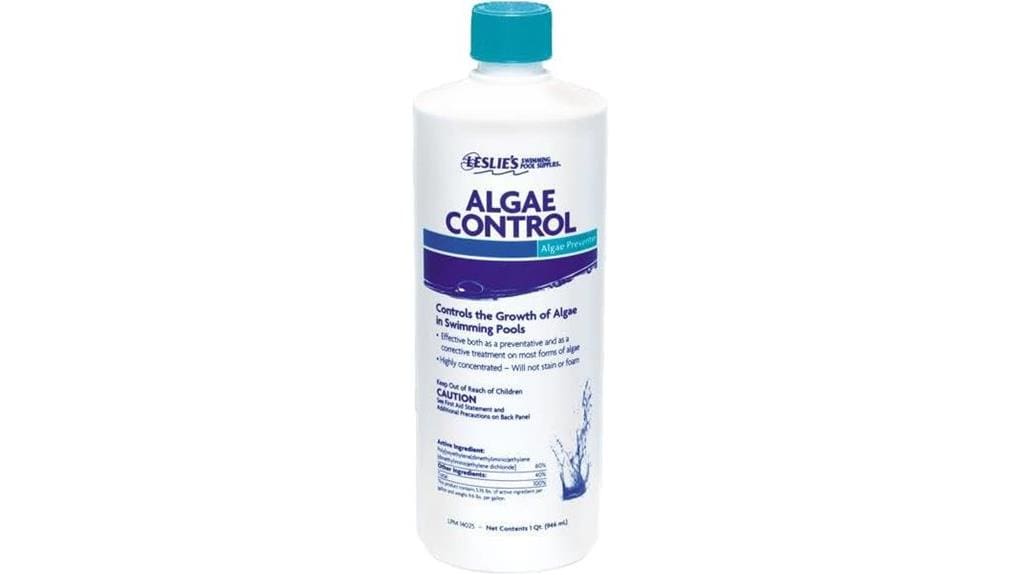
If you want a compact, easy-to-use algae preventative for a small to medium pool or spa, Leslie’s 1-quart polyquat 60% delivers predictable, non-staining protection when used as directed. You’ll get reliable routine prevention, quick knockback of early outbreaks, and no foam or residue to foul skimmers. It’s not an instant cure for heavy blooms and costs more per ounce than bulk sizes, but it’s handy for travel or tight storage—keep going to see usage tips and caveats.
Some Key Takeaways
- 1-quart, 60% polyquat concentrate reliably prevents visible algae for small to medium pools when dosed as directed.
- Best for routine maintenance and early-stage knockbacks, not an instant cure for heavy algae blooms.
- Non-staining, no-foam formula preserves clarity and pool surfaces (vinyl, concrete, tile) with repeated use.
- Compact bottle is convenient for travel properties, spas, and limited storage, though cost per ounce is higher.
- Follow label dilution, add near return jets, wear PPE, and avoid overdosing for optimal, safe performance.
How This 1‑Quart Bottle Fits Your Pool Care Needs
Think of this 1‑quart bottle as a concentrated boost you reach for when you want to keep algae at bay without extra fuss; its 60% polyquat formula treats small to medium pools and spas efficiently, so you won’t be overbuying or storing bulky containers. You’ll like the compact size if you value tidy storage and predictable maintenance. Dosage calculations are straightforward, so you can plan treatments confidently, and seasonal planning becomes simpler when one quart covers scheduled preventative doses. You’ll appreciate non-staining, no-foam performance and clear label directions that help you care for your pool alongside friends and family. This size also makes it easy to follow preventative dosing schedules recommended for residential pools.
Quick Verdict: Real‑World Performance and Effectiveness
While you’ll notice results fastest when used as directed, Leslie’s 60% polyquat formula consistently prevents visible algae in small to medium pools and spas without staining or foaming; it works well as a routine maintainer and can knock back early-stage outbreaks if applied promptly. You’ll find user satisfaction stems from reliable clarity, simple dosing, and no unwanted residues. Expect steady protection rather than instant miracles during heavy blooms. For best outcomes, pay attention to application timing and pool conditions; that consistency builds confidence and community among fellow owners who share tips. Overall, it’s a dependable, user-friendly option. It’s also a convenient choice for homeowners who use pool shock treatments and other maintenance products to keep outdoor pool areas inviting.
How to Use the Polyquat 60% Formula Safely and for Best Results
Now that you know how the 60% polyquat performs in everyday use, here’s how to apply it safely and get the best results. You’ll follow label dosage and make certain proper dilution before adding to your pool or spa; concentrated liquid needs measured handling. Wear personal protective equipment—gloves and eye protection—when pouring or mixing. Add to circulating water near return jets for even distribution and avoid overdosing; less is often better for prevention. Store the quart upright in a cool, dry place away from sunlight and out of reach of kids. Routine, measured use keeps your shared pool clear and welcoming. Store chemicals in cool, dry storage to maintain efficacy and safety.
Measured Results: Algae Types Treated, Non‑Staining Proof, and Foam Behavior
Because Leslie’s polyquat 60% targets a broad spectrum of algae, you’ll see it prevent and control green, black, and mustard/algae types when dosed as directed. You’ll notice green slime clears quickly with routine dosing; stubborn black spot responds over repeated applications but diminishes. Tests show no staining on vinyl, concrete, or tile when used per label, so you can protect surfaces without worry. The formula won’t produce foam, keeping water clear and pump skimming efficient. As a pool-owner ally, you’ll appreciate predictable results, straightforward application, and reassurance that your community of swimmers stays comfortable. For homeowners looking to maintain clear water, pairing treatments with regular phosphate removers can help reduce nutrient-driven algae growth.
Buying Checklist: Cost, Storage, and Who Should Choose the 1‑Quart Size
After you’ve seen how well Leslie’s polyquat 60% handles common algal problems without staining or foaming, consider the buying factors that affect value and convenience. You’ll want a clear price comparison: the 1‑quart bottle costs more per ounce than larger sizes but suits occasional use and targeted shock treatments. For storage, keep it cool, dry, and out of sunlight and reach of children; the small bottle fits a maintenance cabinet. Choose the 1‑quart size if you share tips with neighbors, have limited storage, or need travel portability for vacation properties and mobile spas. It’s practical, not cheapest. Homeowners should also consider pool winterizing techniques that complement algaecide use when closing outdoor pools for the season.
Some Questions Answered
Is This Product Safe for Vinyl and Fiberglass Pool Surfaces?
Yes — you can use it on vinyl and fiberglass surfaces; the polyquat formula supports surface compatibility without staining, so it helps with finish preservation when used as directed. You’ll want to follow label dosages and safety notes to avoid concentrate contact and protect gaskets or adhesives. You’ll feel confident maintaining a shared pool finish; store it properly and keep it away from children to preserve both surfaces and community wellbeing.
Can It Be Mixed With Chlorine Shock Treatments?
Yes — you can mix it with chlorine shock treatments, but follow mixing guidelines and stagger applications. You’ll want to add polyquat after shock has fully circulated and returned chlorine to normal, respecting shock timing to avoid reactions. You’ll feel confident doing this when you wait the recommended interval on labels, wear gloves, and avoid direct splashes. This keeps treatments effective, non-staining, and safe for your pool and fellow swimmers.
How Long After Application Is the Pool Safe to Swim In?
You can usually swim after 15–30 minutes, but check label directions and chemical levels first. For safe waiting time, wait the minimum on the product label and make certain chlorine and pH are in range. If you’re treating heavily or using other chemicals, swimmer restrictions may extend to 24 hours. You’ll feel confident following those steps; they protect you and others and help keep your pool clear and welcoming.
Is This Formula Pet-Safe Around Backyard Pools?
You should avoid direct pet exposure until the product’s treated water meets label safety times and is fully diluted; it’s not marketed as pet-safe. The polyquat formula can pose pet toxicity risks if animals lick treated surfaces or drink pool water soon after application. You’ll want to follow dosage and wait times, keep pets away during treatment, and rinse paws if they contact treated areas—this protects your animals and gives you peace of mind.
Does It Expire or Need Replacement After Opening?
Yes — it has a shelf life and you should replace it if packaging or contents degrade. Store it cool, dry, away from sunlight and check seal integrity after opening; reseal tightly. Watch for expiration signs like clouding, color change, or unusual odor. You’ll want to discard and buy fresh product if any appear. These storage tips help you keep pools safe and your group confident in treatment effectiveness.