You’ll get a fast‑acting, industrial‑strength 94% calcium chloride granule that reliably raises pool hardness by releasing Ca2+ and Cl–; follow the guideline of 6 lbs per 10,000 gallons to boost about 50 ppm, add in increments, circulate, and retest to avoid overshoot. Granules dissolve in 30–60 minutes above 50°F with minimal turbidity if mixed into deep water with a running pump. Wear PPE, keep dry, and store separately from deicing supplies. More practical tips follow.
Some Key Takeaways
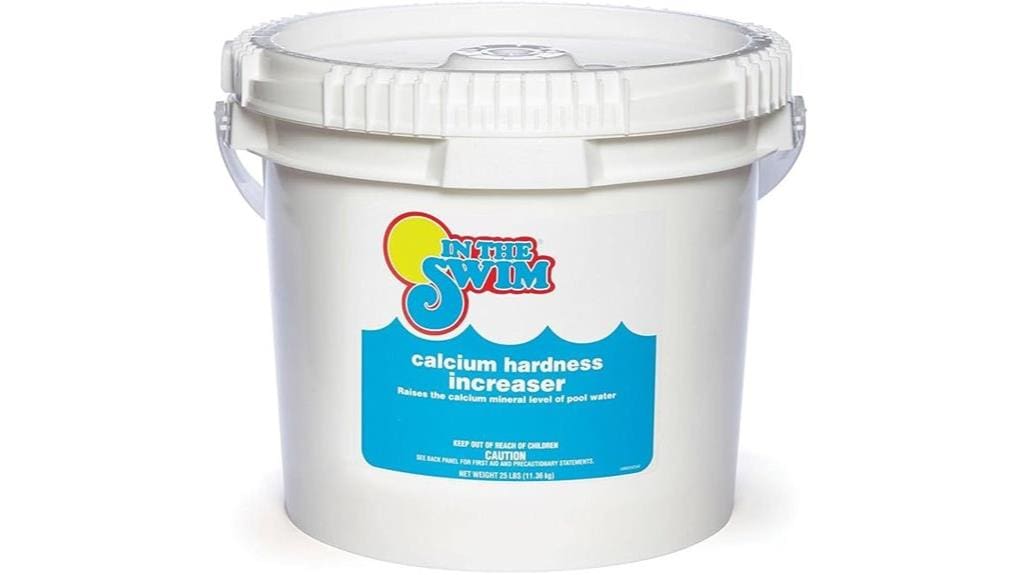
- In the Swim calcium hardness increaser is 94% calcium chloride granules in a 25‑lb bag, formulated for fast, predictable hardness increases.
- Dosage: about 6 lbs per 10,000 gallons raises calcium hardness roughly 50 ppm; add incrementally and retest after mixing.
- Granules dissolve rapidly (30–60 minutes under normal circulation above 50°F) with minimal turbidity when added correctly.
- Use PPE, add to deep water with pump running, store dry and locked to prevent moisture clumping and cross‑contamination.
- Target pool hardness 200–400 ppm to protect plaster, heaters, and pumps; monitor alkalinity and pH to avoid corrosion or scaling.
In the Swim Calcium Hardness Increaser: Quick Product Snapshot
Check and correct calcium hardness quickly with In The Swim Calcium Hardness Increaser, a fast-acting 94% calcium chloride granule sold in a 25-pound bag. You’ll handle a compact, industrial-strength product that’s fast dissolving and engineered for predictable performance. You measure confidently, store confidently—its packaging supports easy storage in shared maintenance areas. You’ll appreciate the clear identity: rapid action, high purity, pool-grade durability. You join a community of pool caretakers who value reliable, no-nonsense solutions. Use protective gear when handling; avoid moisture ingress. The snapshot emphasizes function and fit: potent, portable, and designed to integrate with routine pool care. This product is ideal for homeowners who want to keep pool water balanced and maintain outdoor spaces on their property.
How It Raises Pool Calcium Hardness and Dosage Guide
Measure and add the fast-dissolving 94% calcium chloride granules directly to your pool water, where the compound dissociates into calcium and chloride ions; the liberated Ca2+ increases total calcium hardness, restoring balance and reducing water corrosivity. You’ll calculate calcium dosing from pool volume: 6 lbs per 10,000 gallons raises hardness ~50 ppm. Add in increments, circulate, and retest after full mix. Perform routine solubility testing on a small sample to confirm complete dissolution before bulk dosing. Track cumulative additions to avoid overshoot. This method gives predictable, controllable hardness correction and helps you maintain shared pool integrity. Maintain proper alkalinity levels to support overall water balance and prevent pH swings by monitoring and adjusting as needed, which is especially important for pool alkalinity.
Real-World Performance: Dissolving Speed, Effectiveness, Safety
When you add In The Swim Calcium Hardness Increaser, its 94% calcium chloride granules dissolve rapidly, releasing Ca2+ ions that promptly raise measured hardness; in typical backyard pools a 6 lb dose per 10,000 gallons will mix to effect within 30–60 minutes of steady circulation under normal temperature and flow conditions. You’ll see consistent fast dissolve testing results across temperatures above 50°F; turbidity doesn’t increase when added correctly. Effectiveness is predictable: target ppm changes match dosage math. Follow user safety observations: avoid skin/eye contact, add to deep water with running pump, store dry. Homeowners should keep these chemicals in a cool, dry place and use proper storage containers designed for pool chemicals.
Protecting Your Pool: Surface, Equipment, and Corrosion Prevention
Because calcium hardness directly influences water chemistry, keeping it within the recommended range prevents corrosive conditions that attack metal heaters, pumps, and pool plaster. You’ll maintain substrate integrity by targeting 200–400 ppm, using In The Swim Calcium Hardness Increaser to correct deficits quickly. Combine consistent monitoring with preventive steps: apply surface sealing where appropriate, maintain neutral pH, and perform routine equipment flushing to remove scale and corrosive residues. Treat dosing as part of system maintenance, document changes, and involve fellow pool stewards. This technical, communal approach minimizes pitting, extends equipment life, and preserves finish appearance efficiently. For best results, follow shock treatment best practices for timing and dosage and coordinate with regular calcium adjustments to keep water balanced and clear, especially after heavy use or storms, using shock treatment tips to guide scheduling and application.
Dual Use: Using It as Ice & Snow Melt and Pool-Only Precautions
Although it’s formulated primarily for pools, In The Swim Calcium Hardness Increaser’s 94% calcium chloride granules also serve as an effective industrial-grade ice and snow melt, so you should separate uses and store accordingly to avoid cross-contamination. You’ll use it for sidewalk traction in winter, but never apply pool-designated product near filtration equipment or introduce melted runoff into pool systems. Adopt strict storage precautions: label containers, lock storage, and keep dry to prevent clumping. When switching roles, clean dispensing tools and wear PPE. By following these procedures, you’ll protect pool integrity while benefiting from a trusted community resource. Many homeowners pair proper product selection with natural pH maintenance strategies to keep outdoor water features balanced and safe.
Some Questions Answered
Is This Product Safe to Store Indoors Long-Term?
Yes — you can store it indoors long-term if you manage indoor longevity and storage ventilation properly. You’ll keep the sealed 25 lb bag dry, off concrete, and away from metals and moisture sources to prevent caking and corrosion. Use a ventilated, cool, low-humidity area and a secondary containment tray. You’ll also label it and keep it separate from incompatible chemicals so your household and equipment stay protected and included in safe practices.
Can I Use It With Saltwater Chlorinated Pools?
Yes — you can use it with saltwater chlorinated pools; the product’s calcium chloride raises hardness without harming salt systems when dosed properly. You’ll avoid adverse chemical interactions by dissolving granules fully, adding to circulation, and following dosage guidelines (6 lbs per 10,000 gallons ≈ +50 ppm). You’ll monitor calcium and sanitizer levels afterward, because balanced chemistry preserves equipment and keeps your salt system operating reliably for everyone who shares the pool.
Will It Affect Total Dissolved Solids (TDS) Significantly?
Yes — you’ll see a measurable TDS measurement increase because adding calcium chloride raises dissolved solids. You’ll raise ionic concentration; the Concentration change equals added salt mass divided by pool volume. For example, 6 lbs in 10,000 gallons raises calcium hardness ~50 ppm and increases TDS by roughly the same order. You’ll monitor TDS to maintain balance; the change is significant over repeated applications but modest per single dose.
Are There Any Materials It Can Corrode During Storage?
Yes — you should avoid metal corrosion risks during storage. You’ll store calcium chloride in compatible containers (plastic or polyethylene) because it’s hygroscopic and will corrode carbon steel, aluminum, and some alloys over time. Check container compatibility for seals, gaskets, and fittings to prevent leaks and degradation. Keep it dry, ventilated, and off reactive surfaces. That way you’ll protect equipment, maintain safety, and preserve community trust.
What Personal Protective Equipment Should I Wear When Handling It?
Wear chemical-resistant gloves selection like nitrile or neoprene and splash-resistant eye protection; you’ll prevent skin and eye irritation. Add a long-sleeve shirt, pants, and closed-toe shoes to protect limbs and feet. If you’re handling large amounts or dusty granules, use a NIOSH-approved particulate respirator. Work in well-ventilated areas, keep a buddy nearby for safety, and wash hands after handling to stay safe and included in proper procedures.