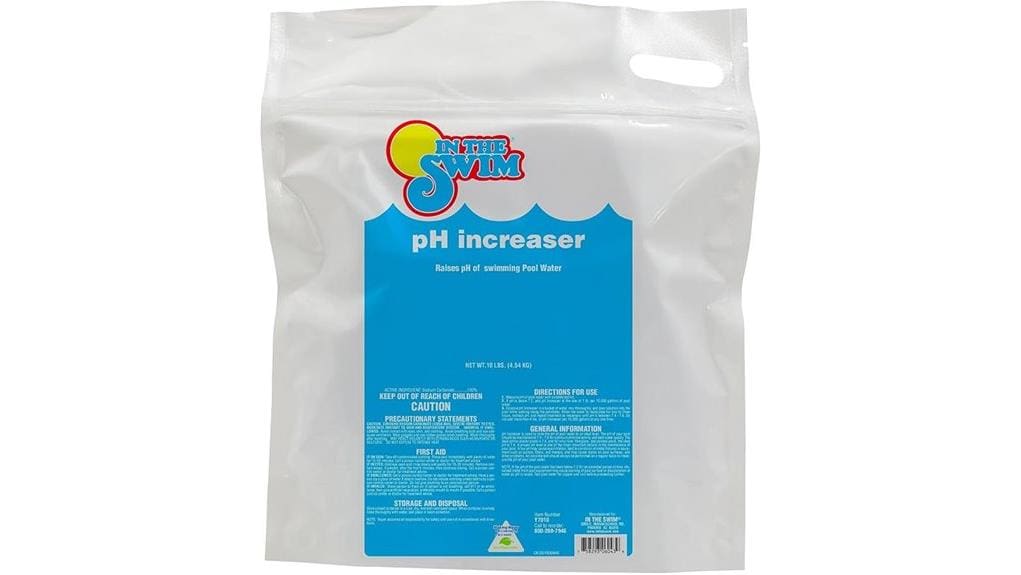
You’ll get a fast, predictable pH and alkalinity boost with In The Swim pH Increaser, a 100% sodium carbonate granular formula that dissolves quickly and raises pH/TA when dosed per label. You’ll measure pool volume, apply incrementally around returns with the pump running, and test after treatment to avoid overshoot. It’s economical and effective for DIYs and pros, though repeated use can drive pH high; continue for full dosing, monitoring, and alternative options.
Some Key Takeaways
- In The Swim pH Increaser is a 100% sodium carbonate granular formula that quickly and predictably raises pool pH and alkalinity.
- It dissolves rapidly, allowing spot or full-pool application around return jets for fast correction.
- Follow label dosing, test after application, and raise pH incrementally to avoid overshooting above 8.0.
- Repeated use can increase carbonate hardness and cause pH drift, so monitor total alkalinity regularly.
- Economical for DIY and pros, best paired with regular shock and tablet chlorine for stable, safe pool water.
Quick Verdict and Who This Product Is For
If you need a fast, reliable way to raise pool pH and alkalinity, In The Swim pH Increaser delivers: it’s a 10‑lb granular soda ash (100% sodium carbonate) that dissolves readily and reliably increases pH and total alkalinity when dosed per label directions. You’ll find it ideal if you’re a DIY pool owner, maintenance pro, or community facility manager seeking consistent corrections. Suitable buyers include those managing seasonal timing for openings and closings, or addressing sudden acidic drops. You’ll apply per instructions, test after dosing, and expect predictable pH stabilization. It’s straightforward, repeatable, and fits group standards. Keeping your pool pH balanced is key to clearer, safer water, especially for homeowners who enjoy outdoor spaces on their property; see more on pool pH balance.
What’s Inside: 100% Sodium Carbonate and What That Means for Pools
In The Swim’s pH Increaser is pure sodium carbonate (soda ash), a strong, soluble alkaline salt that raises both pH and total alkalinity by consuming hydrogen ions and shifting carbonate equilibria toward carbonate/bicarbonate species. You’ll find granular, 100% composition means predictable dosing and rapid dissolution, so carbonate chemistry behaves reproducibly across pools. As you add it, water buffering increases, resisting acid inputs and reducing pH bounce. That enhanced buffering stabilizes chlorine effectiveness and swimmer comfort when you maintain recommended ranges. This formulation contains no fillers or stabilizers, so you’re working with a single active agent and community-trusted control. Homeowners should use it as part of routine maintenance to keep pools balanced and protect outdoor living spaces.
How to Use It Safely and Correctly (Dosing, Application, and Monitoring)
Now that you know the product is pure sodium carbonate and how it affects carbonate chemistry, you’ll need a clear procedure for dosing, applying, and confirming results to raise pH safely and predictably. Measure pool volume, calculate dose per manufacturer guidance, and plan a gradual adjustment: raise pH in increments to avoid overshoot. Do pre dissolving tests if desired—dissolve small batches in a bucket to confirm solubility and concentration. Apply around return jets with pump running; use spot treatment only for local low-pH zones. Monitor pH and alkalinity frequently. Store unopened bags in cool, dry safe storage, sealed and labeled. Many homeowners also appreciate using natural pool care methods to complement chemical adjustments and maintain healthy outdoor water.
Real-World Performance: pH/Alkalinity Results, Dissolvability, and Common Outcomes
When you dose In The Swim pH Increaser, expect predictable, measurable rises in both pH and total alkalinity because the product is pure sodium carbonate and dissolves readily. You’ll see quick stabilization: dissolution speed is fast in typical pool temperatures, so granules disperse and react within minutes to hours depending on circulation. Measure pH and alkalinity post-application to confirm target ranges (7.2–7.6 pH; recommended alkalinity range). In practice you’ll rarely chase persistent alkalinity drift when dosing correctly; occasional small adjustments are normal. You’ll appreciate the consistency and the community of users who value reliable, repeatable results. For homeowners maintaining outdoor pools, using proper shock treatment practices alongside pH increasers helps keep water clear and safe.
Pros, Cons, and Alternatives to Consider
Although soda ash gives you fast, predictable pH and alkalinity increases, you should weigh its strengths and limits against alternatives. You’ll benefit from rapid correction, easy dissolution, and straightforward dosing with In The Swim’s 100% sodium carbonate, making routine maintenance efficient. Cons: repeated use raises carbonate hardness and can push pH above 8, risking irritation; you must monitor alkalinity to prevent pH bounce. For cost comparison, granular soda ash is economical per dose, but liquid or muriatic acid for opposing adjustments change overall expense. Consider brand alternatives like trisodium phosphate blends or sequestrants for specific water chemistry needs and community-tested options. For regular poolkeepers, pairing tablet-based chlorine products with proper pH management is a reliable way to keep outdoor swimming areas safe and enjoyable, especially when using chlorine tablets compatible with sodium carbonate adjustments.
Some Questions Answered
Is This Product Safe for Saltwater Pools and Swim Spas?
Yes — you can use it in saltwater pools and swim spas, but you should monitor levels closely. Sodium carbonate raises pH and alkalinity effectively, yet elevated pH increases saltwater corrosion risk on metal fittings and spa equipment. You’ll want to dose per instructions, dissolve or broadcast evenly, retest pH/alkalinity, and adjust to the 7.2–7.6 pH range. That protects swimmers and extends equipment life.
Can It Be Used With Vinyl or Fiberglass Liners?
Yes — you can use it with vinyl or fiberglass liners. You’ll protect liner compatibility and material integrity by dissolving granules fully, adding to deep water with circulation off the skimmer returns, and following dose guidelines. After dosing, test pH and alkalinity to confirm 7.2–7.6 pH and stable alkalinity. If you or others notice discoloration or surface changes, stop use and consult a professional to preserve comfort and shared pool ownership.
Does It Affect Calcium Hardness Levels?
No — it won’t directly change calcium hardness; sodium carbonate raises pH and alkalinity but lacks calcium ions, so calcium interaction is minimal. You’ll still want routine hardness testing because pH and alkalinity shifts can influence scale formation or dissolution, indirectly affecting measured hardness. Test after adjustments, log results, and community-share tips if levels drift; that keeps your pool balanced and helps everyone maintain target calcium hardness safely.
How Long After Application Before Swimming Is Safe?
You should wait at least 15–30 minutes after applying granular sodium carbonate before swimming, longer if you added a large dose. Circulate for 15–30 minutes, then test pH and alkalinity. Maintain testing frequency daily until stable, then weekly. Don’t swim until pH sits between 7.2–7.6 and alkalinity is within recommended range. This keeps everyone safe and part of a responsible pool-care community.
Is It Biodegradable or Environmentally Safe?
No — it’s not biodegradable; sodium carbonate itself dissolves but isn’t classified as biodegradable, and the product can affect aquatic toxicity if discharged untreated. You should avoid releasing treated or concentrated solutions to waterways, follow disposal and dilution guidance, and prefer products with biodegradable packaging where possible. You’ll protect the community and environment by testing, neutralizing spills, and disposing of residues per local regulations to minimize aquatic toxicity risks.