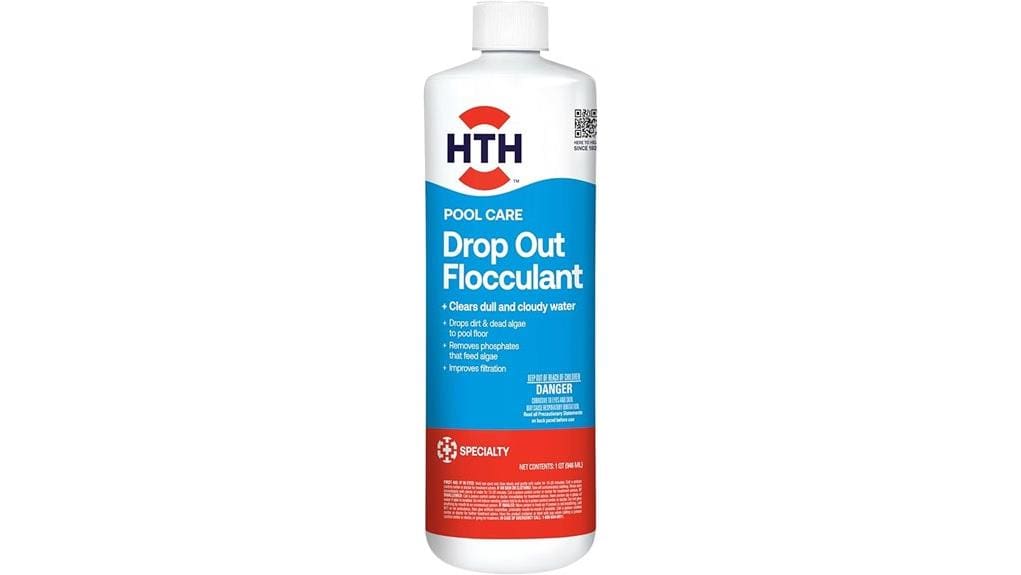
If your pool clouds from fine particles or dead algae and you vacuum to waste, HTH 67229 Drop Out flocculant binds fines into sinkable flocs so you can vacuum them away with minimal filter loading. It’s pH‑neutral, salt‑system compatible, and works after you balance sanitizer and alkalinity; apply near returns, let flocs form 8–24 hours, then vacuum slowly to waste. A 32‑oz bottle suits spot treatments—keep going and you’ll find detailed dosing and troubleshooting next.
Some Key Takeaways
- HTH 67229 Drop Out is a 32-oz flocculant ideal for clearing fine particles, pollen, silt, and dead algae via vacuum-to-waste.
- It uses high-molecular-weight polymers to aggregate particles into fast-settling flocs without significantly altering pool pH.
- Best results require balanced sanitizer and alkalinity, evening dosing near returns, brief circulation, then 8–24 hours undisturbed settling.
- After settling, vacuum slowly to waste (bypass the filter), then run filtration and follow with recommended shock or clarifier if needed.
- Cost-effective for small to medium pools needing occasional spot treatments; consider larger sizes for frequent or large-volume use.
Quick Verdict : Who Should Buy HTH 67229 Drop Out Flocculant
If your pool is clouded by fine particles or dead algae and you can vacuum settled debris directly to waste, HTH 67229 Drop Out Flocculant is for you; it quickly gathers suspended solids so they sink for efficient removal without affecting pH or damaging saltwater systems or filters. You’ll use it when routine filtration and clarifiers fail. It’s ideal for pool owners who vacuum to waste and want rapid restoration with a single 32 oz treatment. Apply per label, wait settlement, then vacuum. It reduces required maintenance frequency versus repeated shock/clarifier cycles, fitting teams that value efficient, communal upkeep. Improve pool water clarity with the right filter powder to maximize results.
How HTH Drop Out Flocculant Works and What It Clears
Having decided this flocculant fits your needs, here’s how it works and what it clears: HTH Drop Out contains high-molecular-weight polymers that neutralize particle surface charges and bind fine suspended solids into larger aggregates (flocs), causing them to settle rapidly to the pool floor for vacuuming to waste. You’ll see rapid particle aggregation of dust, pollen, fine silt, and dead algae cells that evade filtration. The product’s mechanism prioritizes sediment removal over filter loading, so you can vacuum to waste without clogging equipment. It’s compatible with salt systems, won’t alter pH, and restores clear water efficiently. Many homeowners use it alongside pool clarifiers to maintain crystal-clear outdoor spaces.
Step-by-Step Application and Best Practices for Fastest Clearing
When you’re ready to clear cloudy water fast, start by testing and balancing sanitizer and alkalinity so the floc can work efficiently; then lower the pump speed or turn it off to let flocs form without shear. You’ll apply evening dosing near return jets, following label dose for 32 oz. Circulate briefly, then let settle 8–24 hours. Use marker on pool deck to note settled zones and plan pre vacuuming route. Vacuum slowly to waste, avoiding filter recirculation. After debris removal, run filtration, monitor chemistry, and perform post treatment shock or clarifier per instructions to restore clarity and stability. For best results, remember that proper shock treatment timing and compatible products help maintain long-term pool water quality.
Compatibility, Safety, and Common Concerns (Salt Pools, pH, Filters)
After you’ve vacuumed settled floc and restarted filtration, check compatibility and safety factors to protect pool equipment and water chemistry. You’ll find HTH 67229 formulated for saltwater compatibility, so it won’t impair chlorine generators or saline systems when used per directions. It’s pH-neutral in practice, so you won’t need major pH adjustments after treatment. For filtration safety, avoid vacuuming through the filter; route waste to bypass media and prevent clogging. Wear gloves and eye protection during handling. Inspect skimmer baskets and pump baskets after vacuuming. Follow manufacturer dosage and local disposal rules to maintain shared pool stewardship. HTH products are commonly recommended for residential use due to their pool care focus and availability.
Value Assessment : Cost, Container Size (32 Oz), and When to Choose Alternatives
A single 32‑oz container of HTH 67229 provides a cost-effective option for spot treatments on small to medium pools, but you should match dose rates to pool volume and frequency of cloudy events to assess true value. You’ll evaluate price per ounce relative to treatment frequency; one quart covers limited uses, so calculate ounces required per treatment and annual need. Choose alternatives when you service larger pools, frequent turbidity, or want fewer handling steps—look for bulk formulations or alternative sizes that reduce unit cost and labor. You’ll prefer the 32‑oz for occasional, precise vacuum‑to‑waste applications. Homeowners who enjoy their outdoor living spaces often prioritize low-maintenance solutions like automatic pool vacuums when selecting pool care products.
Some Questions Answered
How Long Before I Can Swim After Using This Flocculant?
You can usually swim once the flocculant has settled and you’ve vacuumed the pool to waste, typically 24 hours. Follow safety precautions: check that water is clear, sanitizer levels are back in recommended ranges, and no visible residue remains. Don’t run water through the filter during vacuuming. You’ll feel included in pool care when you follow these steps precisely; they protect you and your equipment for safe, clear swimming.
Can I Mix This Flocculant With Algaecide Treatments?
No — you shouldn’t mix the flocculant directly with algaecide. You’ll perform compatibility testing first, then use treatment sequencing: apply flocculant, let solids settle, vacuum to waste, and only afterward add algaecide if needed. This avoids interference and protects filtration. Follow package directions and wait recommended intervals between chemicals. You’ll maintain consistent results and keep your pool equipment safe while staying part of a responsible pool-care community.
Does It Leave Any Residue or Staining on Pool Surfaces?
No — it typically won’t leave residue or staining when used per instructions. You’ll perform residue testing on a small, inconspicuous area to confirm surface compatibility before full application. Apply, let solids settle, then vacuum to waste; avoid circulation through filters. If you follow dosing and compatible-surface procedures, you’ll maintain pool finishes and equipment. The community of users trusts this protocol for reliable, stain-free results.
How Many Treatments Does One 32 Oz Bottle Provide?
One 32 oz bottle usually provides about 4–8 treatments depending on treatment frequency and pool size; you’ll calculate dosage using dosage calculations based on gallons (typically 4–8 oz per 10,000–20,000 gallons). You’ll adjust dosage calculations for heavier cloudiness or repeat treatments, and plan treatment frequency accordingly. You’ll feel supported knowing shared examples and clear dosage calculations help you match bottle volume to your pool’s needs.
Can I Use It in Above-Ground Pools and Vinyl Liners?
Yes — you can use it in above-ground pools and with vinyl liners. You’ll find safe compatibility when applied per instructions; it’s liner friendly maintenance that won’t harm vinyl or filters. Apply directly, let solids settle, then vacuum to waste to protect circulation. Don’t circulate settled material through the filter. You’ll join others who maintain clear water reliably by following dosage and waste-vacuum procedures for peak, equipment-safe results.