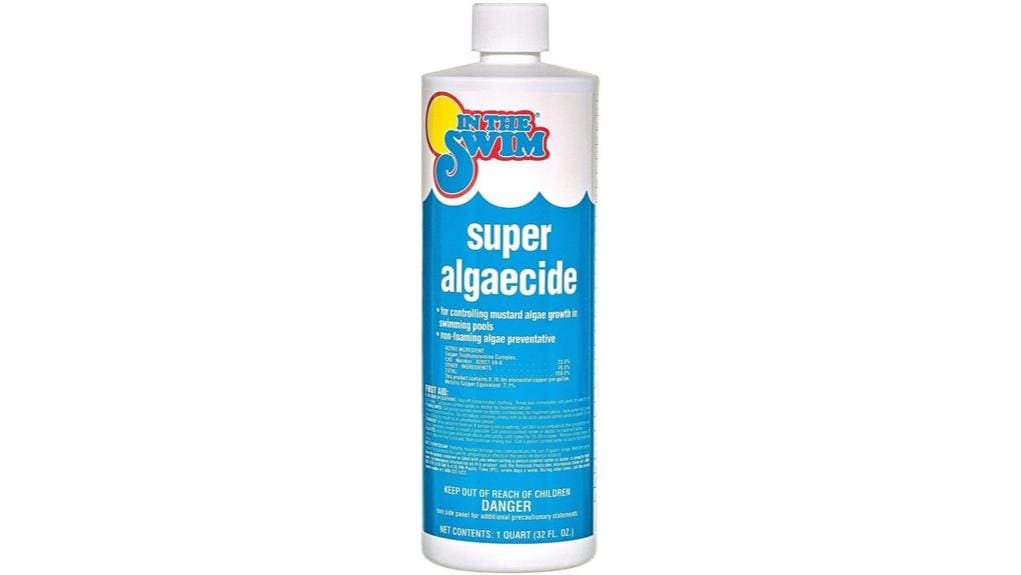
You’ll get a concentrated, low-odor copper triethanolamine algaecide that’s formulated to keep ionic copper soluble and evenly distributed with measured, low-volume doses. It rapidly suppresses yellow and mustard algae and gives sustained residual activity while chelation helps reduce immediate staining. Apply with circulation running, avoid skimmer addition, and monitor cumulative copper to prevent long-term marks; it’s compatible with common pool surfaces and chlorine. Keep going to see detailed use, safety, and alternatives. in the swim product features and benefits include its ability to enhance water clarity and improve overall pool health. The formulation is designed to minimize the need for frequent adjustments, making maintenance easier for pool owners. Additionally, its eco-friendly components ensure that it’s safe for swimmers while effectively tackling algae growth.
Some Key Takeaways
- Highly concentrated copper triethanolamine formula (23.5% copper) rapidly suppresses yellow and mustard algae with measured low-volume dosing.
- Chelated copper (7.1%) stabilizes ions, reducing precipitation and immediate staining compared with non-chelated products.
- Designed for even dispersion and prolonged residual activity when applied with pool circulation, offering predictable long-term control.
- Safe for vinyl, concrete, and fiberglass when dosed precisely; follow label instructions and avoid skimmer application.
- Cost-effective per treatment in a quart bottle, but monitor cumulative copper and consider alternatives for low-copper preferences.
How This Algaecide Works and What’s in the Bottle
Understand how it works: this algaecide combines 23.5% copper triethanolamine and 7.1% chelated copper to deliver a concentrated, low-odor treatment that attacks yellow and mustard algae while minimizing staining by keeping copper in solution. You’ll appreciate the clear copper chemistry: chelation stabilizes ionic copper, reducing precipitation and stains while maintaining biocidal availability. The application mechanism relies on measured, low-volume dosing that disperses active copper uniformly across the water column, targeting algal cells. You’ll follow concise instructions, mix or broadcast per label, and feel confident you’re using a technically sound, community-oriented solution that’s safe and reliable. Customers who use this product often appreciate its compatibility with outdoor spaces and pool maintenance routines.
Real-World Performance: Algae Control, Longevity, and Stain Protection
When you treat a pool with In The Swim Super Algaecide, you’ll see rapid suppression of yellow and mustard algae thanks to its high copper concentration and chelation chemistry. You’ll notice sustained clarity; small, measured doses deliver prolonged residual activity that reduces algae recurrence over weeks. The formula’s chelated copper minimizes immediate staining while providing stain protection as biocidal copper binds cell walls. Monitor cumulative copper buildup if you dose frequently to maintain balance and avoid stains long-term. In practice, you’ll appreciate predictable, long-lasting control that integrates with routine maintenance and with other pool-keeper peers seeking reliable results. Regular shock treatment and proper maintenance help keep your pool sparkling and healthy, especially when combined with pool shock best practices.
How to Use It Safely: Dosing, Timing, and Immediate Swimmability
Having seen how well the algaecide suppresses yellow and mustard algae over time, you should focus next on precise dosing, timing, and safety to get those results without staining or irritation. Measure per manufacturer instructions—small, concentrated doses reduce staining risk. Apply evenly with circulation running; avoid adding directly to skimmer. Time treatments during low sun exposure to limit photo-degradation and respect pool etiquette by informing users before application. The formula permits immediate swimming, but you should wait a brief circulation period if heavy dosing is used. Wear gloves and goggles, store securely, and maintain shared-responsibility norms for safe pool care. Consider keeping essential pool safety gear on hand to respond quickly to any emergencies.
Who Should Buy It: Pool Types, Algae Problems, and Compatibility
If you manage an above-ground or inground pool and routinely battle yellow or mustard algae—or want a preventative, low-odor option—this concentrated copper-based algaecide is a strong fit. You’ll find it appropriate if you maintain vinyl, concrete, or fiberglass shells and need targeted control of mustard/yellow strains. It’s less useful for tiny inflatable pools but still safe if dosed accurately. The formula offers chlorine compatibility when used per label, so it integrates with standard sanitization routines. Choose it if you value concentrated dosing, stain-minimizing copper action, and a community of owners seeking reliable, low-odor maintenance. Proper phosphate removal helps keep your pool sparkling and improves overall algae control.
Value Check: Price, Bottle Size, and Alternatives to Consider
Because the quart bottle packs a highly concentrated formulation, you’ll need smaller, more precise doses than with many competing algaecides, which stretches the product’s value across multiple treatments. You’ll find the upfront price comparison favors this quart if you measure cost per treatment rather than per ounce. The bottle size suits seasonal and routine use without frequent repurchases. If you prefer lower copper exposure or non-metal alternatives, evaluate alternative brands offering polyquat or biguanide-based formulas. Compare ingredients, treatment rates, and stain risk. Buy with fellow pool owners’ feedback in mind so you feel confident and supported in your choice. Consider also how eco-friendly pool care practices, like using reduced-chemical strategies, can complement your product choice.
Some Questions Answered
Does It Affect Pool Water Chemistry or Require pH Adjustments?
It generally won’t force you to adjust pH; you can add it without routine pH changes. The copper-based formula provides algae resistance and minimizes disruptive chemical interactions with sanitizer when used per directions. Still, you should monitor chlorine and pH as part of normal maintenance because copper levels and sanitizers can interact and affect effectiveness. Follow dosing guidelines and test water after treatment to make certain balanced chemistry and shared pool safety. poolife super algae bomb benefits include its ability to enhance water clarity and improve the overall health of the swimming environment. Users often report a significant reduction in algae growth, making maintenance easier and more efficient. This product not only promotes a cleaner pool but also extends the lifespan of your pool equipment by preventing buildup and corrosion.
Can It Be Used With Saltwater Chlorine Generators?
Yes — you can use it with saltwater chlorine generators. You’ll maintain salt system compatibility if you follow dosing and avoid overdosing; chelated copper minimizes electrolytic interactions with the cell. You should monitor free chlorine, copper levels, and cell condition regularly, and rinse the cell if deposits form. By sharing these precautions, you’ll protect your system and enjoy effective algae control while belonging to a community that values safe pool care. When considering options for maintaining a clean pool, the Pool Mate Premium Algaecide Review highlights its effectiveness in preventing algae growth while being safe for various pool systems. Users have reported noticeable improvements in water clarity and overall pool health after incorporating this product into their routine. Ensure that you adhere to the recommended application instructions for optimal results.
Is It Safe for Vinyl, Fiberglass, and Plaster Surfaces?
Yes — you can use it on vinyl, fiberglass, and plaster surfaces; the product shows broad surface compatibility. You’ll want to perform material testing on a small, inconspicuous area first to confirm no discoloration on your specific finish. Apply the recommended dose, monitor for staining, and rinse if needed. This approach keeps your pool materials protected and helps you confidently maintain a shared standard of care.
Will It Discolor Swimsuits or Pool Toys?
Unlikely — you won’t typically see color fading or fabric staining from proper use. The copper-based formula is low-odor, non-foaming, and designed to dilute quickly, reducing risk to swimsuits and pool toys. To protect fabrics, rinse gear after swimming and avoid direct concentrated contact during application. Following dose instructions preserves material color and integrity, and helps you feel confident and included in shared pool use.
How Should I Store Leftover Product After Opening?
Store leftover product in its original container, tightly sealed, and keep it in cool, dark storage away from heat or direct sunlight. You’ll label the bottle with the opening date and keep it upright to prevent leaks. Treat it as a hazardous pool chemical: out of reach of children and pets, separate from acids and oxidizers. You’ll follow local disposal rules if it degrades or is unused long-term.