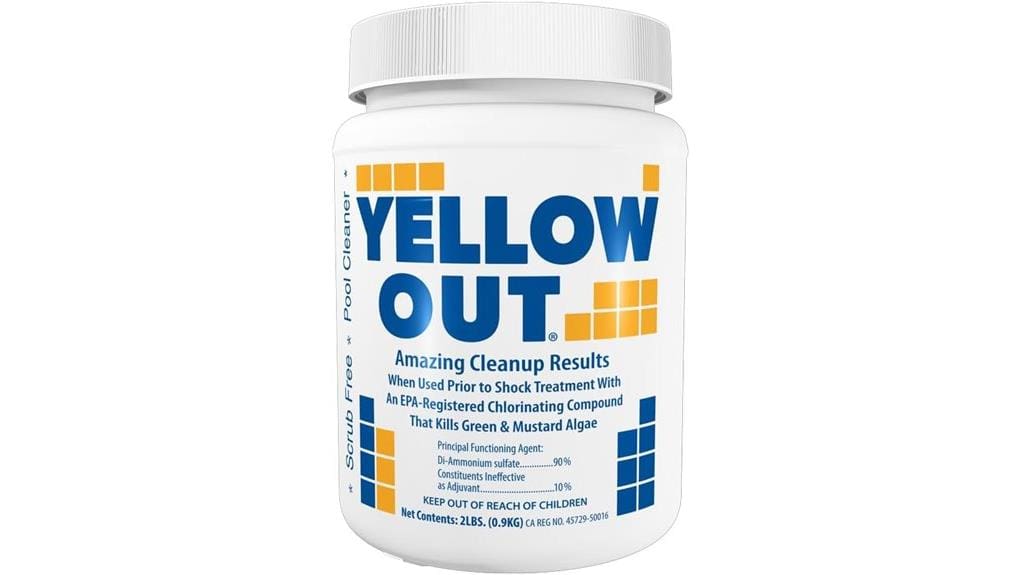
You’ll get a 2 lb chlorine-compatible enhancer that you add alongside regular pool shock to accelerate oxidative breakdown of green, yellow, brown, and pink algae. It raises shock efficacy without changing filtration or harming vinyl and works with chlorine generators when you follow label dosing. Test free chlorine and pH, remove debris, circulate, dose Yellow Out, then apply shock and retest after 4–6 hours. Continue and you’ll find stepwise instructions, safety notes, and buyer guidance.
Some Key Takeaways
- Yellow Out is a 2 lb chlorine shock enhancer designed to accelerate algae breakdown when used alongside regular pool shock.
- It boosts oxidative power to improve removal of green, yellow, brown, and pink algae without extra brushing.
- Safe for vinyl and common pool surfaces and compatible with chlorine generators when used per label instructions.
- Use protocol: test free chlorine/pH, remove debris, add Yellow Out while circulating, then broadcast shock and run filter.
- Not a standalone shock—may require multiple packages for large pools and functions best as an adjunct to regular treatments.
What Yellow Out Is and How It Works
Yellow Out is a 2 lb. chlorine shock enhancing treatment formulated to accelerate and boost your pool’s sanitizing process; you add it alongside regular pool shock to target and break down green, yellow, brown, and pink algae more effectively. You’ll follow measured dosing instructions, combining Yellow Out with shock to raise oxidative capacity without altering routine filtration. The formulation complements chlorine generators and is safe on vinyl and other surfaces. Regular water testing guides timing and dosing, enabling proactive algae prevention and staged interventions. You’ll appreciate the clear protocol: test, dose, circulate, retest—so your group maintains trustworthy, shared pool standards. It’s a convenient option for homeowners who want to Keep Your Pool Sparkling with shock treatment and simple maintenance steps.
Does Yellow Out Actually Remove Algae and Enhance Shock?
You’ll see faster algae breakdown when you add Yellow Out alongside your regular pool shock because its formulation boosts the oxidative power of the treatment without changing filtration routines. You’ll observe reduction in green, yellow, brown, and pink algae during routine algae detection checks; results are consistent with the product’s gentle, non-toxic profile. You’ll maintain your chlorine generator settings and monitor residuals, focusing on precise shock timing to maximize synergy. You’ll feel reassured as the treatment enhances shock efficacy without extra brushing. You’ll belong to a community prioritizing methodical, safe pool care and predictable remediation outcomes. Homeowners often combine algaecide use with regular shock treatments to keep outdoor pool spaces clear and healthy.
How to Use Yellow Out With Pool Shock (Step-by-Step)
Start by prepping the pool for treatment: test and record free chlorine and pH, confirm the filter is running, and remove any large debris so the shock and Yellow Out can act directly on algae. Measure the correct dose of pool shock for your volume, then add Yellow Out per label while circulating. Apply shock immediately (pre shock sequence), broadcasting evenly around the perimeter. Maintain filtration and avoid swimmers. Check chlorine after 4–6 hours; adjust if needed. After levels drop to safe range, perform post application testing and resume normal use. Log doses and observations for consistent future treatments. Also consider regular use of pool opening chemicals to ensure a sparkling start each season.
Compatibility, Safety, and Pool Surface Considerations
After you complete the shock application sequence, verify compatibility and surface safety before declaring the job finished: Yellow Out is formulated to work with pools using chlorine generators and is safe on all common surfaces, including vinyl liners, so you can apply it without changing filtration hardware or liner care routines. You’ll inspect material compatibility by checking manufacturer specs and testing a small, discrete area. Monitor chlorine interaction rates and allow circulation to dilute concentrates. Watch for chemical residues and measure free chlorine until levels normalize. If you observe surface discoloration, stop treatment, document findings, and consult support for remediation steps. For ongoing maintenance, pair treatments with regular chlorine tablet replacement and testing to keep levels steady.
Pros, Cons, and Who Should Buy Yellow Out
Who benefits most from Yellow Out, and what trade-offs should you expect? You’ll gain targeted algae removal, gentle formulation, and compatibility with chlorine generators and all surfaces; it enhances shock without harsh chemicals. Pros: effective on green/yellow/brown/pink algae, simple no-brush application, non-toxic. Cons: 2 lb size may require multiple purchases for larger pools; it’s an adjunct, not a standalone shock. If you value community-tested reliability, you’ll fit in. Perform a color comparison against alternatives and a clear price analysis to decide cost-per-treatment. Buy if you want a safe, complementary algae enhancer. Homeowners who enjoy maintaining outdoor pool spaces may find it especially useful for routine algae control and compatibility with robotic pool vacuums.
Some Questions Answered
Can Yellow Out Be Used in Indoor Pools?
Yes — you can use yellow out in indoor pools, provided you address ventilation concerns and follow dosing instructions. You’ll treat algae without causing pool surface discoloration when applied properly; the product’s gentle formulation minimizes harsh chemical exposure. You’ll monitor air exchange to avoid vapor buildup, test water chemistry before and after dosing, and make certain even distribution. You’ll belong to a careful user group prioritizing safety and surface integrity.
Does It Affect Pool Water Chemistry Tests?
No — it won’t cause pH interference or test falsification when used as directed. You’ll measure water chemistry normally; the treatment enhances shock without altering test reagents. Systematically wait the recommended contact time, then retest to confirm stabilized readings. If you’re part of a pool-care group, follow shared protocols for timing and sampling to avoid transient anomalies and guarantee consistent, reliable results for everyone maintaining the pool.
How Long After Treatment Can Pets Swim?
You should wait at least 24 hours before allowing pets back into the pool to ensure pet safety. Measure chlorine and pH; confirm free chlorine has returned to normal operational range and combined chlorine is low. Rinse pets after swimming. If you used pool shock concurrently, extend wait time until test strips or a meter show safe levels. Trust community-tested procedures and follow them consistently for shared safety and reassurance.
Is It Safe to Mix With Algaecides or Clarifiers?
Yes — you can mix it, but observe chemical compatibility and proper application sequencing. You’ll add the treatment with shock first to optimize oxidization, wait recommended circulation time, then introduce algaecides or clarifiers per label instructions. Don’t combine products simultaneously; stagger dosing to avoid reactions. You’ll protect pool chemistry by testing levels between steps. This methodical approach keeps you and fellow pool owners safe and confident.
Where Is Yellow Out Manufactured?
The product is manufactured in the United States. You’ll find the manufacturing location listed on packaging or the company website, and the production facility follows industry standards. When you check, note the production facility address and any stated certifications. You’ll want that transparency so you feel included in safe sourcing. If you need, you can contact customer service for batch-specific production facility details and validation of manufacturing location.