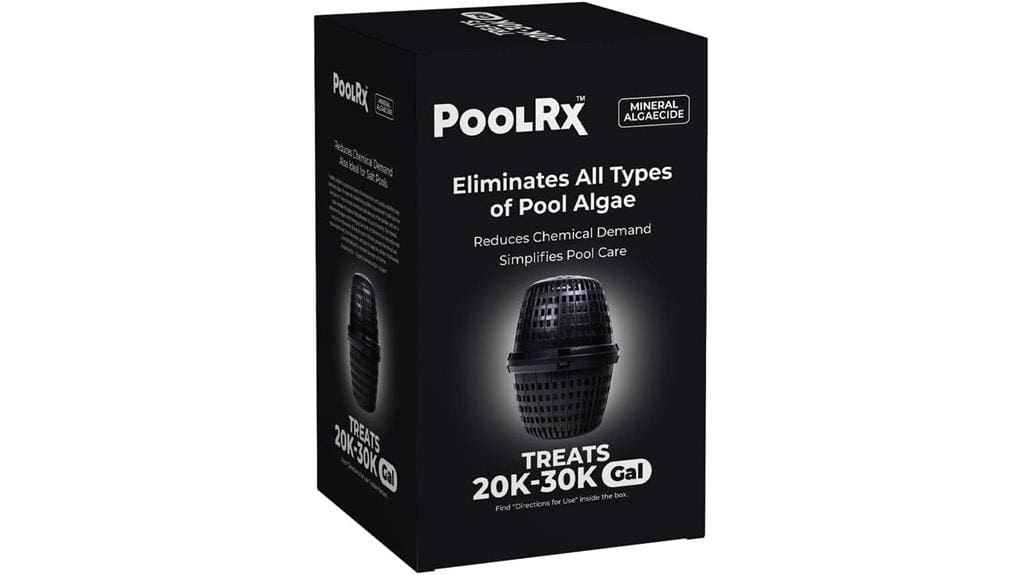
You’ll find PoolRx Pool Unit #101066 is a discontinued one‑pound algaecide tablet that treats 20,000–30,000 gallons with steady, up‑to‑six‑month dosing and annual replacement recommended. You’ll place it in a pump or skimmer basket for continuous release, helping cut algae blooms and reduce shock frequency while aiding mineral sequestration. It’s simple and low‑maintenance but lacks dose adjustability and may mix unevenly in complex plumbing. Keep seller verification and warranty in mind if you want more specifics.
Some Key Takeaways
- One-pound PoolRx Pool Unit #101066 is a slow-release algaecide tablet treating 20,000–30,000 gallons for up to six months.
- It provides steady continuous dosing, reducing visible algae and lowering need for frequent shock treatments.
- Place in pump or skimmer basket for best flow contact; check monthly and rinse debris for consistent release.
- Limitations include no dose adjustability, possible uneven distribution in large systems, and chemical interaction risks.
- Product is discontinued but still sold through some third-party sellers; compare sources, prices, and return policies.
Product Snapshot: What PoolRx Pool Unit #101066 Is and Who It’s For
The PoolRx Pool Unit #101066 is a compact, black algaecide tablet designed to sit in your pump or skimmer basket and continuously treat 20,000–30,000 gallons of water, reducing the need for frequent dosing of other chemicals. You’ll appreciate this black cartridge’s straightforward form: one-pound tablet, 3.25×3.25×4.25 inches, rated up to six months’ effectiveness and replaced annually per guidance. Target users include pool owners wanting simplified maintenance, small commercial operators, and spa caretakers seeking consistent algae control. You’ll find it evaluative and reliable, with discontinued status noted, yet still relevant for those valuing low-effort, community-minded pool care. It is particularly useful for homeowners focused on maintaining clear water while managing nutrient levels with phosphate removers.
How It Works and What to Expect From Performance
When you drop the PoolRx Pool Unit #101066 into your pump or skimmer basket, it steadily releases an algaecide formulation that keeps 20,000–30,000 gallons of water inhospitable to common algae strains for up to six months, cutting down on shock treatments and frequent manual dosing. You’ll notice continuous diffusion of active ingredients, maintaining consistent coverage rather than episodic spikes. Performance feels reliable: fewer visible blooms, clearer water, and reduced reliance on supplemental algaecides. The unit also aids mineral sequestration, limiting scale-related cloudiness. Expect steady, hands-off control that complements your routine and connects you to a community valuing simple, effective pool care. Many homeowners appreciate that algaecide products like this are designed specifically for residential outdoor pool maintenance, helping preserve clear outdoor spaces and making seasonal care more manageable.
Installation, Maintenance, and Lifespan in Real Pools
Having seen how PoolRx steadily prevents algae and reduces chemical swings, you’ll want to get installation and upkeep right to realize those benefits in real pools. Place the black 101066 tablet in your pump or skimmer basket per installation tips: secure it so flow contacts the tablet without obstructing skimmer function. Check baskets monthly, rinse debris, and make certain consistent circulation. Lifespan monitoring matters—expect up to six months effective dosing and consider replacement at manufacturer guidance intervals. Track residual clarity and tablet size; keep a shared log with fellow pool users so everyone feels responsible and informed. For homeowners who enjoy their outdoor spaces, proper skimmer installation and product selection are key to keeping a pool healthy and inviting, so learn more about skimmer installations.
Real-World Pros, Cons, and Alternatives to Consider
If you want a low-maintenance way to cut algae and chemical swings, PoolRx #101066 delivers clear advantages—consistent algicide release for up to six months, easy placement in a pump or skimmer basket, and reduced need for frequent shock treatments. You’ll appreciate fewer dosing steps and steady control, but note cons: limited dose adjustability, possible uneven distribution in large plumbing systems, and potential chemical interactions with certain shock or clarifier chemistries. Consider alternatives like automated liquid feeders, slow-release copper/silver systems, or routine manual shocking if you want control flexibility. Factor environmental impact and community pool norms when choosing. Natural enzyme products can complement such systems by breaking down non-living organic waste to reduce demand on sanitizers and improve water clarity, making them a useful addition to pool maintenance when used appropriately with other treatments and equipment natural enzymes.
Buying, Replacement, and Support Details (Availability, Warranty, Cost)
Although PoolRx #101066 is discontinued, you can still find units through some third-party sellers and leftover retail stock, so check specialty pool suppliers, online marketplaces, and local pool stores for availability. You’ll compare prices—expect variability—and confirm shipping options before buying; some sellers offer tracked, expedited, or combined shipping. Ask about return policy and warranty eligibility up front; manufacturer warranty is available via customer service but may require proof of purchase. For replacement planning, budget for roughly annual replacement despite up-to-six-month effectiveness. Join user groups to share supplier leads, negotiate better costs, and confirm authentic stock. Many homeowners also use pool mineral systems to enhance water quality and reduce chemical usage in outdoor pools.
Some Questions Answered
Does It Affect Pool Water Chemistry Test Readings?
Yes — it can subtly influence some readings. You’ll rarely see sensor interference with electronic testers, but organic leaching may alter colorimetric strips or digital sensors over time. Reagent depletion can occur faster if you test immediately downstream of a placed unit, giving low or skewed results. You should sample from the pool away from the skimmer/pump, wait a few hours after adding or replacing the unit, and compare multiple test methods for confidence.
Is It Safe for Vinyl and Fiberglass Liners?
Yes — you can use it with vinyl and fiberglass liners. The vinyl safe formula minimizes risk of discoloration or degradation, and fiberglass compatibility is supported when placed in the pump or skimmer basket as directed. You’ll still monitor chlorine and pH regularly, but you’re joining others who’ve found it gentle on common liner materials. Follow manufacturer placement and replacement guidance to keep your pool materials protected and effective.
Can Pets or Wildlife Be Harmed by Contact?
Direct contact is unlikely to cause immediate harm, but you shouldn’t assume zero risk. You’ll want to minimize pet exposure to the unit and avoid wildlife ingestion of tablets or residues. If pets lick or chew the unit, call your vet; if wildlife eats pieces, notify local wildlife rehab. Store and install the tablet securely in the pump or skimmer basket, check periodically, and keep pool edges supervised to protect animals.
Is the Tablet Recyclable or How to Dispose?
No, the tablet isn’t recyclable; you’ll handle tablet disposal as chemical waste. You should follow local hazardous-waste rules, don’t toss tablets in regular trash or recycling. Contact your municipal waste authority or hazardous waste facility for recycling options and drop-off instructions. If instructions aren’t available, double-bag and seal for hazardous pickup. You’ll protect your community and environment by choosing proper disposal and using designated waste facilities.
Does It Have a Child-Resistant Packaging Feature?
No — it doesn’t include a child-resistant packaging feature. You’ll want to assess the product’s packaging durability and add safety measures yourself; store the unit locked and out of reach. As a caring community member, you’ll appreciate labeling and secondary containment to prevent accidental access. Consider a child safe mechanism like a locked box or tamper-evident seal when handling or disposing, and follow manufacturer guidance for secure storage and replacement intervals.