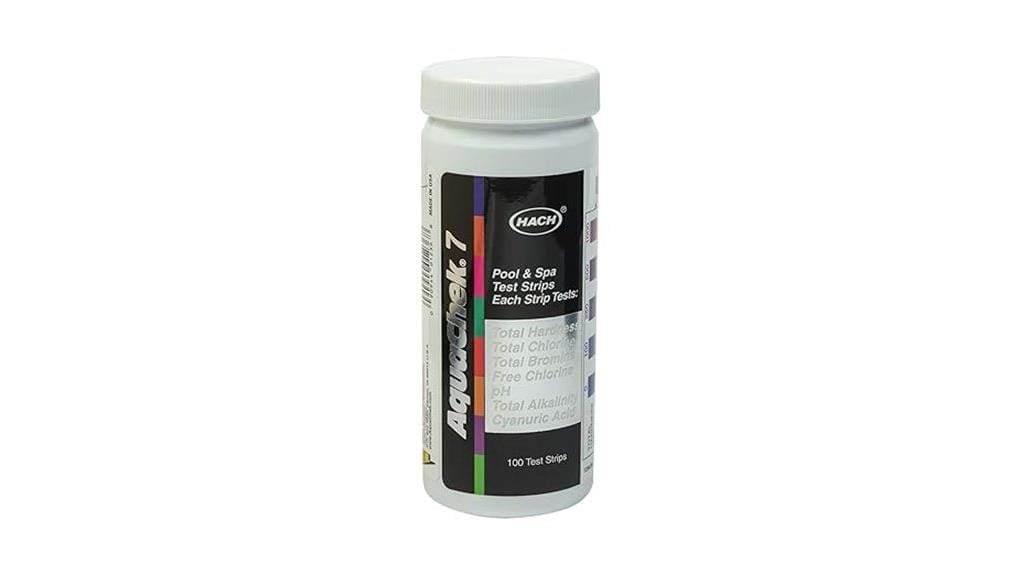
You’ll get fast, technician‑grade readings for seven key pool and spa parameters with AquaChek’s 7‑Way strips — just dip, wait ~15 seconds, and match colors for pH, free/total chlorine, bromine, alkalinity, hardness, and cyanuric acid. The medical‑industry colorimetry and anti‑bleed pads yield consistent, low‑mess results that align closely with liquid kits for routine maintenance. They save time and reduce user error, though disposables and per‑test cost matter; continue for practical tips and usage best practices.
Some Key Takeaways
- Fast, low‑mess dip‑wait‑compare strips give technician‑grade readings for seven parameters in about 15 seconds.
- Tests pH, total/free chlorine, bromine, alkalinity, total hardness, and cyanuric acid with medical‑grade colorimetric pads.
- Specialized anti‑bleed pads and optimized substrates improve color clarity and reduce reading ambiguity.
- Closely aligns with liquid‑kit results for routine maintenance while saving time and reducing user error.
- Best for backyard pools/spas; test twice weekly, store strips sealed, and read under consistent light.
Quick Verdict: Is AquaChek 7‑Way Worth Buying?
Though you can choose other testers, AquaChek 7‑Way is worth buying if you want a fast, accurate, low‑mess way to monitor seven key pool and spa parameters. You’ll get medical‑industry technology accuracy without measuring reagent drops, reducing errors and yielding consistent results that professionals trust. The dip‑wait‑compare workflow takes 15 seconds, so you’ll test more often and protect water quality—translating to measurable cost savings on chemicals and repairs. User testimonials report reliable readings and streamlined routines, reinforcing community confidence. Adopt it to maintain balanced water with minimal fuss, predictable outcomes, and practical, repeatable procedures. The product line is geared toward homeowners who enjoy maintaining their outdoor spaces and includes options for digital pool testers that simplify regular testing.
How the 7‑Way Strips Work and What They Test
When you dip an AquaChek 7‑Way strip into your pool or spa, each of the seven reagent pads reacts chemically to specific analytes and develops a color within about 15 seconds that you compare to the bottle chart; this quick colorimetric response uses medical‑grade substrates and reagents to deliver accuracy comparable to liquid titrations without measuring drops. You read pH, total and free chlorine, bromine, alkalinity, total hardness, and cyanuric acid. Each pad employs tailored chemical indicators and paper substrates to optimize contrast and minimize bleeding. The result: compact, reproducible colorimetry principles applied so you can keep water balanced confidently. These test strips are designed for homeowners who enjoy their outdoor spaces and want simple, reliable pool water testing with easy-to-use results.
Real‑World Accuracy and Ease of Use (15‑Second Dip Test)
Having seen how each reagent pad produces a color within about 15 seconds, you can judge how those quick readings perform in everyday use. You dip, wait, and match to the bottle chart; the user experience is consistently straightforward and repeatable. In side‑by‑side trials with liquid kits, color responses align closely, offering a practical accuracy comparison for routine maintenance. The specialized paper and anti‑bleed pad layout reduce ambiguity, so you’ll make consistent adjustments without second‑guessing. For a community of pool owners who value reliable, efficient protocols, these strips deliver predictable, technician‑grade feedback with minimal fuss. Many homeowners also pair clarifiers and regular testing to maintain clear pool water and optimize treatment results.
Pros and Cons vs. Liquid Kits and Competing Strips
While liquid kits still set the bar for lab-style granularity, AquaChek 7-Way strips give you technician-grade results with far less effort and mess. You’ll get fast pH, chlorine/bromine, alkalinity, hardness and CYA readings without dosing reagents or timing drops. Versus liquid kits, strips win on speed, reduced user error and lower upfront time cost. Against competing strips, AquaChek’s specialized pads and anti-bleed design improve consistency. Consider cost comparison over 100 tests and note disposables’ environmental impact; strips produce more waste but cut chemical packaging. You’ll choose based on workflow, precision needs and sustainability priorities. Many homeowners who enjoy their outdoor spaces find that regular testing with easy tools helps maintain safer, clearer water and protects pool equipment, making routine testing a smart part of pool care.
Who Should Buy the AquaChek 7‑Way and How to Get the Most From It
If you manage a backyard pool or spa and want fast, technician-grade checks without the mess of liquid reagents, the AquaChek 7‑Way is a practical choice that balances accuracy and convenience. You should buy it if you’re homeowners with pools, spa owners, new pool owners, budget conscious buyers, frequent testers, occasional testers, DIY maintainers, or professional technicians seeking repeatable, medical‑grade strip performance. To get the most from it, test at least twice weekly, dip and read at 15 seconds, store strips sealed and dry, compare to the bottle chart under consistent light, and log results to spot trends early. For best results during seasonal use, pair testing with essential opening chemicals like shock and algaecide to ensure a sparkling start.
Some Questions Answered
Are These Strips Safe to Use in Saltwater Pools?
Yes — you can use them in saltwater pools; they’re salt compatible and won’t suffer electrode interference because they rely on colorimetric pads, not electronic electrodes. You’ll get pH, free and total chlorine, bromine, alkalinity, hardness and cyanuric acid readings comparable to liquid tests. Dip, wait 15 seconds, and compare to the chart twice weekly for reliable results. You’ll join other owners who keep water balanced and safe.
Do Strips Expire, and How Should They Be Stored?
Yes — test strips have expiration dates, and you should follow storage tips to keep them accurate. Store strips in their original, tightly sealed bottle away from heat, sunlight, humidity, and chemicals; don’t touch pads or expose the bottle to water. Keep them at room temperature, use within the manufacturer’s stated shelf life, and discard strips after the expiration date or if pads look discolored. Share these practices with fellow pool owners.
Can One Strip Be Used for Multiple Tests at Once?
Yes — each strip is single use; you dip once and read all seven pads simultaneously. Don’t attempt multiple dips or reuse a strip, as that causes cross contamination and invalidates readings. You’ll get accurate, consistent results by dipping, removing, waiting 15 seconds, and comparing to the chart. Treat strips as disposable tools, store unopened packs properly, and test regularly so your group can confidently maintain balanced, safe water chemistry.
Are Readings Affected by Temperature of the Water?
Yes — temperature effects can influence color reactions, so you should account for testing timing. You’ll dip, wait 15 seconds, and compare immediately; doing so at extreme water temperatures may skew results. For consistent, accurate readings, test when water temperature is within typical pool/spa ranges and avoid very cold or hot samples. You’ll get repeatable measurements by standardizing testing timing and handling across all your strips.
Do the Strips Detect Combined Chlorine Separately?
No — the strips don’t report combined chlorine separately; they measure free and total chlorine, so you infer combined chlorine by subtracting free from total. You’ll use that difference to monitor chloramine buildup and decide when to perform breakpoint chlorination. Follow test timing and compare readings consistently, and you’ll help keep your pool chemistry safe and equitable for all users by recognizing when combined chlorine exceeds acceptable limits and requires treatment.