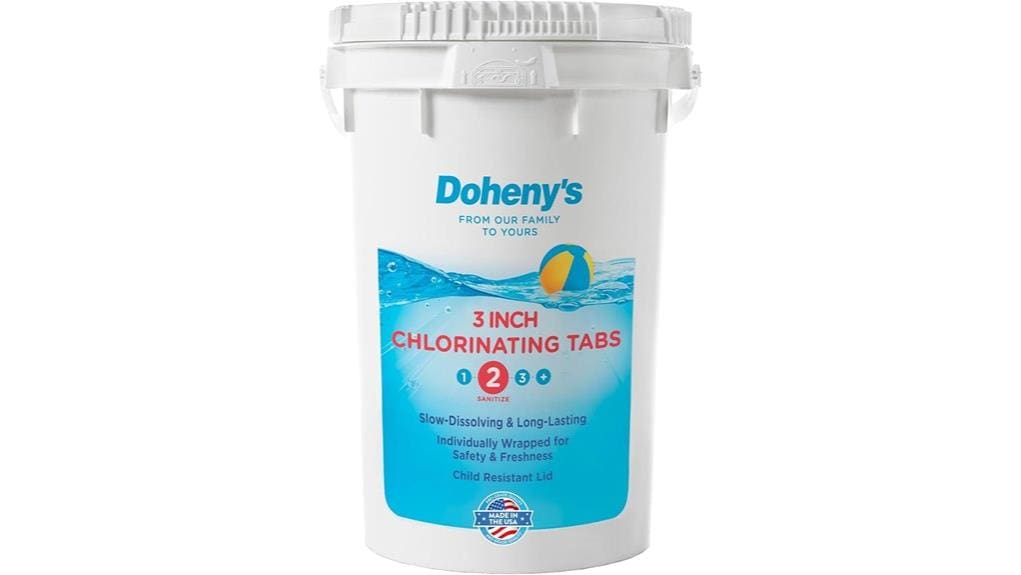
You’ll get reliable, long‑lasting sanitation with Doheny’s 3‑inch stabilized chlorine tablets—bulk 50‑lb buckets hold 800 individually wrapped tablets with 90% available chlorine for steady, UV‑resistant sanitation. Tablets dissolve slowly to reduce shock frequency and work well in skimmers, floaters, or feeders when you monitor free chlorine and pH regularly. Handle with gloves, keep the childproof bucket sealed, and manage runoff to limit trichloro persistence. Keep going for dosing tips, safety notes, and alternatives.
Some Key Takeaways
- 50‑lb bucket (model 4824) contains 800 individually wrapped 3‑inch stabilized chlorine tablets, ideal for bulk buyers.
- Tablets are 90% available chlorine and stabilized to resist UV breakdown for longer sanitizer life.
- Slow, consistent dissolution fits skimmers, floaters, or feeders but dissolution rate varies with flow and temperature.
- Recommended for community pools and pros; requires careful handling, monthly feeder calibration, and routine residual testing.
- Environmental persistence of trichloro compounds and discontinued status mean manage runoff and consider alternative sources if unavailable.
Quick Verdict: Is Doheny’s 3‑Inch Stabilized Chlorine Tablet Worth Buying?
Bottom line: Doheny’s 3‑inch stabilized chlorine tablets deliver reliable, long‑lasting sanitation for pools and are worth buying if you need bulk, slow‑dissolving chlorine with UV stabilization. You get 800 tablets in a single 50‑lb purchase, so you’ll save on per‑tablet cost compared with smaller packs; the cost comparison favors volume buyers. The 90% available chlorine and slow dissolution keep maintenance predictable, and you’ll feel confident keeping swimmers safe. Consider environmental impact: stabilized trichloro compounds persist longer, so manage dosing and runoff carefully. If you want dependable, community‑minded supply, this meets that need. Homeowners who enjoy outdoor spaces can use simple pool water test kits to monitor sanitizer levels and ensure safe swimming pool water testing.
What’s Inside the Bucket: Key Specs, Packaging, and Safety Features
When you pop the lid on Doheny’s 50‑lb bucket, you’ll find 800 individually wrapped 3‑inch stabilized chlorine tablets neatly stacked and protected by a childproof locking lid. You get a clear spec set: 50 pounds, 800 tablets, model 4824—each tablet slow‑dissolving and stabilized for UV resistance. Packaging minimizes mess: individual wraps cut dust, skin contact, and help odor control. The bucket’s childproof lid reinforces safe storage and communal responsibility. Labels list active ingredient and handling instructions so you and your pool community can store and use the product confidently and in compliance with basic safety practices. This product is an essential pool opening chemical for homeowners who enjoy their outdoor spaces and want reliable sanitization pool opening chemicals.
Real-World Performance: Dissolve Rate, Chlorine Availability, and Stabilization
Having covered what’s in the bucket, let’s look at how these tablets perform in the pool. You’ll notice slow-dissolving, stabilized tablets that generally deliver steady available chlorine; available chlorine content is high, so shock dosing is less frequent. Expect some dissolution variability with water flow, temperature, and placement—so you’ll want routine residual monitoring to confirm free chlorine stays in target range. In practice, they maintain sanitizer levels well when used consistently and placed where circulation reaches them. The stabilized formula reduces UV loss, so you and your pool community can rely on predictable protection when you monitor and adjust as needed. These tablets are a convenient option for homeowners who want to keep their pool sparkling with less frequent shock treatments.
How to Use Them Safely and Effectively: Skimmer, Floater, and Feeder Dosing Tips
If you want consistent, safe chlorination, choose the placement method that matches your pool circulation and monitoring routine and follow dosing guidelines carefully. You’ll use skimmer placement for straightforward, periodic dosing; place tablets in the skimmer only if your pump runs regularly and you monitor chlorine daily. Use a floater for gradual, visible delivery when you want flexibility. Use an inline or off-line feeder for pools needing steady control—perform feeder calibration monthly and after maintenance. Always follow label instructions, wear gloves when handling wrapped tablets, keep the childproof bucket sealed, and test free chlorine and pH before adjusting doses. For best results, consider using stabilized tablets to reduce UV degradation of chlorine.
Pros, Cons, and Who Should Buy: Use Cases and Alternatives
Now that you know how to dose Doheny’s 3-inch stabilized tablets safely via skimmer, floater, or feeder, consider whether this product fits your pool care needs. You’ll appreciate long-lasting, stabilized chlorine that simplifies pool maintenance and reduces daily chores. Pros: concentrated 90% available chlorine, slow dissolve, childproof bucket, bulk value for frequent users. Cons: discontinued status may limit availability, strong chemical handling, not ideal for occasional owners. Who should buy: community pools, committed owners, service pros seeking volume and reliable sanitization. Alternatives to weigh in a cost comparison include granular shock, liquid bleach, or smaller tablets for flexibility. Many homeowners also maintain their systems by keeping components like the pool pump basket working smoothly throughout the season.
Some Questions Answered
Can These Tablets Be Used in Hot Tubs or Spas?
No — you shouldn’t use these tablets in hot tubs or spas. For hot tub compatibility and spa safety, large 3-inch stabilized tablets deliver too much chlorine and cyanuric acid for small, heated volumes, risking over-chlorination and skin/respiratory irritation. You’ll want products formulated for spas: smaller-dosed, unstabilized or spa-specific sanitizers and precise dosing tools. Join other owners who prioritize spa safety by choosing appropriate, measured chemicals and testing frequently.
Are They Safe for Vinyl or Inflatable Pool Liners?
Yes — you can use them with vinyl compatibility in mind, but you should take precautions. You’ll avoid liner discoloration by keeping tablet contact minimal: use a floater or in-line feeder, never drop tablets directly onto vinyl or inflatable walls. Test a small area first, maintain proper chlorine levels, and rinse any splashed residue. You’ll protect your liner and enjoy sanitized water while staying part of a community of careful pool owners.
Do They Affect Pool pH or Require pH Adjustments?
Yes — they’ll tend to lower pH over time, so you’ll need to monitor and sometimes raise pH. The stabilized trichloro tablets release acidic byproducts that can also lower alkalinity, so you’ll check alkalinity and raise alkalinity if needed to stabilize pH. Test regularly, adjust with sodium carbonate to raise pH or sodium bicarbonate to raise alkalinity, and you’ll keep water balanced and enjoy worry-free swimming.
How Long Is the Shelf Life Unopened?
Unopened, you can expect an expiration date of about 3–5 years when stored properly. Keep the bucket sealed, in cool, dry storage conditions away from sunlight and moisture; that preserves available chlorine and stabilizer. You’ll want to check the manufacturer’s lot or label for a specific date and respect any printed expiration date. Store with the childproof lid engaged and treat older stock with caution before use.
Can Tablets Be Mixed With Other Pool Chemicals?
No — you shouldn’t mix tablets directly with other pool chemicals. You’ll avoid unsafe chemical interactions by adding products separately, flushing dosing timing between treatments, and following label instructions. Test water before and after adjustments, wait appropriate intervals (usually hours) between different additives, and use feeders or floaters as directed. You’ll protect swimmers and equipment, maintain proper sanitation, and join other careful pool owners who prioritize safe handling and measured dosing.