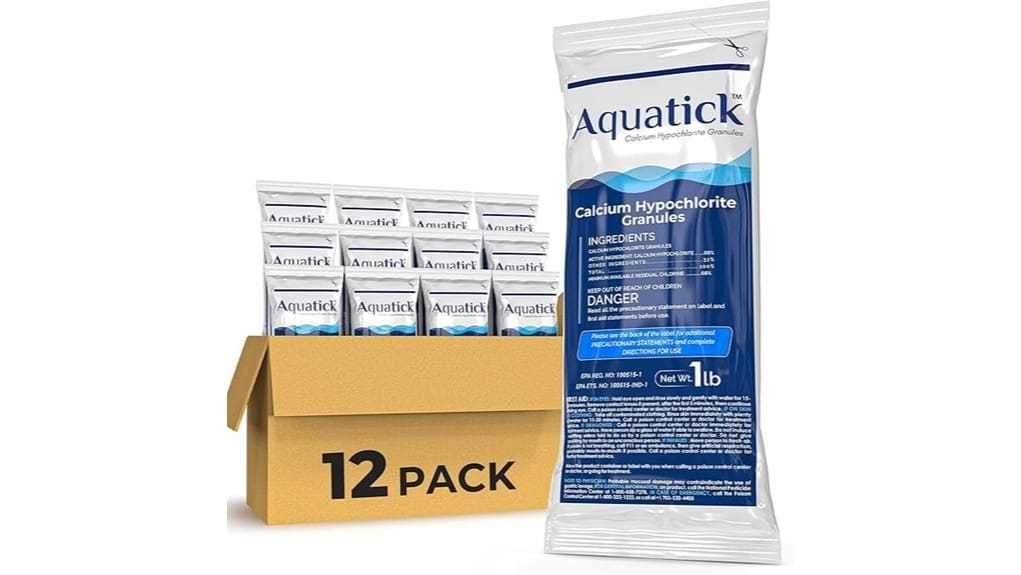
Pro‑Grade 68% cal‑hypo shock gives you a fast, potent chlorine boost that reliably knocks back bacteria and algae without adding stabilizer. Each 1‑lb bag treats about 10,000 gallons and typically raises free chlorine ~5–10 ppm, so you’ll use less product to hit target levels. It clears cloudy or green water quickly when paired with filtration, but you must pre‑dissolve and store bags dry and handle oxidizers safely. Continue for practical dosing, safety, and storage tips.
Some Key Takeaways
- Powerful 68% calcium hypochlorite shock delivers fast, high free-chlorine boosts per 1-lb bag for rapid sanitization.
- Typical 1-lb bag treats 10,000 gallons, raising chlorine roughly 5–10 ppm for quick bacteria and algae knockdown.
- Pre-dissolve in a plastic bucket and broadcast around the pool perimeter with pump running; stagger dosing at dusk.
- Offers higher available chlorine per dollar and avoids CYA buildup, but requires careful handling and proper storage.
- Best for fast treatments and season openings; not ideal for users who cannot safely handle or store strong oxidizers.
Quick Verdict: Is Pro-Grade Chlorine Pool Shock 68% Cal-Hypo Worth Buying?
While not flashy, Pro-Grade Chlorine Pool Shock (68% cal-hypo) is a solid, cost-effective choice if you need fast, powerful sanitizing power; it reliably boosts chlorine, kills bacteria and algae, and clears cloudy water without CYA buildup. You’ll find clear value comparison against stabilized shocks: higher available chlorine per dollar and no CYA tradeoff. Dosage is straightforward, treating 10,000 gallons per 1-lb bag. Take precautions—dissolve before adding to protect liners. User testimonials cite rapid clarity restoration and reduced odor. If you prioritize raw sanitizing efficiency and predictable dosing, this product’s worth is demonstrable and practical. Homeowners who enjoy their outdoor spaces will appreciate shock treatment tips for maintaining a sparkling pool.
What the 68% Cal-Hypo Formula Means for Pool Chlorine Strength
Having established that Pro-Grade’s 68% cal-hypo delivers fast, reliable chlorination, it helps to quantify what that 68% figure actually means for your pool. That percentage denotes available chlorine by weight: 68% of the granules can release active hypochlorous species that sanitize. Higher available chlorine equals greater chemical potency per ounce, so a 1‑lb bag produces a larger free‑chlorine boost than lower‑strength products. Practically, one 1‑lb bag treating 10,000 gallons yields roughly 5–10 ppm because of that 68% content. You’ll dose less by weight to reach target ppm, improving storage efficiency and dosing predictability. Maintaining proper alkalinity and pH helps chlorine work effectively, so balancing total alkalinity and pH is important for optimal sanitization and water health total alkalinity.
Real-World Performance: Sanitizing Speed, Algae Control, and Swimmer Comfort
Because Pro-Grade’s 68% cal-hypo delivers a high available-chlorine dose per ounce, you’ll see free-chlorine levels spike quickly after treatment—typically reaching the estimated 5–10 ppm per 1‑lb bag in properly mixed applications—so bacteria and newly forming algae are knocked back within hours rather than days. You’ll notice fast sanitizing action in routine and shock treatments; visual clarity returns faster and greenwater clears after a single correct application. Algae regrowth is suppressed when combined with filtration. Swimmer comfort improves as chloramines fall and odor diminish, though you should wait for levels to normalize before re-entry to guarantee safety. Using a phosphate remover as part of regular maintenance helps reduce a key nutrient that fuels algae growth and supports longer-lasting clarity.
How to Dose and Add 1‑lb Bags Safely for Different Pool Types
Start by calculating your pool’s volume and the number of 1‑lb bags required: each bag treats 10,000 gallons and yields roughly 5–10 ppm chlorine, so divide your pool gallons by 10,000 to find the base dose and adjust up for heavy algae, warm weather, or high bather load. For vinyl, saltwater, above‑ground and in‑ground pools, use a pre‑dissolving technique: dissolve each bag in a clean plastic bucket of water separately, then broadcast around the perimeter with the pump running. Stagger dosing at dusk for application timing, retest after 1–2 hours, and avoid simultaneous multi‑bag dumping. For best results when opening the season, pair shock dosing with appropriate pool opening chemicals to clear algae and balance water before regular maintenance.
Buying and Storage Tips, Plus Who Should (and Shouldn’t) Use This Product
Once you’ve calculated doses and learned safe addition methods, you’ll want to choose and store shock properly to keep potency and safety intact. For purchase considerations, buy sealed 1-lb bags to limit moisture exposure and verify 68% cal-hypo labeling; avoid products with CYA. storage tips: keep bags dry, cool, and ventilated, away from organics, acids, and sunlight; store off the floor and separate from pool equipment. Use this product if you need fast, high-strength chlorination and can pre-dissolve safely. Don’t use it if you can’t handle oxidizers safely, have unstable storage, or need stabilized chlorine for daily dosing. Store pool chemicals in ventilated, cool conditions and in corrosion-resistant containers to reduce risk and extend shelf life.
Some Questions Answered
Is This Product Safe to Use With Fountain and Spa Features?
Yes — you can use it with fountain compatibility if you’re careful. You’ll pre-dissolve or dilute the cal-hypo and avoid direct contact with metal fixtures to limit spa corrosion. Keep chlorine levels within recommended ranges and avoid adding to spa features while people are using them. Rinse nozzle areas after treatment, monitor pH and sanitizer, and use less frequent, lower-dose applications for decorative fountains and smaller spa components to reduce corrosion risk.
Can Cal-Hypo Shock Be Mixed With Other Pool Chemicals?
No — you should avoid mixing cal-hypo shock directly with other pool chemicals. You’ll pre-dissolve or dilute it, add it separately, and wait between treatments to prevent dangerous reactions and uneven dosing. Be mindful of stabilizer interaction: cal-hypo contains no CYA, so manage stabilizer additions separately. Also monitor for metal corrosion risks when shocking; high chlorine and low pH can accelerate corrosion, so test and adjust water chemistry before and after treatment.
How Long After Shocking Can I Swim Again?
You can usually swim again after chlorine levels drop to 1–3 ppm and cyanuric acid is stable, which often takes 8–24 hours; test the water. If you used a full 1-lb bag per 10,000 gallons, expect longer wait times toward the upper range. If anyone has high skin sensitivity, wait until free chlorine is near 1 ppm and recheck pH to avoid irritation. Follow product label instructions and measure before entering.
Does the Product Increase Pool Water Hardness?
Yes — it raises calcium levels, so you’ll see a calcium increase after dosing. Because it’s calcium hypochlorite, repeated or heavy use will raise total hardness and can push the pool toward water saturation with respect to calcium carbonate. You should monitor hardness and adjust dosing or use a partial drain-and-refill if saturation approaches scale risk. Balance alkalinity and pH to control precipitation and maintain proper water saturation levels.
Are These 1-Lb Bags Recyclable or Biodegradable?
No, the 1-lb bags aren’t biodegradable and their recyclability options depend on local programs; many are polyethylene-lined and won’t go in standard curbside paper recycling. You should check the bag markings and local facilities for plastic-film or store drop-off recyclables. If recycling isn’t available, dispose per municipal hazardous-waste guidance. For greener choices, consider biodegradable alternatives for packaging or bulk-buy options that reduce single-use bags and waste.