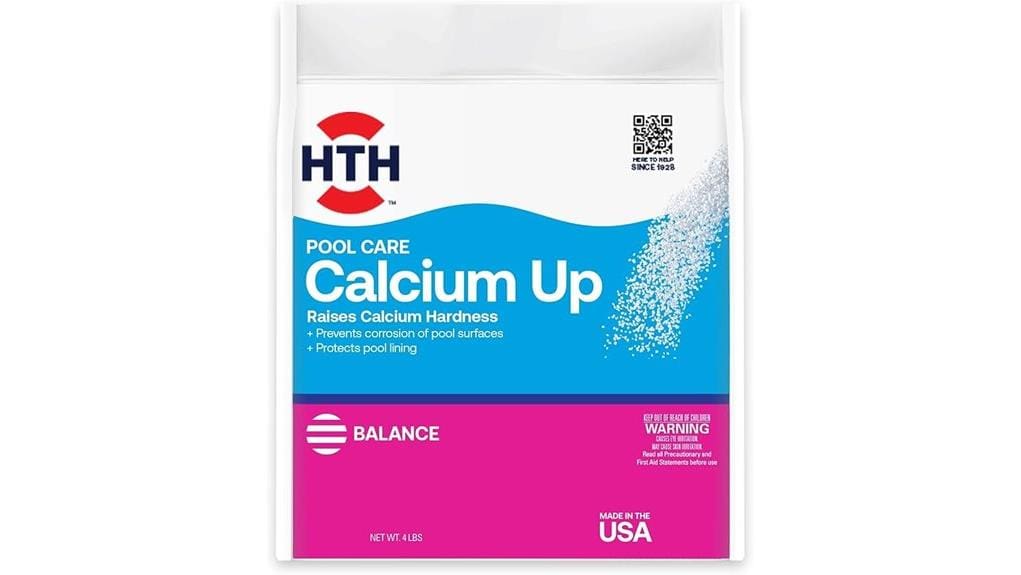
You’ll get a measured, fast boost in pool calcium hardness with HTH 67059, a powdered calcium chloride formula that raises ppm predictably and suits all pool types. You’ll dissolve measured doses, broadcast while the pump runs, and retest after 4–6 hours to avoid scaling. It helps prevent corrosion and plaster damage when pH and alkalinity are balanced, though it adds chloride and can be dusty. Keep staged dosing and protective gear—continue for detailed dosing, risks, and alternatives.
Some Key Takeaways
- HTH 67059 reliably increases pool calcium hardness with measured dosing to hit recommended 200–500 ppm ranges.
- Dissolve powder in a bucket, broadcast while pump runs, and retest after 4–6 hours for predictable results.
- Proper dosing reduces corrosion and plaster damage but overcorrection can cause scaling; stage doses to avoid spikes.
- Compatible with all pool types; dissolution varies with temperature and agitation, so ensure good circulation.
- Wear gloves and eye protection, store sealed and dry, and log additions for consistent maintenance.
Quick Verdict: Is HTH 67059 Calcium Hardness Increaser Worth Buying?
If you need a straightforward way to raise pool calcium hardness, HTH 67059 delivers: this 4-pound powdered increaser quickly boosts hardness to the recommended 200–500 ppm range, helping prevent corrosion and protect liners, metals, plastics, and equipment. You’ll find it practical: one compact unit treats typical residential pools, is compatible with all pool types, and pairs with routine testing. From a technical standpoint, its measured dosing supports predictable adjustments. For a community of conscientious owners, its cost effectiveness and clear maintenance role translate to tangible long term value. You’ll get dependable protection without unnecessary complexity. Many homeowners rely on calcium hardness increasers to keep their outdoor pool environments safe and well-maintained.
What HTH 67059 Does and How It Protects Your Pool
Raise your pool’s calcium hardness with HTH 67059 to maintain water chemistry that protects surfaces and equipment. You’ll increase calcium concentration to recommended 200–500 ppm, reducing corrosive conditions that damage liners, metals, plastics, and pumps. Proper hardness prevents aggressive water that etches plaster and causes pitting, while minimizing calcium scale when balanced with pH and alkalinity. HTH 67059 supplies a controlled, soluble calcium source so you can stabilize saturation index and extend component lifespan. Use weekly testing to monitor levels and keep your pool community’s assets protected — this product targets surface protection and equipment longevity with predictable results. Keep your pool balanced year-round by following essential stabilizer tips that help maintain proper chemistry.
How to Use HTH 67059: Dosing, Timing, and Safety Tips
When adjusting calcium hardness with HTH 67059, measure current levels first and calculate the exact dose needed to reach the 200–500 ppm target range; one 4 lb container treats a defined volume, so base additions on your pool’s gallons and the ppm change required. You’ll add powder to a bucket of pool water, dissolve, then broadcast evenly while the pump runs. Use precise measurements and record each addition. Space dose applications—retest after 4–6 hours, adjust as needed. Wear protective gear use: gloves and eye protection. Store sealed, dry, away from children. Share procedures with fellow caretakers for consistent results. Homeowners who enjoy their outdoor spaces often combine clarifiers and proper hardness management to keep clear pool water and equipment condition optimal.
Real-World Performance: Results, Compatibility, and Common Issues
Although lab specs predict consistent results, your real-world experience with HTH 67059 will depend on accurate measurement, pool volume, and water chemistry interactions; expect reliable increases in calcium hardness when you dose correctly and allow the pump to circulate for several hours. You’ll monitor changes with test strips and note dissolution rate varies with temperature and agitation. User anecdotes often cite predictable ppm shifts but highlight the need for staged dosing. Watch for equipment interactions—scale risk if overcorrected, and softer-metal corrosion if undercorrected. Track long term effects via routine testing and recordkeeping so you and fellow pool owners stay aligned. Maintaining proper pH alongside calcium hardness is essential for clearer, safer water and equipment longevity.
Pros, Cons, Alternatives, and Who Should Buy This Product
Because it delivers a concentrated, easy-to-measure dose of calcium chloride powder, HTH 67059 is a practical choice if you need to reliably increase pool calcium hardness to the 200–500 ppm target range; you’ll get predictable ppm changes when you calculate dose by pool volume, dissolve and circulate for several hours, and retest with quality strips. Pros: accurate dosing, broad compatibility, protects surfaces and equipment. Cons: adds chloride load, handling dust, single-size packaging. Alternatives: other calcium chloride brands, granular formulations, or professional water treatment service. Who should buy: homeowners and facility managers seeking fast correction, mindful of cost comparison and eco impact. Homeowners who use chlorine tablets to maintain their outdoor pools should consider overall water chemistry when increasing calcium hardness, especially how it interacts with chlorine tablet maintenance.
Some Questions Answered
Is This Product Safe for Saltwater Pools?
Yes — you can use it in saltwater pools; it’s saltwater compatible and raises calcium hardness to reduce marine corrosion risk. You’ll add the powder per label directions, test weekly with HTH 6-Way Test Strips, and keep calcium in the 200–500 ppm target to protect liners, metals, and plastics. You’ll prevent corrosive conditions and prolong equipment life while maintaining balanced water chemistry for your shared pool community.
Can I Store It Outdoors or Does It Need a Cool Dry Place?
No — don’t store outdoors; you’ll need a cool, dry place. Keep covered? Yes — keep the container tightly sealed and covered to prevent moisture ingress and caking. Store off the ground, away from direct sunlight and humidity, and separate from incompatible chemicals (acids). You’ll protect product efficacy and pool equipment by maintaining recommended storage conditions, and you’ll join other pool owners who treat maintenance supplies responsibly.
How Long Does One 4 Lb Container Treat My Pool?
A 4 lb container will treat roughly one typical 20,000–25,000 gallon pool for a modest calcium hardness boost; exact coverage depends on pool size and dosage rate. You’ll add about 1.5–2.0 pounds per 10,000 gallons to raise hardness roughly 10–15 ppm, so a 4 lb tub supplies roughly two single-dose treatments for 20,000 gallons. You’ll belong to careful owners who test weekly and adjust dosing precisely.
Is It Safe to Use With Algaecides and Chlorine Shock?
Yes — you can use it with algaecides and chlorine shock, but monitor chemical interactions and stagger application timing. You’ll add calcium hardness increaser separately, avoid adding shock or algaecide until the powder fully dissolves and circulation runs for 4–6 hours. Test water after dosing to confirm levels. You belong to a careful pool-keeping group: follow label instructions, use weekly test strips, and adjust dosing to maintain recommended calcium hardness and sanitizer balance.
Does It Have an Expiration Date or Degrade Over Time?
No specific expiration date is printed, and you won’t see rapid degradation; the product has good shelf life and storage stability if kept dry and sealed. Store in a cool, dry place away from moisture and incompatible chemicals to maintain effectiveness. You’ll want to use older stock first, inspect for caking or contamination, and toss if compromised—this keeps your pool-care group confident that the product will perform as expected.