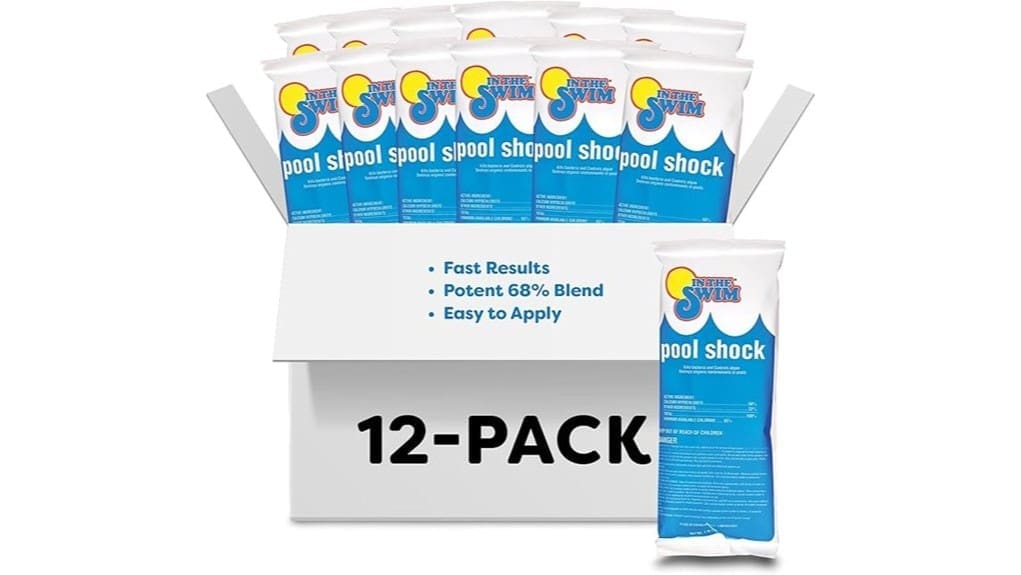
You’ll find In the Swim Pool Shock a strong, no-frills 68% calcium hypochlorite that’s cost-effective for routine shock and fast at killing algae and bacteria when dosed and pre-dissolved correctly. It lacks stabilizer so it works hard immediately but won’t protect against UV, and it can bleach liners or react with metals if mishandled. It’s best for larger volumes or frequent shocks; keep safety gear and proper mixing in mind, and you’ll learn practical tips and alternatives next.
Some Key Takeaways
- In The Swim Pool Shock is a high-strength 68% calcium hypochlorite shock offering rapid, cost-effective oxidation for pool maintenance.
- It clears algae and reduces bacteria quickly when dosed correctly, but lacks stabilizer so no long-term UV protection.
- Best practice: pre-dissolve recommended doses and avoid pouring granules on vinyl liners to prevent bleaching.
- Typical maintenance dose is 1 lb per 10,000 gallons; increase cautiously and retest rather than doubling doses for persistent issues.
- Packaged as 12×1 lb cans for convenience and reduced spoilage; bulk tubs are cheaper per pound but risk faster degradation.
Is In the Swim Pool Shock Worth Buying? Quick Verdict and Who It Suits
Wondering if In The Swim Pool Shock is worth your money? You’ll find it’s a strong, no-frills Cal-Hypo shock that suits owners who need powerful, non-stabilized chlorine. Compared with stabilized shocks, it costs less per effective oxidizing dose but demands careful handling and pre-dissolving. For routine weekly maintenance it’s efficient; budget considerations favor those treating larger volumes or frequent needs. User testimonials often praise clarity results and fast action, though complaints note handling inconvenience and liner-bleach risk if misused. You should buy it if you want concentrated performance at a reasonable cost and can follow safe application practices. Many homeowners use shock treatments as part of their weekly maintenance routine to keep pools clear and sanitary.
How Effective Is 68% Calcium Hypochlorite for Clearing Algae and Bacteria?
If you liked the value and punch of In The Swim Pool Shock, you’ll want to know how that 68% calcium hypochlorite performs against algae and bacteria. You’ll find its high available chlorine delivers rapid oxidation speed, clearing visible algae blooms faster than lower-strength shocks. Its bacterial killrate is strong when dosed correctly, bringing quick reductions in common pathogens. Compared with stabilized products, the stabilizer absence means more immediate free chlorine activity but no long-term UV protection, so you’ll need routine dosing. For stubborn, resistant strains think higher dose plus brushing; for routine control it’s efficient and cost-effective. Homeowners should also consider regular testing and proper dosing to maintain clear pool water.
How to Use In the Swim Pool Shock Safely and Get Best Results
Because Cal-Hypo is a powerful, non-stabilized oxidizer, you should handle In The Swim Pool Shock with care and follow precise dosing to get fast, reliable results without damaging equipment or liners. You’ll start with solid pool preparation: test chemistry, lower combined chlorine, remove debris, and make certain circulation runs. Compare application methods—pre-dissolving avoids liner bleaching but spot-dosing is faster; pick what fits your pool type. Wear protective gear—gloves and goggles—and keep granules away from metals and organics. Evaluate results by testing residuals and clarity; if algae persists, repeat treatment rather than doubling dose to protect surfaces. When closing your pool for the season, follow recommended procedures and use appropriate pool-closing chemicals to ensure a clean, protected winterization.
Dosage, Mixing Tips, and Avoiding Liner Bleaching (Pools, Spas, Hot Tubs)
When treating pools, spas, or hot tubs with In The Swim Pool Shock, follow exact dosing and mixing to get rapid disinfection without harming liners or equipment. You should use recommended dilution ratios (pre-dissolve 1 lb per recommended water volume) and apply during low bather periods; application timing limits chlorine contact with vinyl. For routine maintenance, 1 lb per 10,000 gallons is typical; for spot treatment increase locally but dilute first to avoid concentrated contact. Compare pre-dissolving versus broadcasting: pre-dissolve gives better liner protection and consistent distribution. Always avoid pouring granules directly on liners to prevent bleaching. This product is part of a line of pool opening chemicals designed for homeowners who enjoy their outdoor spaces.
Packaging, Value, and Alternatives: 12×1 Lb Packs Vs Other Pool Shock Options
Several pool owners prefer the 12×1 lb pack of In The Swim Pool Shock because it balances convenience and shelf-life: you can open a single pound for quick weekly dosing without exposing the rest to humidity or heat. You’ll find the small canisters reduce waste and simplify storage versus bulk tubs, and they’re easier to pre-measure for the typical 1 lb per 10,000 gallons dose. In a cost comparison, per-pound pricing can be higher than bulk, but lower spoilage may offset that. Consider alternatives—bulk 5–10 lb tubs or stabilized shock—evaluating price, handling, and environmental impact. Pools with high phosphate levels often benefit from using dedicated phosphate removers to keep algae growth in check.
Some Questions Answered
Does Cal-Hypo Affect Pool Stabilizer (Cyanuric Acid) Levels Over Time?
Yes — you might see slight cal hypo interaction but it doesn’t chemically destroy cyanuric acid. You’ll evaluate that frequent Cal-Hypo additions dilute or concentrate cyanuric levels indirectly by changing water volume or requiring fresh water, so cyanuric decay is usually from dilution, backwash, or UV breakdown over time. Compared to stabilized shocks, Cal-Hypo won’t raise CYA, so you’ll manage CYA separately and test regularly to avoid drift.
Can in the Swim Pool Shock Be Used With Saltwater Chlorine Generators?
Yes — you can use it, but cautiously. Saltwater compatibility is acceptable since cal-hypo won’t harm the generator directly, yet you’ll boost free chlorine and CYA indirectly. You’ll need to adjust Generator maintenance: lower output after shocking, monitor chlorine and stabilizer levels, and avoid adding granules near cell or metal parts. Compared to liquid chlorine, cal-hypo gives a stronger, faster shock but requires careful dosing and pre-dissolving.
Is This Product Safe to Store Near Other Pool Chemicals at Home?
No — you shouldn’t store it near other pool chemicals. Storage safety requires chemical segregation: keep Cal-Hypo separate from acids, organic materials, and bitumin-containing items. Compared to stabilized chlorine, it’s a stronger oxidizer and reacts violently with incompatible substances, so you’ll want a cool, dry, well-ventilated spot, sealed containers, and spill-ready precautions. That reduces fire, decomposition, and contamination risks versus loose or mixed storage.
How Long After Shocking Can You Safely Swim or Use a Spa?
You should wait until chlorine residuals drop to safe levels—typically 24 hours after shocking. That’s generally longer than stabilized shocks, since Cal-Hypo raises free chlorine high. Test the water: when free chlorine is under 3–5 ppm (follow local guidance), you can swim. Comparatively, some shocks allow quicker return; Cal-Hypo needs more time. If levels stay high, keep testing every few hours before using the spa or pool.
Are There Special Disposal Instructions for Unused Granules or Empty Containers?
Yes — you should follow special disposal steps for unused granules and empty containers. You’ll treat them as hazardous oxidizer waste, avoid dumping granules into drains or vegetation, and rinse containers per label. Check local regulations for hazardous household chemical disposal or take to a household hazardous waste facility. Comparatively, municipal guidance is stricter than general trash rules; following environmental disposal protocols reduces risk and legal issues.