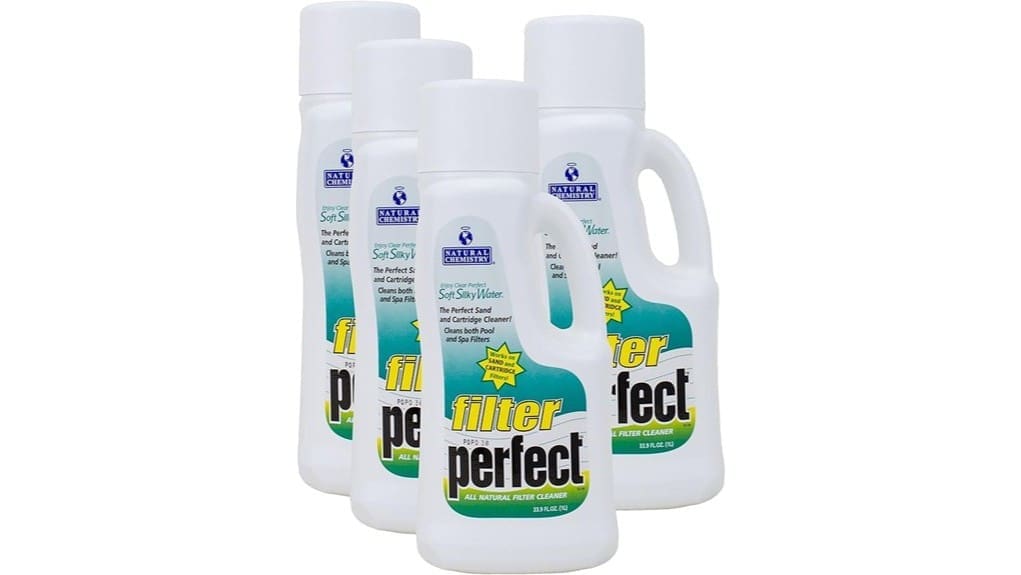
You’ll find Filter Perfect uses SMARTZyme enzymes to break long-chain hydrocarbons and protein films into water-soluble fragments, loosening oils, grease, and scum so they rinse away and reopen fouled sand, DE, and cartridge media without damaging them or common sanitizers. It’s acid-free, safe with chlorine/bromine, and restores flow and surface area when used per instructions (1 L dose, soak/ dwell and rinse). Keep going and you’ll see detailed steps, results, and buying guidance.
Some Key Takeaways
- Enzyme-based formula digests non-living oils, grease, and protein films to loosen and rinse trapped filter contaminants.
- Compatible with sand, DE, and cartridge filters; acid-free and safe for common sanitizers like chlorine and bromine.
- Typical 1 L cleaning: pre-soak option, saturate media, 1–4 hour dwell, high-pressure rinse until runoff is clear.
- Restores pore volume and flow, reducing pressure drop and recurring odors by reopening fouled media.
- Not a biocide replacement; concentrated product requires correct dosing and has an upfront cost per bottle.
How Natural Chemistry Filter Perfect Works and What SMARTZyme Does
Although it’s gentle and acid-free, Natural Chemistry Filter Perfect attacks oils, grease and organic scum at the molecular level: SMARTZyme is a proprietary enzyme-based catalyst that accelerates biodegradation of non-living organics, loosening and solubilizing trapped contaminants so they rinse away rather than recoat the media. You apply a concentrated liquid that penetrates fouling layers; enzyme action breaks long-chain hydrocarbons and proteinaceous films into water-soluble fragments. That restores pore volume and surface area, improving hydraulic flow and particle capture. SMARTZyme complements microbial balance by targeting non-living residues rather than viable organisms, preserving sanitizer function and reducing biological regrowth. It’s an excellent maintenance choice for homeowners who want to keep their outdoor pools and equipment working efficiently with minimal downtime and proper filter cartridges.
Which Filter Types and Sanitizers the Cleaner Is Safe With
Building on how SMARTZyme targets non-living organics, Filter Perfect’s formulation is compatible with all common filter media—sand, DE, and cartridge—and works safely alongside standard sanitizers such as chlorine and bromine. You can use it on sand beds, diatomaceous earth systems, and cartridge filters without risking media degradation; cartridge compatibility is explicitly supported by the acid-free, enzyme-based formula. It won’t neutralize sanitizers or produce harmful byproducts, demonstrating verified bromine safety and chlorine compatibility. Follow manufacturer dosing and contact times to preserve sanitizing residuals, material integrity, and filtration efficiency across pool and spa systems. Upgrade your filtration with easy filter kit solutions for straightforward installation and maintenance.
Step-by-Step: How to Use 1 L Per Cleaning for Best Results
When you use one 1‑L bottle per cleaning, follow a clear, systematic workflow to guarantee complete enzyme contact and maximum soil removal. Drain and disassemble the filter per manufacturer instructions. Apply pre soak tips: dilute 250–500 mL in warm water for 10–15 minutes to loosen heavy oil/grease, then reapply remaining concentrate to saturate media. Agitate to distribute SMARTZyme throughout pleats or grid. Let dwell 1–4 hours depending on soil level. Use high-pressure rinsing technique from clean side outward; repeat until run-off is clear. Reassemble, backwash if applicable, and return filter to service. Follow safety and dosage guidelines. Maintain your equipment regularly to ensure optimal filtration and longer filter life.
Real-World Performance: Removes Oils, Restores Surface Area, and Improves Water Clarity
Because SMARTZyme targets oils, grease, and non‑living organics at a molecular level, you’ll see trapped contaminants loosened and flushed from media rather than simply redistributed, restoring effective surface area and flow immediately after a proper clean. You’ll observe measurable surface restoration: pressure drop returns toward baseline and flow rates increase as pores reopen. Oils and scum that blind media are enzymatically broken, producing sustained odor reduction and reduced biofilm formation. In practice, one 1 L dose per clean consistently clears fines and organic residue across sand, DE, and cartridge filters, improving water clarity and extending productive run times. Many homeowners find that using the right filter powder helps maintain clear water and prolongs filter life.
Pros, Cons, and Who Should (or Shouldn’t) Buy This Cleaner
Although no cleaner is universal, Filter Perfect delivers strong, targeted performance for most pool owners: its SMARTZyme formula actively digests oils, grease, and non‑living organics to restore media surface area and flow, while remaining acid‑free and fume‑free for safer handling. You’ll appreciate rapid recovery of filter efficiency, universal compatibility, and safe indoor use. Downsides: concentrated liquid requires careful dosing and upfront cost per 1 L bottle (pack of four mitigates this); it’s not a biocide replacement. Choose this if you prioritize performance, safety, and reduced environmental impact. Consider budget alternatives if initial cost or simple particulate removal is your only need. Many homeowners pair it with the right sand or alternative media like zeolite to maximize filtration performance.
Some Questions Answered
Is This Cleaner Safe to Store Near Other Pool Chemicals?
Yes — you can store it near other pool chemicals, but you should exercise caution. The acid-free, non-fuming formula minimizes flammable risk, yet you’ll still separate oxidizers and strong acids. Make certain container compatibility by keeping the original plastic bottles upright, sealed, and away from extreme heat or direct sunlight. Label storage clearly, maintain good ventilation, and follow local regulations and manufacturer guidance to prevent unintended chemical interactions.
Can I Dilute the Product for Lighter Maintenance Cleanings?
Yes — you can dilute for lighter maintenance cleanings. Use reduced dilution ratios (for example, 1:1 to 1:3 product:water) for routine upkeep, but keep full-strength dosing for deep cleans. Adjust dilution ratios based on visible buildup and maintenance frequency; clean more often with higher dilution or less often with stronger mixes. Always rinse thoroughly and monitor filter performance to guarantee restored surface area and peak water quality.
How Long Is the Shelf Life After Opening a Bottle?
You’ll typically get about 12–24 months as the expiration timeline after opening, assuming proper storage conditions. Store the bottle tightly sealed, upright, in a cool, dry place away from direct sunlight and freezing temperatures. Avoid contaminating the liquid with debris or other chemicals. If the solution changes color, odor, or clarity, discard it regardless of age. Follow manufacturer label for specific advice and lot/date codes.
Are There Any Environmental Disposal Precautions?
Yes — you should follow proper disposal to minimize environmental impact. Rinse empty containers per label instructions, recycle if local facilities accept the plastic, and never pour concentrated product into drains, storm sewers, or natural waters. Dispose of residual liquid through authorized hazardous-waste collection if required by local regulations. Keep used rinse water out of waterways; neutralize or dilute per label guidance before disposal. Check local waste authority for specifics.
Will It Void My Pool Equipment Warranty?
Generally no — using this product shouldn’t void your warranty if you follow manufacturer instructions and dosage. You’ll want to confirm warranty coverage specifics with your equipment maker and obtain dealer authorization if required for service or chemical use. Keep records of use, label UPC/part number, and follow recommended procedures; undocumented or improper chemical use might be disputed by a warranty claim, so proactive confirmation preserves your coverage.