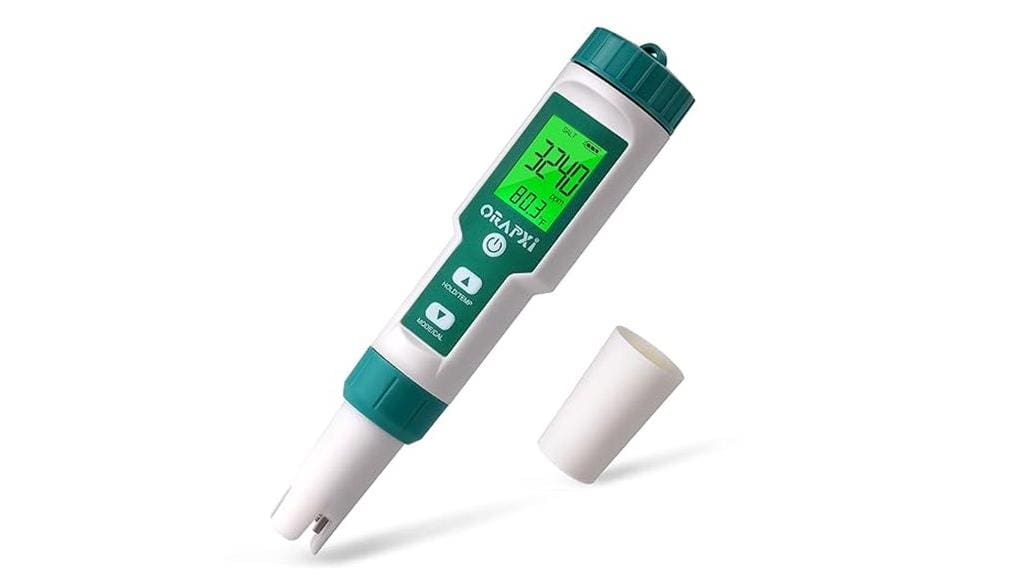
You’ll get five fast numeric readings—salinity, pH, TDS, EC, and temperature—with the ORAPXI 5‑in‑1, giving you precise, repeatable values for pools, spas, and aquariums. Calibrate and rinse the probe regularly, dip to the immersion mark, and wait seconds for stable LCD results. It’s compact, rugged, and faster and more consistent than color strips, though battery swaps and periodic calibration are required. Keep going to see practical usage, accuracy limits, and alternatives.
Some Key Takeaways
- Delivers fast, numeric readings for salinity, pH, TDS, EC, and temperature in seconds.
- Accurate and repeatable when probes are clean and regularly calibrated.
- Compact, durable design suitable for pools, spas, and aquariums.
- Practical upgrade over test strips for salt chlorinators and reef-sensitive systems.
- Moderate battery life; consider higher-end models for datalogging or wireless features.
Quick Verdict: Is the ORAPXI 5-In-1 Pool Salt Tester Worth Buying?
While simple in operation, the ORAPXI 5-in-1 Pool Salt Tester delivers precise, fast readings for salinity (0–9,990 ppm), pH (0.00–14.00), TDS, EC, and temperature, making it a practical upgrade over color strips for pool, spa, and aquarium owners; you’ll get reliable data in seconds. You can integrate it into your maintenance schedule to protect pool aesthetics and optimize equipment. Use its readings to plan seasonal adjustments and avoid overbuying chemicals. Compact design eases storage alongside chemical storage bins. For anyone who cares about consistent water quality and belonging to a mindful maintenance community, it’s worth buying. Many homeowners find digital testers essential for accurate salinity readings and everyday pool care.
What the ORAPXI Measures and How Accurate Its Readings Are
Because you need reliable metrics to manage saltwater systems, the ORAPXI measures five key parameters—salinity (0–9,990 ppm/10–100 ppt), pH (0.00–14.00), TDS, electrical conductivity (EC), and temperature—using a digital probe and LCD readout to deliver quantitative values in seconds. You’ll get consistent measurement precision suitable for pool, spa, and aquarium maintenance; salinity and EC correlate directly, while pH accuracy keeps sanitizer chemistry stable. Expect lab-adjacent repeatability when you perform regular sensor calibration and avoid extreme temperatures. Readings aren’t infallible—clean sensors and follow calibration schedules to maintain trustworthy data for your community of users. Our site offers a range of pool water test kits and accessories to help homeowners keep outdoor pools safe and balanced.
How to Use the ORAPXI: Step-by-Step Testing for Pools, Hot Tubs, and Aquariums
Start by rinsing the ORAPXI probe with clean water, then power it on and let the display stabilize before testing; this guarantees baseline accuracy and prevents cross-contamination between different water sources. Hold the device vertically, dip to the indicated immersion mark, wait for the LCD to settle, and record salinity, pH, TDS, EC, and temperature. Rinse between sites and sample depths. Use calibration tips: perform a fresh pH and EC calibration per manufacturer intervals or after extreme readings. Log results and follow a yearly maintenance schedule for probe storage, replacement, and battery checks to make certain consistent measurements and group confidence. For backyard pool owners, consider incorporating stylish lane dividers to help organize swimming areas and protect testing zones.
Real-World Performance: Speed, Reliability, Battery Life, and Durability
When you dip the ORAPXI into water it delivers near-instantaneous numeric readings—salinity, pH, TDS, EC, and temperature stabilize on the LCD within seconds—so routine testing becomes a quick, repeatable task rather than a time-consuming chore. You’ll appreciate consistent response times and tight repeatability across multiple samples; variance is minimal when you follow probe maintenance and calibration guidance. Battery life is moderate—typical AA/AAA or button-cell usage yields months of intermittent testing—but you should plan for straightforward battery replacement to avoid downtime. The housing feels rugged; sensors tolerate normal pool chemistry, though careful storage extends service life. This makes it an excellent tool for homeowners focused on pool care who want reliable, fast readings for maintaining outdoor water features.
Who Should Buy This Tester : Alternatives and Final Buying Recommendation
Many pool and aquarium owners will find the ORAPXI 5‑in‑1 an efficient, precise tool for maintaining salt and pH levels; it’s especially suited to users who need quick numeric readings (salt, pH, TDS, EC, temperature) for salt chlorine generators, hot tubs, and reef systems where accuracy matters. You should buy it if you want repeatable, digital measurements that replace strips and reduce consumable costs. Choose it for routine maintenance, salt chlorinator verification, or reef sensitivity checks. Consider budget alternatives if price is primary; seek models with advanced features only if you need datalogging, probe calibration, or Bluetooth integration. It also helps homeowners preserve their outdoor spaces by keeping pool chemistry stable and equipment running efficiently.
Some Questions Answered
How Often Should I Calibrate the ORAPXI for Accurate Readings?
Calibrate every 1–3 months for accurate readings. You’ll follow a calibration schedule based on use: weekly checks if you test daily, monthly if you test weekly, or every 3 months for infrequent use. Use the manufacturer’s calibration procedure with proper standard solutions, clean electrodes, and stable temperature. You’ll log each calibration and retest after adjustments to confirm accuracy. That keeps your measurements reliable and helps you belong to a careful user community.
Can the Tester Be Used in Chlorinated Freshwater Pools?
Yes — you can use it in chlorinated freshwater pools, but it’s optimized for measuring salinity so readings may sit near zero. You’ll monitor pH, TDS, EC and temperature effectively, yet watch for sensor drift if sensors sit unused or face heavy chlorine exposure. Calibrate regularly, rinse after testing, and track water chemistry trends. You’ll belong to a group of proactive owners who maintain consistent, reliable pool data.
Are Replacement Probes or Parts Available?
Yes — replacement probes aren’t typically sold by ORAPXI directly, but you can source replacement probes or third party parts compatible with standard pH/salt meter fittings. You’ll want to match probe specs (connector type, range, temperature compensation) before buying. Check vendor manuals or contact support to confirm compatibility. If you prefer community-tested options, pool-owner forums and aquarium groups often recommend reliable third party parts and sellers.
Is the Device Waterproof for Submerged Use?
Yes — you can submerge it briefly for testing, but it’s not rated for long-term underwater use. Check the waterproof rating to confirm short immersion tolerance; the unit’s design supports submerged safety during measurement dips, not continuous submersion. You’ll want to avoid leaving it underwater or exposing battery compartment to moisture. Treat it as splash- and dip-resistant, follow manufacturer care, and store it dry between uses to preserve accuracy and lifespan.
What Type and Size of Batteries Does It Require?
It uses two power options: alkaline AA cells for primary handheld operation and a backup coin cell CR2032 for memory/clock retention. You’ll install AA cells in the main compartment for full function; keep a CR2032 on hand to preserve settings when swapping AAs. You’ll want fresh alkaline AA cells for reliable readings and a sealed CR2032 to avoid data loss. This setup keeps your device precise and community-supported.