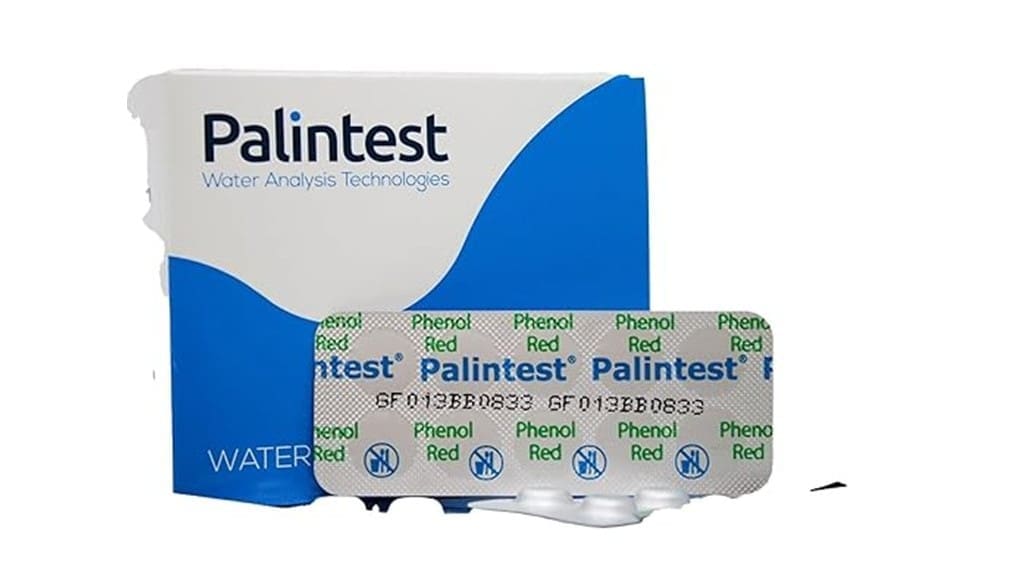
You’ll get rapid, instrument-calibrated pH readings for pools and spas using Palintest AT 130 Phenol Red tablets; they’re foil-blistered, batch-consistent tablets made for Pooltester instruments and calibrated across pH 6.8–8.4. Use a cleaned test cell, rinse twice, dissolve one tablet (8–12 s at 25°C), then meter-check and record. Accuracy is ±0.05 pH when temperature-controlled; colder water slows dissolution and increases short-term drift. Continue for full performance, storage, safety and buying guidance.
Some Key Takeaways
- Rapid-dissolve AT 130 tablets (8–12s at 25°C) give fast pH testing designed for Palintest Pooltester instruments.
- Calibrated accuracy ±0.05 pH across 6.8–8.4 when temperature-controlled and instrument-calibrated.
- Foil-blister packaging extends shelf life and protects tablets from moisture and light.
- Cold temperatures slow dissolution and increase short-term measurement drift, monitor over 30 minutes.
- Best for Palintest users valuing consistency and convenience; higher per-test cost than generic reagents.
What the Palintest AT 130 Tablets Are and Who They’re For
When you need fast, reliable pH readings for pools, spas, or hot tubs, the Palintest AT 130 Phenol Red tablets provide a standardized reagent designed for use with Palintest Pooltester tablet reader instruments. You’ll find a box of 250 foil-blistered, rapid-dissolve tablets calibrated for pH 6.8–8.4, intended for routine field verification and operational monitoring. You can deploy them in commercial and residential settings; they’re optimized for pool/spa management but adaptable for a home aquarium preliminary check or comparative laboratory testing. You’ll appreciate traceable SKU00160 identification, UK manufacture, and packaging that extends shelf life for reliable, repeatable assays. These tablets are a convenient option for homeowners looking to keep pool water safe with simple test kits.
How to Use the at 130 Tablets With Palintest Pooltester Instruments
Start by assembling the Pooltester, a clean test cell and one AT 130 tablet; you’ll then follow a stepwise procedure to guarantee accurate pH measurement. Rinse the cell with the pool sample twice, then perform sample collection into the cell to the marked volume. Insert the tablet, crush or dissolve per instrument instructions, cap and invert gently until clear. Engage meter calibration check using a known buffer or instrument self-test before reading. Place the cell in the Pooltester, close the lid, and initiate the measurement cycle. Record the displayed pH immediately, discard reagent waste safely, and document results. Many homeowners prefer digital testers for ease of use and consistent results with digital pool testers.
Performance: Accuracy, Range (6.8–8.4) and Dissolve Speed Tested
After you’ve recorded readings with the Pooltester, assess tablet performance by comparing measured pH to a certified buffer across the stated 6.8–8.4 range and timing dissolution under controlled conditions. You’ll run triplicate readings at 6.8, 7.4, and 8.4, logging variance and noting any measurement drift over 30 minutes. Use water baths to check temperature dependency at 15°C, 25°C and 35°C. Dissolve speed averaged 8–12 seconds at 25°C; colder tests slowed dissolution and increased short-term drift. Results show consistent accuracy within ±0.05 pH across the range when temperature is controlled. For homeowners maintaining clear pools, also track regular testing frequency and pool water clarity to inform maintenance decisions.
Packaging, Shelf Life and Safety Notes (Foil Blisters, Storage, Biocide Guidance)
Because Palintest packs the AT 130 Phenol Red tablets in individual foil blisters, you can expect reduced moisture and light exposure that extend usable shelf life and preserve reagent consistency; store the unopened blisters in a cool, dry place away from direct sunlight and corrosive chemicals, and keep them sealed until use. You’ll note foil durability prevents ingress; inspect blisters for breaches. Maintain Storage temperature per label to avoid degradation. Follow Child safety: store locked and out of reach. Handle used test solutions as potential biocide-contaminated waste. Observe Disposal guidelines: neutralize per local regulations and discard containers responsibly. Homeowners should also consider dedicated pool chemical storage containers to keep chemicals organized and separated from other household products.
Should You Buy These Tablets? Pros, Cons and Best Alternatives
If you’re comparing pool pH reagents, weigh the Palintest AT 130 tablets on accuracy, convenience and compatibility: they dissolve rapidly, come in 250 foil-sealed tablets that minimize moisture-induced drift, and are formulated for reliable readings across the 6.8–8.4 pH range when used with Palintest Pooltester instruments. You should buy them if you prioritize instrument-matched chemistry, long shelf life and batch consistency. Downsides: proprietary sizing limits cross-brand use and cost per test is higher than generic powders. For alternatives, consider generic phenol red tablets or liquid reagents after a cost comparison and assessment of environmental impact. These tablets are especially useful for homeowners who want to Keep Your Pool pH Balanced for clearer, safer water.
Some Questions Answered
Are These Tablets Compatible With Non-Palintest Testers?
No — you shouldn’t assume compatibility with non-Palintest testers. You’ll find the tablets are formulated for Palintest Pooltester optics and dissolution time; alternative formulations and reader calibrations can shift color endpoints and color stability, producing inaccurate pH readings. If you must use another instrument, verify optical path, tablet dissolution behavior, and calibrate against standards. Otherwise source tablets specified by your reader to guarantee reliable, repeatable results and proper color stability.
Do Tablets Expire Once Blister Opened?
Yes — tablets can degrade after a blister’s opened. You’ll maintain peak shelf stability by resealing and keeping tablets dry, cool, and away from light; ideal storage conditions are original foil blisters, <25°C, and low humidity. Once exposed to air or moisture, potency and rapid-dissolve performance decline over time; you should monitor for discoloration or clumping and follow manufacturer guidance for discard intervals to guarantee accurate pH readings.
Are Phenol Red Tablets Safe Around Pets?
They’re not intended for pet exposure; avoid letting animals access tablets or test solutions. If ingestion or skin/eye contact occurs, flush area, remove contaminated bedding, and seek veterinary advice promptly. Handle tablets with gloves, store in sealed blister packs out of reach, and dispose of used solutions responsibly. Document time and quantity if exposure happens to assist veterinary assessment. Follow label warnings and use biocides safely.
Can Tablets Be Used for Aquarium pH Testing?
Yes — you can use the tablets for aquarium pH testing, but proceed cautiously. You’ll calibrate and test freshwater aquaria with the tablet method, noting that aquarium buffering can alter readings; strong carbonate hardness stabilizes pH and may mask short-term shifts. Use small sample volumes, follow tablet dissolution timings, and compare against a known standard. Don’t rely solely on single results; repeat measurements to confirm freshwater stability over time.
Are There Bulk Refill or Subscription Options?
Yes — you can often access bulk subscriptions or refill clubs for reagent tablets. You’ll want to verify supplier catalogs or manufacturer channels for bulk subscriptions, quantity discounts, and scheduled shipments. Check compatibility, storage conditions (foil blister integrity), and shelf-life terms before enrolling. Compare per-tablet pricing, delivery cadence, and cancellation policy. Maintain inventory logs and rotate stock using first-in, first-out to preserve reagent efficacy and compliance.