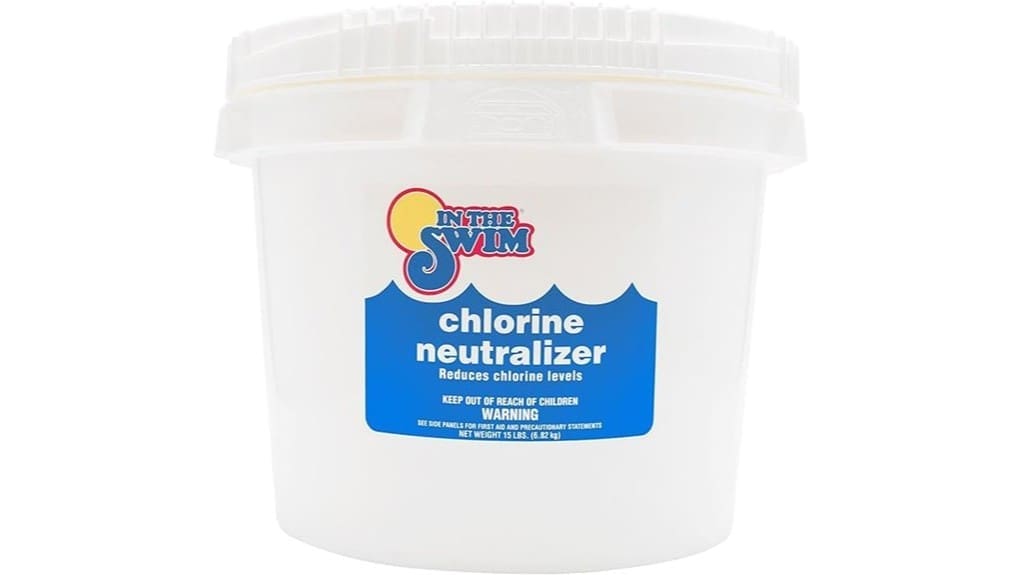
You’ll get a fast, predictable way to knock down excess chlorine with In The Swim Chlorine Neutralizer; it’s a granular sodium thiosulfate (~90% active) that treats about 5.5 ppm per 5-ounce dose in 10,000 gallons and a 15‑lb bag gives roughly 48 doses. You’ll broadcast dry granules with the pump on, wear gloves and eye protection, retest after 15–30 minutes, and repeat only if needed — keep going for specifics on dosing, safety, and cost.
Some Key Takeaways
- 15-lb granular sodium thiosulfate (~90% active) neutralizes free chlorine rapidly and is broadcastable without premixing.
- Recommended dose: about 5 ounces per 10,000 gallons reduces free chlorine roughly 5.5 ppm per dose.
- One 15-lb bag yields ~48 full 5-ounce doses, treating about 480,000 gallons cumulatively.
- Wear gloves/eye protection, run the pump 1–2 hours after application, and retest chlorine within 15–30 minutes.
- Cost-effective and predictable for routine dechlorination, with hydrogen peroxide noted as an alternative.
Quick Verdict: Is In The Swim Chlorine Neutralizer Worth Buying?
Although it neutralizes chlorine quickly and reliably, whether it’s worth buying depends on your needs: In The Swim Chlorine Neutralizer is a 15‑lb granular sodium thiosulfate product (90% active) that lowers free chlorine at a rate of about 5.5 ppm per 5 ounces per 10,000 gallons, so it’s a practical, cost-effective choice if you regularly need to drop chlorine levels to reduce eye/skin irritation or rinse down pool water after shock treatments. You’ll get fast relief from high free chlorine with straightforward granular application, predictable dosing, and clear cost effectiveness when routine dechlorination is part of your pool care. Keep your pool plumbing safe in winter by protecting pipes with antifreeze for pools to prevent freeze damage.
What’s in the Bag and How Much Will It Treat?
A single 15‑lb bag contains granular sodium thiosulfate at about 90% active ingredient, so you can treat large volumes of water without premixing; using the stated dosing—roughly 5 ounces per 10,000 gallons—each bag supplies approximately 48 full 5‑ounce doses, enough to lower free chlorine by about 5.5 ppm per dose in that volume. You’ll find the package weight clearly labeled; the granular form lets you broadcast product directly into the pool. Treatment capacity is straightforward to calculate: multiply doses by 10,000 gallons. This clarity helps you plan purchases and match neutralizer supply to seasonal pool usage. Consider pairing neutralizer use with proper equipment maintenance like filter cartridge care to keep water clean and extend system life.
How to Use It Safely and Effectively in Your Pool
When you need to lower free chlorine quickly and safely, follow the product dosing and basic pool-safety practices: measure pool volume, test current chlorine, then add the recommended 5 ounces per 10,000 gallons (or proportionally) of the granular sodium thiosulfate directly to the pool while the pump runs to promote distribution. Wear protective gear (gloves and eye protection) when handling the granules. Confirm pump circulation for at least 1–2 hours, then retest free chlorine. Use proper dosing—repeat only if residuals remain high. Store the 15-pound container sealed, dry, labeled, and out of reach to maintain pool safety and product efficacy. This product is especially useful for homeowners who enjoy their outdoor spaces and need a quick way to lower chlorine after shock treatments.
Real-World Performance: Chlorine Reduction, Eye and Skin Benefits, and Troubleshooting
Having followed proper dosing and circulation, you’ll see how the In The Swim sodium thiosulfate performs in practice: it reliably knocks down free chlorine quickly—about 5 ounces per 10,000 gallons reduces chlorine by roughly 5.5 ppm—while also easing chlorine-related eye and skin irritation when levels are brought into the recommended range. In real-world use, chlorine persistence falls predictably after treatment; test within 15–30 minutes and again after circulation to confirm. Swimmer comfort improves when free chlorine returns to target. Troubleshooting: if chlorine rebounds, check source dosing, organic load, and filtration; repeat measured applications rather than overdosing. Homeowners can also use simple pool water test kits to monitor levels and maintain a safe swimming environment.
Should You Buy It? Cost, Alternatives, and Final Recommendation
If you want a fast, inexpensive way to neutralize excess chlorine, In The Swim’s 15 lb sodium thiosulfate is a practical choice. You’ll get 90% active granules that act immediately; typical dosing (5 oz per 10,000 gallons ≈ −5.5 ppm) makes results predictable. For cost comparison, price per pound is low versus branded liquid neutralizers and small bottles of sodium thiosulfate; calculate dose-based cost for accuracy. Alternative chemicals like hydrogen peroxide work but need careful dosing and may oxidize other contaminants. Recommendation: buy this product if you require rapid, low-cost dechlorination and follow dosing and handling instructions precisely. Many homeowners who maintain their pools themselves prefer purchasing chlorine treatment supplies from specialty retailers that focus on pool chemicals and related outdoor products.
Some Questions Answered
Is Sodium Thiosulfate Safe for Aquatic Life Like Fish and Plants?
Yes — when dosed correctly, sodium thiosulfate is generally safe for fish safety and aquatic plants because it neutralizes harmful free chlorine without leaving toxic residues. You should follow the product’s dosage guidelines (e.g., 5 ounces per 10,000 gallons lowers chlorine ~5.5 ppm) to avoid sudden chemical shifts. Overdosing can alter water chemistry, so measure carefully and monitor chlorine and pH to protect fish and aquatic plants.
Can It Be Used With Saltwater Pools and Salt Chlorine Generators?
Yes — you can use it in saltwater pools, but watch saltwater compatibility and generator interaction. You’ll dose sodium thiosulfate to neutralize free chlorine; it won’t harm salt levels or the cell. However, once chlorine’s removed, your salt chlorine generator won’t produce more until chlorine sanitizer is re-established, so monitor chlorine and run the generator as needed. Follow dosage guidelines and retest water to keep levels balanced for safety.
How Long Does It Take to Fully Dissolve in Cold Water?
You’ll typically see full dissolution in cold water within 5–20 minutes, though colder temperatures push toward the slower end. Because granule settling occurs, stir or agitate to speed it up; smaller particle size dissolves faster than coarse granules. Expect a slow dissolve if you dump large amounts at once—breaking up clumps and spreading the dose over the surface helps guarantee consistent, evidence-based reduction of free chlorine.
Is It Compatible With Common Pool Algaecides and Clarifiers?
Yes — you can use it with common pool algaecides and clarifiers, but watch chemical interactions and application timing. You’ll apply the neutralizer first to remove free chlorine, then wait for levels to stabilize before adding algaecide or clarifier. That prevents deactivation of active ingredients. Follow label dosages and retest chlorine and pH; adjust application timing based on test results to make sure treatments remain effective and predictable.
How Should Leftover Product Be Stored Long-Term?
Store leftover product in a cool, darkspotting place away from heat and sunlight; this preserves potency and prevents caking. Keep the granules in airtight containers to block moisture and contaminants. Label containers with contents and date, and don’t mix with other chemicals. Check periodically for clumping or discoloration; if you see significant change, dispose of it per local hazardous-waste rules. Keep out of reach of children and pets.