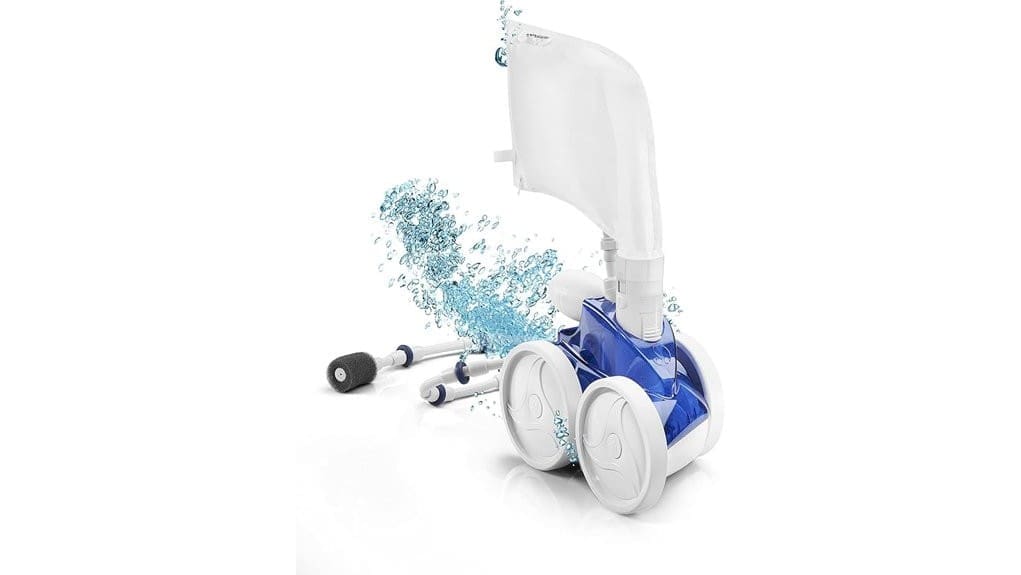
If you need a pressure‑side cleaner that hauls leaves, acorns, and pebbles with minimal babysitting, the Polaris Vac‑Sweep 380 is a solid pick. It uses triple‑venturi jets and a booster pump to self‑propel, scrub, and suck debris into a large single‑bag inlet without frequent clogs. Expect full coverage in under three hours on typical pools, routine brush and hose upkeep, and extra pump cost—keep going to see specs, pros, cons, and buying tips.
Some Key Takeaways
- Powerful pressure‑side cleaning using triple‑venturi jets and a booster pump efficiently removes leaves, acorns, and pebbles.
- Large 2.25″ inlet and single‑chamber 5‑L debris bag reduce clogging and handle mixed heavy debris well.
- Self‑propelled motion scrubs floors and walls, typically completing a full clean in under three hours.
- Requires a Polaris‑compatible booster pump (sold separately) and careful hose routing to prevent kinks and stalls.
- Midrange price with one‑year warranty; expect brush wear, occasional valve issues, and routine bag/hose maintenance.
Quick Verdict : Who the Polaris Vac‑Sweep 380 Is Best For
If you want a pressure‑side cleaner that rips through heavy debris and finishes a full clean in three hours or less, the Polaris Vac‑Sweep 380 is a strong choice. You’ll favor it if you need robust pickup of leaves, acorns and pebbles without constant intervention. It’s especially apt for budget buyers who want high-capacity single‑bag debris collection and reliable propulsion using a booster pump. You’ll also appreciate its compatibility with small pools and varied surfaces—vinyl to pebble—so you won’t overspend on a specialty model. It’s not for those wanting cordless or low‑pressure suction solutions. The Vac‑Sweep 380 is a popular option among homeowners who enjoy enhancing their outdoor spaces with reliable automated pool care and robotic pool vacuums.
How the Vac‑Sweep 380 Cleans: Key Features and Real‑World Performance
Having established who benefits most from the Vac‑Sweep 380, let’s look at how it actually cleans your pool. You’ll notice its triple‑venturi jets and booster pump create focused flow dynamics that power propulsion and suction. The large 2.25″ inlet and self‑propelled motion let it sweep and scrub floors and walls efficiently. In real use it captures mixed loads—leaves, pebbles, even acorns—into the single‑chamber debris bag without frequent clogging. Maneuvering is fluid; coverage completes in under three hours on typical pools. Overall, you get consistent debris capture and dependable mechanical scrubbing across surfaces. This model is a popular choice among homeowners who appreciate above‑ground pool accessories for maintaining outdoor living spaces.
What’s Included, Specs, and Installation Requirements (Hose, Pump, Bag)
Because the Vac‑Sweep 380 relies on pressure-side operation, make sure you’ve got the right hose, booster pump, and debris bag before setup: the package includes the Vac‑Sweep 380 unit, a 31‑ft feed hose, and a single‑chamber debris bag rated to hold about 5 liters, while the cleaner itself measures roughly 9.75″ L x 20″ W x 22.5″ H and uses a large 2.25″ inlet to handle sizeable debris; note that the system requires a separate Polaris‑compatible booster pump (not included) to deliver triple‑venturi jet power, and installation is user‑installed with no assembly required.
Plan hose routing to avoid kinks and excess drag; keep the 31‑ft hose straightened and positioned for full pool coverage. Check pump sizing: choose a Polaris‑specified booster pump that matches flow/pressure requirements to guarantee peak sweep time and debris capture. The debris bag is easy to empty and accommodates mixed debris; replace as needed for heavy leaf loads. Upgrade kits and filter accessories from pool supply specialists can simplify matching components like hoses and pumps for best performance with the Vac‑Sweep 380, see filter kit solutions for compatible options.
Pros, Cons, and Common Problems Buyers Report
Once your hose, booster pump, and bag are set up and the 380’s sweep pattern is established, you’ll notice clear strengths and a few predictable weaknesses. You’ll appreciate strong suction, large inlet pickup, and efficient debris collection in under three hours. Pros: reliable propulsion, effective scrubbing, and single-chamber capacity for leaves and pebbles. Cons: routine wear points—brush wear reduces scrub effectiveness over time; hose kinking can stall motion; some users report valve issues with booster setups; and prolonged exposure to coarse debris may cause bag tearing. Overall, it’s robust but requires inspection and occasional part replacement to stay optimal. Consider pairing it with a variable-speed pump to maximize energy efficiency and quieter operation.
Buying Guidance: Price, Warranty, Alternatives, and Maintenance Tips
When you shop for a Polaris Vac-Sweep 380, expect to pay a midrange price for a pressure-side cleaner that trades upward performance for the cost of a required booster pump; factor in the booster pump price (and possibly preassembled hose kits) when comparing total system cost. For price comparison, tally pump, hoses, and shipping. Check warranty details: Fluidra backs defects for one year—keep proof of purchase and register if available. Follow a strict maintenance schedule: rinse bag after each cycle, inspect jets monthly, replace worn hose sections annually. Consider alternative models (robotic or suction-side) if you want lower install cost. Make sure your pool pump and motor are properly sized and maintained to keep the cleaner operating efficiently and to protect the pool pump motor.
Some Questions Answered
Can It Run Without the Polaris Booster Pump?
No — it needs a booster pump to operate effectively. Booster necessity is real: the Vac-Sweep 380 depends on high-pressure flow for propulsion, vacuuming, and debris capture. Pump alternatives (like some high-flow filter systems) rarely provide consistent pressure and won’t deliver full performance or could void warranty. If you lack a Polaris booster, evaluate compatible booster pumps or consult Fluidra support for approved Pump alternatives to make certain proper cleaning and avoid damage.
Is the Debris Bag Compatible With Third‑Party Replacements?
Yes — you can use third‑party debris bag replacements, but check fit and inlet alignment first. Replacement availability is generally good from aftermarket suppliers and pool parts shops. Evaluate fabric durability closely: OEM mesh tends to last longer under high flow and rough debris than cheaper alternatives. You’ll want reinforced seams and sturdy attachment rings to avoid tears and leaks. Replace proactively if you see fraying or reduced suction performance.
How Loud Is the Cleaner During Operation?
You’ll find the noise level moderate — not whisper‑quiet but not deafening. The sound profile is a steady whoosh and rhythmic jet pulse from the booster pump and triple venturi jets. You’ll hear propulsion and suction tones while it sweeps; vibration is minimal at the pool shell. If you’re sensitive to noise, you’ll notice it more near the pool equipment pad, but from typical yard distances it blends into ambient outdoor sounds.
Can It Handle Pools Deeper Than 12 Feet?
Yes — it can handle deep water beyond 12 feet, but you’ll need correct pressure adaptability. You’ll run the Vac-Sweep 380 off a separate booster pump so it maintains jet force and maneuverability at depth. Performance depends on hose length, pump flow and proper setup; otherwise suction and steering degrade. Check booster pump specs and hose routing to guarantee consistent pressure for reliable deep-water cleaning and debris pickup.
Is Winter Storage Required in Freezing Climates?
Yes — you should winterize it in freezing climates. Follow a winterizing checklist: drain hoses, remove the Vac-Sweep 380 and debris bag, store indoors in a dry place, and clean/lubricate fittings. Consider antifreeze options for lines and low spots per manufacturer guidance (use pool-grade, non-toxic antifreeze only). Proper storage prevents cracking and motor damage, so don’t skip these steps if temperatures drop below freezing.