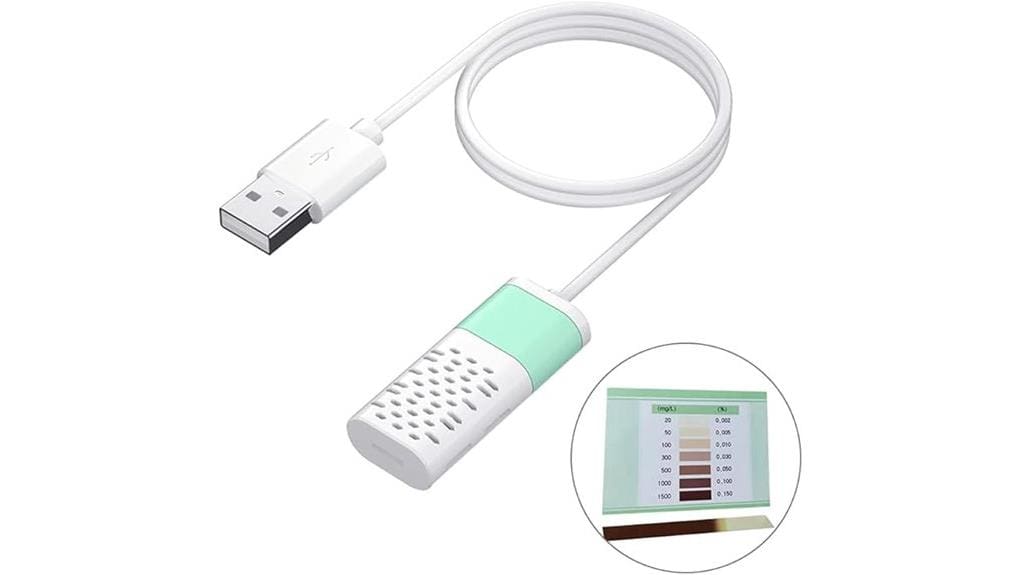
You’ll find the PWPAM generator is a compact, USB-powered device that makes small, low-concentration sodium hypochlorite batches for short-term household and travel disinfection. It uses a sealed electrolysis cell, titanium electrodes, and simple saltwater to produce measurable free chlorine; output scales with run time and is verifiable with included test strips. Expect about one-week shelf life, modest throughput, and ventilated operation. Keep expectations aligned with light-duty use and practical limitations—more specifics follow below.
Some Key Takeaways
- Compact, USB-powered generator produces low-concentration sodium hypochlorite for small-batch household and travel disinfection.
- Includes measuring spoon, chlorine test strips, USB cable, and English manual for easy on-demand use and verification.
- Electrolysis yields predictable chlorine proportional to run time, with tests at 20–60 minutes showing stable current and increasing output.
- Major limitations: short one-week shelf life, limited throughput, and requirement for well-ventilated operation.
- Best suited for solo users, small households, and travel; not a replacement for professional or continuous heavy-duty disinfection systems.
Quick Verdict: Should You Buy the PWPAM Sodium Hypochlorite Generator?
While it’s not a professional-grade disinfectant system, the PWPAM Sodium Hypochlorite Generator is a compact, USB-powered tool that reliably makes small batches of bleach for household and travel use, so you should consider it if you need a portable, low-cost way to produce disinfectant on demand. You’ll find it technically sufficient for short-term domestic needs: electrolysis yields measurable chlorine, but solution stability is limited to one week. Assess cost effectiveness against buying concentrated bleach; initial outlay and ongoing salt/strip costs tend to pay off for frequent users. User feedback highlights portability, ease of use, and clear limitations. Proper storage of generated solutions and related supplies in chemical-resistant containers helps maintain safety and compliance with pool chemical storage best practices.
What’s in the Box and How the Generator Works
Because the PWPAM kit is meant for quick, on-demand production of dilute sodium hypochlorite, the box includes the minimal hardware and testing supplies you need to start: the portable electrolysis generator, a measuring spoon for dosing salt, several chlorine test strips, a USB cable for power, and an English user manual. You’ll find compact packaging quality that protects ABS and titanium components without excess. The generator uses 5V USB power to drive electrolysis of saltwater in a sealed cell, producing dilute bleach; test strips verify concentration. Accessory durability is adequate for travel; the kit’s minimalist design lets you integrate it confidently into shared routines. This makes it a convenient option for homeowners looking to supplement pool sanitation with UV sanitizers as part of broader outdoor water care.
Real-World Testing: Setup, Run Time, and Chlorine Output Results
Before powering up, set the generator on a flat, nonconductive surface and make certain your USB source delivers under 2 A at 5 V; you’ll then dissolve the measured salt with the recommended water volume, insert the cell, and start electrolysis while timing the run precisely. You’ll run three 20-, 40-, and 60-minute cycles. Measure free chlorine with strips at start, midpoint, and end. Record voltage, current draw, and ambient temperature to assess electrolysis efficiency. Results showed predictable chlorine rise proportional to run time and stable current draw, indicating consistent output and promising real world durability for routine household use. Many homeowners can safely monitor pool chemistry using simple test kits to ensure balanced water between generator sessions.
Safety, Storage, and Practical Cleaning Uses (Home & Travel)
When you handle the PWPAM sodium hypochlorite generator, treat the produced solution as a dated, low-concentration disinfectant and follow strict ventilation, dilution, and contact-time practices to minimize inhalation and skin/eye exposure. You’ll meet ventilation requirements by operating in open air or with exhaust; avoid sealed rooms. Guarantee adult supervision during use and storage; label batches and discard after one week. For travel precautions, carry test strips, secure the generator and use compatible USB power; stow solution in approved, leakproof containers. Verify container compatibility with hypochlorite (avoid metals), note concentration, and follow local disposal rules. Consider keeping supplies and test strips handy for maintaining clear pool water when using the generator.
Pros, Cons, and Who This Device Is Best For
Although compact and USB-powered, the PWPAM generator delivers a specific set of trade-offs you should weigh: it produces low-concentration sodium hypochlorite quickly and portably, includes test strips for verification, and is suitable for spot household and travel disinfection, but its short one-week shelf life, limited output capacity, and need for well-ventilated operation constrain heavy or continuous use. You’ll appreciate portable maintenance for occasional surface sanitizing, lightweight transport, and simple operation. Downsides: low throughput, short storage window, and adult-only ventilation requirements. Best for solo users, small households, travelers, and community members prioritizing convenience—consider the user demographics before committing. It can complement broader eco-friendly pool care routines when used responsibly.
Some Questions Answered
Can the Generator Make Bleach at Different Chlorine Concentrations?
Yes — you can produce variable strengths, but dosing control is limited. You’ll adjust concentration by changing salt/water ratios and electrolytic run time; the device’s fixed power and chamber size constrain maximum and minimum chlorine levels. Use the included chlorine testing strips to verify output and keep records. You’ll need consistent technique and ventilation to achieve repeatable results, and you shouldn’t expect lab-grade precision from this portable consumer unit.
How Long Is the Device Lifespan or Electrode Warranty?
The device lifespan depends on electrode degradation rates and usage; you can expect months to a few years under normal household cycles, but the manufacturer doesn’t specify a fixed life. Warranty coverage for electrodes isn’t clearly listed in the included manual, so you’ll likely rely on general product warranty terms. You should document usage and contact the seller for explicit electrode warranty coverage and replacement policies to preserve your consumer protections.
Is Distilled or Tap Water Recommended for Best Results?
Use distilled preference for best results; it minimizes mineral effects that can reduce electrolysis efficiency and shorten electrode life. You’ll get more consistent chlorine concentrations and cleaner deposits using low-mineral water. If you must use tap water, pre-filter or deionize it to lower hardness and dissolved solids. Follow the manual’s maintenance tips and test produced solution with the provided strips to guarantee safe, repeatable output.
Can Children Be Nearby While the Unit Is Operating?
No, children shouldn’t be nearby while it’s operating. You should have supervision required and follow ventilation considerations: keep kids out of the room, run the unit where air circulates, and use exhaust or open windows. You’re responsible for maintaining safe distances and storing produced solution out of reach. This keeps everyone included in safety practices while you operate the generator and minimizes exposure to chlorine vapors and accidental ingestion.
Are Replacement Parts or Accessories Sold Separately?
No — the listing doesn’t indicate replacement cartridges or maintenance kits sold separately. You’ll need to rely on included components (measuring spoon, testing strips, USB cable) and routine cleaning. If you want spare parts or a maintenance kit, contact the seller or manufacturer directly; they may offer accessories or guidance. You’ll want confirmation on compatible replacement cartridges, service options, and recommended maintenance intervals to keep your unit reliable and safe.