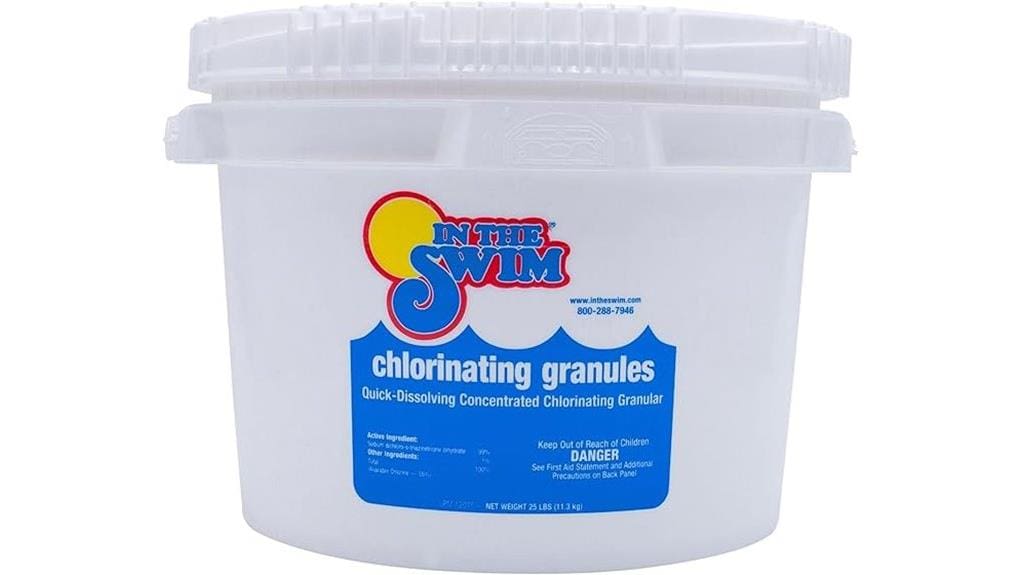
You’ll find In The Swim Sodium Dichlor shock delivers fast, stabilized chlorination with predictable free-chlorine peaks and minimal pH disturbance, thanks to its pH-balanced, calcium-free granules (56% available chlorine). It dissolves quickly for reliable dosing—3 oz/10,000 gal routine, 21 oz/10,000 gal shock—while adding cyanuric acid over time and requiring moisture-safe storage. It’s ideal for routine and super‑chlorination in pools, spas, and fountains; continue for full performance, dosing nuances, and comparison to other shocks. A comprehensive yellow out swimming pool treatment guide can help you address issues with algae blooms effectively. By following the step-by-step instructions outlined in the guide, you can restore your pool’s clarity and ensure a safe swimming environment. Regular maintenance and proper chemical balancing are crucial for preventing future yellowing and keeping your pool water inviting.
Some Key Takeaways
- Fast-dissolving, pH-balanced granular sodium dichlor provides rapid, predictable free-chlorine peaks for shock and routine maintenance.
- Contains 56% available chlorine and is stabilized, offering longer residual sanitation than unstabilized bleach.
- Calcium-free formula suits pools, spas, fountains, and saltwater systems without raising water hardness.
- Regular use builds cyanuric acid; store sealed in cool, dry conditions to prevent moisture degradation.
- Typical dosing: 3 oz/10,000 gal routine, 21 oz/10,000 gal shock; dissolve fully to avoid temporary clouding.
Quick Verdict and At-a-Glance Specs for In The Swim Sodium Dichlor Chlorine Shock Granules
Cut through the clutter: In The Swim Sodium Dichlor Chlorine Shock Granules deliver a concentrated, stabilized chlorination solution (99% sodium dichlor; 56% available chlorine) in a fast-dissolving, pH‑balanced granular form designed for routine and shock treatments across pools, spas, fountains, and water features. You’ll get a 25 lb unit (some listings show 28 lb) that’s calcium-free, stabilized, and suited to varied systems. Specifications, dosage guidelines, and stability testing protocols are clear so you can integrate it confidently. Follow labeled storage tips—cool, dry, sealed container—to preserve efficacy and sustain your community of pool stewards. Improve pool water clarity by pairing it with the right filter powder for best results.
How Well It Sanitizes: Performance, Available Chlorine, and Real-World Results
Having established the product’s composition and dosing framework, let’s examine how effectively In The Swim Sodium Dichlor sanitizes in practice. You’ll get 56% available chlorine, which establishes rapid free chlorine peaks for shock treatments and measurable chlorine residuals afterward. In routine dosing you maintain sanitizer longevity due to the stabilized dichlor form, reducing consumption between shocks. Under moderate organic load you’ll see effective bacterial and algae control; heavy organic load requires increased shock frequency to restore free chlorine. Follow measured testing and dosing—this product delivers predictable, fast-acting sanitation that integrates well with your pool care regimen. Many homeowners find it convenient for regular maintenance of outdoor pools.
Safe, Easy Use: Dosing, Dissolution, pH Effects, and Compatibility With Pools/Spas
While you handle routine chlorination and shock treatments, In The Swim Sodium Dichlor offers straightforward dosing and rapid dissolution that minimize fuss and dosing errors. You’ll apply specified routine (3 oz/10,000 gal) or shock (21 oz/10,000 gal) dosages to achieve consistent sanitizer levels; dosage accuracy reduces corrective adjustments. The granules show a high dissolution rate and are pH-balanced, so you won’t induce significant alkalinity swings; expect a modest residual stabilizer from cyanuric acid content. Compatibility extends to pools, spas, fountains and hard-water areas due to calcium-free formulation. Monitor for transient clouding potential if added undissolved or in still water. It’s a good choice for homeowners maintaining saltwater pool systems who want low-maintenance sanitizer options.
Pros, Cons, and How It Compares to Other Pool Shock Types (Cal-Hypo, Bleach, Trichlor)
Comparing sodium dichlor to other shock types, you’ll find distinct trade-offs in effectiveness, handling, and pool chemistry management. You’ll appreciate sodium dichlor’s stabilized chlorine—steady residual with 56% available chlorine—and pH neutrality, which makes dosing predictable versus bleach (fast, unstabilized) and trichlor (slow, tablet form). Compared with calcium hypochlorite, it’s calcium-free, avoiding hardness increases. Cons: regular use causes stabilizer buildup (cyanuric acid) and requires monitoring; granules need careful storage safety to prevent moisture exposure. You’ll choose sodium dichlor when you want stabilized, fast-dissolving shock that’s easy to handle but must manage CYA and storage responsibly. The site also offers a range of pool chlorine tablet products for homeowners who enjoy their outdoor spaces, helping you find the right options for maintenance and storage pool chlorine tablets.
Who Should Buy It and Best Ways to Save (Use Cases, Container Size, and Purchasing Tips)
If you manage a residential or small commercial pool and need a reliable, fast-dissolving, stabilized shock that won’t raise calcium hardness, In The Swim Sodium Dichlor is a practical choice—you’ll get predictable, pH-neutral dosing and sustained chlorine residuals suited for routine chlorination and periodic super-chlorination. You should buy it if you value stabilized, calcium-free granules for pools, spas, and water features. Opt for the 25 lb tub for frequent use; choose seasonal purchasing to stock before peak months. For savings, buy in bulk storage quantities, split costs with fellow operators, and watch for supplier discounts or bundled offers. This product fits well into a homeowner’s pool opening checklist for preparing outdoor water features.
Some Questions Answered
Is This Product Safe to Store Indoors Long-Term?
Yes — you can store it indoors, but you should take precautions to prevent long term degradation. You’ll keep granules in a cool, dry, well-ventilated area away from heat, sunlight, moisture and incompatible chemicals (acids, organics). Use original sealed container or an airtight, labeled chemical-safe bin and inspect periodically for caking or odor. Following these steps preserves potency, minimizes dust and hazard, and helps you feel secure in communal storage.
Can It Be Used in Combination With Algaecides or Clarifiers?
Yes — you can combine it with most pool algaecides and clarifiers if you follow timing and dosing. Algaecide compatibility requires waiting until free chlorine drops below manufacturer-recommended levels (usually under 5 ppm) before adding copper or polymer algaecides. For clarifier interactions, add clarifiers after chlorine has circulated and debris is oxidized. You’ll maintain efficacy and community safety by measuring levels, following product directions, and avoiding simultaneous heavy dosing.
How Should Spills Be Cleaned up Safely?
You should contain the spill immediately, protect skin, and avoid inhalation. Don PPE: gloves, goggles, long sleeves. Use spill containment barriers or absorbent materials to confine granules, then sweep carefully into a labeled, sealed container. Neutralize residues with plenty of water while avoiding splashes. Decontaminate tools and affected surfaces, wash your skin promptly if exposed, and dispose of waste per local hazardous-waste rules. Report large spills to authorities.
Is It Shipped Restricted by Air or Ground Carriers?
Yes — you’ll find restrictions: air transport is generally prohibited or tightly limited for sodium dichlor, while ground shipping is the standard method. You should expect carriers to require proper labeling, packaging, and safety documentation for ground shipments; airlines typically ban or require hazardous materials handling. Check carrier-specific Dangerous Goods rules and coordinate with the seller so you belong to compliant shipping practices and avoid regulatory delays or refusals.
Does It Have an Expiration or Loss of Potency Over Time?
Yes — it experiences potency degradation over time. You’ll find sodium dichlor has good shelf stability when stored cool, dry, and sealed, but chlorine strength slowly declines. Store bags off the ground, away from heat, moisture, and incompatible chemicals to minimize loss. Test residual chlorine before dosing aged stock and adjust dosage as needed. This preserves safety and guarantees your group’s water stays reliably sanitized.