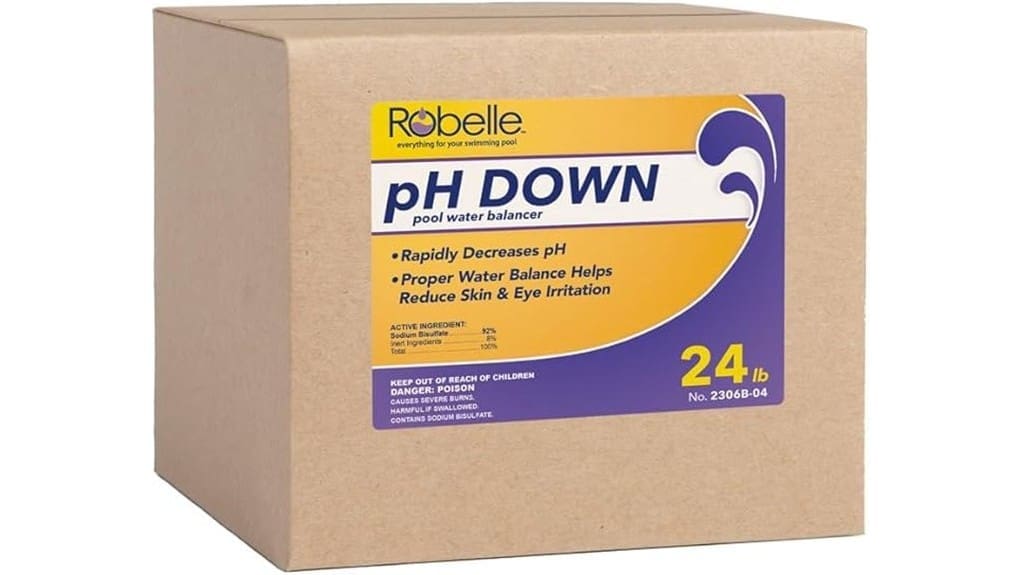
You’ll get an industrial‑strength 24‑lb bag of concentrated sodium bisulfate that reliably drops pool pH into the 7.2–7.6 range when you dose and apply it correctly. Use gloves and eye protection, pre‑dissolve measured amounts in a plastic pail of pool water, and pour slowly with the filter running; retest after two hours. It’s cost‑effective for medium residential pools, but larger sites may need bulk or automated systems — keep going for application and safety specifics.
Some Key Takeaways
- Concentrated 24‑lb sodium bisulfate reliably lowers pool pH to the recommended 7.2–7.6 when dosed correctly.
- Pre‑dissolve measured product in a plastic pail of pool water and add slowly with the filter running for consistent results.
- Requires chemical‑resistant gloves and eye protection during handling; retest pH two hours after treatment.
- Best value for medium residential pools needing multiple seasonal treatments; bulk or automated systems suit larger pools.
- Alternatives include muriatic acid or CO2 for faster dispersion or automation, and adjust total alkalinity separately if needed.
Product Overview and Quick Verdict: Robelle 24‑Pounds Premium pH Down at a Glance
Cut pH quickly and reliably with Robelle’s 24‑Pound Premium pH Down, a concentrated sodium bisulfate powder made in the USA and formulated to lower pool pH to the recommended 7.2–7.6 range when readings exceed 7.6. You’ll get a single 24‑lb unit (Model 2306B-04A) that delivers rapid, reliable acidification to protect chlorine efficacy and swimmer comfort. Specifications are clear: powder form, concentrated active, UPC B0F7TGFS56. Use dosing calculators to determine precise grams per gallon for target adjustment; accurate dosing preserves pool aesthetics and prevents overcorrection. Overall verdict: industrial strength, cost‑effective, and technically dependable for routine pH control. Many homeowners find routine use of pH increasers and decreasers helps maintain a comfortable backyard swimming environment and supports outdoor enjoyment.
How to Use Robelle pH Down Safely and Get Fast Results
Now that you know what the Robelle 24‑Pound pH Down does and when to use it, here’s how to apply it safely for fast, predictable results. Start by testing pH; only treat when pH >7.6. Don protective gear—chemical-resistant gloves and eye protection—before handling. Use the pre dissolving technique: add measured sodium bisulfate to a plastic pail half-filled with pool water (never add water to product), stir until dissolved. With the filter running, slowly pour solution onto the pool surface away from metal fittings and skimmer. Retest after two hours; repeat dosing as needed to reach 7.4–7.6. Maintaining balanced pH helps ensure clearer, safer water and prolongs pool equipment life.
Performance and Effectiveness: How Well the Sodium Bisulfate Lowers pH
You’ll see sodium bisulfate lower pool pH reliably and predictably when dosed correctly. You’ll notice rapid pH reductions per recommended grams per gallon, with dose-response matching expected curves. Maintain dosing accuracy by measuring product, pre-dissolving, and applying with circulation; retest after two hours. The acid introduces sulfate ions without destabilizing alkalinity if you correct total alkalinity separately, supporting pH stability within the 7.2–7.6 target. Overdosing requires neutralization or dilution and can transiently depress pH and irritate swimmers. Overall, concentrated formulation yields consistent, controllable drops in pH when procedures and measurements are precise. For homeowners who enjoy their outdoor spaces, pairing proper pH control with regular use of chlorine tablets helps keep the pool safe and sparkling.
Who This Bag Is Best For and When to Choose a Different Size or Chemical
Having seen how reliably Robelle’s sodium bisulfate lowers pH when dosed and dispersed correctly, determine suitability based on pool size, frequency of adjustment, and handling preferences. You’ll find the 24-pound bag ideal for medium residential pools or seasonal pools that need several treatments across a season; the weight balances storability and dose economy. If you manage large-volume bodies, high-frequency adjustments, or commercial facilities with daily use, opt for bulk sacks or automated feed systems to reduce handling and dosing error. Choose alternate chemistries (liquid muriatic acid or CO2 systems) if you require faster dispersion, automated control, or lower particulate handling. This product pairs well with efforts to keep calcium balanced in outdoor pool water.
Buying Details, Warranty, and Value: Price, Returns, and What’s Included
Although the upfront cost of a 24-pound Robelle pH Down bag may seem higher than smaller packages, it delivers lower cost per dose for routine residential use and reduces trip frequency for seasonal maintenance. You’ll evaluate price comparisons across retailers; bulk buys lower unit cost. Check shipping options—standard, expedited, and freight for heavy volumes—before purchase. The package includes 24 lb powder, UPC/ASIN/part numbers, and handling instructions. Review the return policy: Robelle offers a voluntary 30-day return guarantee with exceptions; keep original packaging. Warranty details are available via customer service for manufacturer defects; document purchase for claims. Maintain proper stabilizer levels to keep your pool balanced and protect chlorine efficacy with stabilizer management.
Some Questions Answered
Is This Product Safe for Vinyl Pool Liners and Plaster Surfaces?
Yes — vinyl safe? Generally yes when used correctly. You’ll lower pH with concentrated sodium bisulfate; pre-dissolve, dilute into pool water, avoid pouring undiluted on liners or near metal. Plaster impact? Minimal if you maintain pH target 7.2–7.6 and avoid localised high-acidity contact. Test pH, run filter, retest after two hours, and repeat dosing as needed. Follow manufacturer safety and application guidelines to prevent damage.
Can I Store Opened Bags Outdoors or in a Garage Safely?
Yes — but you shouldn’t store opened bags outdoors or in an unprotected garage without precautions. You’ll need dry, cool store conditions and reliable moisture protection: reseal the original bag, place it inside a heavy-duty plastic bin or sealed bucket with a desiccant, and keep it off concrete to avoid damp transfer. Avoid temperature extremes and direct sunlight. Proper storage preserves sodium bisulfate stability and prevents caking, clumping, and corrosion risks.
How Long After Treatment Is It Safe for Children to Swim?
You should wait at least 2 hours after dosing, then test pH; it’s safe for children once pH is within 7.2–7.6 and chlorine is at proper levels. Because of possible pH rebound, retest after 4–6 hours and again the next day if large adjustments were made. If pH climbs above 7.6 or chlorine is off, keep swimmers out, rebalance, and only permit children back when readings are stable and within target ranges.
Will This Affect Chlorine or Other Sanitizer Levels?
Yes. Lowering pH with sodium bisulfate will temporarily increase free chlorine efficacy because chlorine is more active at lower pH, so you’ll see improved chlorine interaction and faster sanitization. It doesn’t consume significant chlorine directly, so overall sanitizer stability remains intact if you dose correctly. Still, avoid overdosing; retest total and free chlorine after adjustment, and monitor combined chlorine to confirm sanitizer stability and maintain effective disinfection.
Are There Environmental Disposal Instructions for Unused Powder?
Yes. You should follow local environmental regulations when disposing of unused powder and prioritize waste minimization. Keep product sealed and labeled; don’t dump into storm drains, waterways, or soil. Contact local hazardous-waste or household-chemical disposal programs for authorized drop-off or guidance. Small amounts may be neutralized per label instructions and disposed with municipal guidance; large quantities require licensed hazardous-waste handling. Document disposal actions for compliance and tracking.