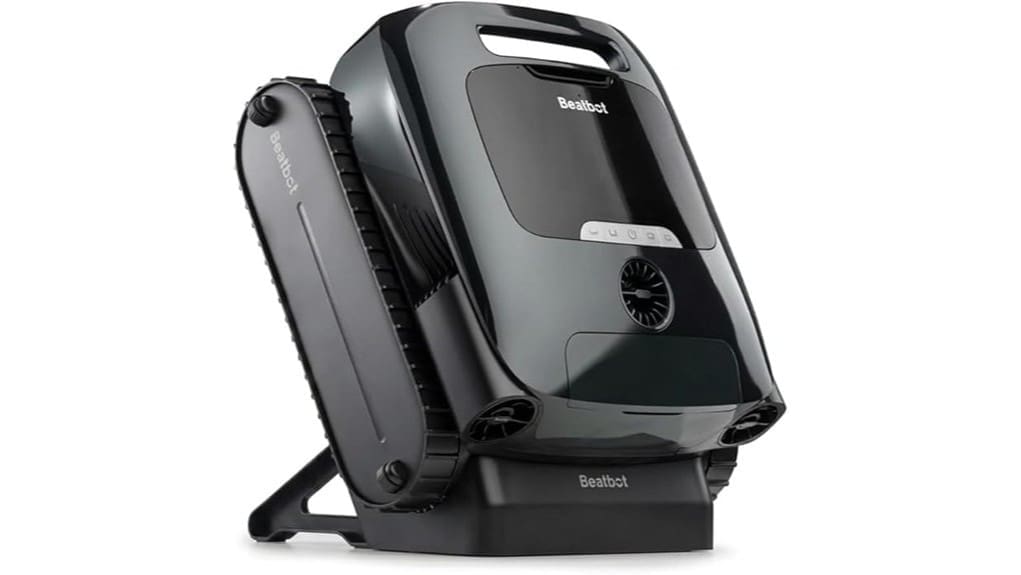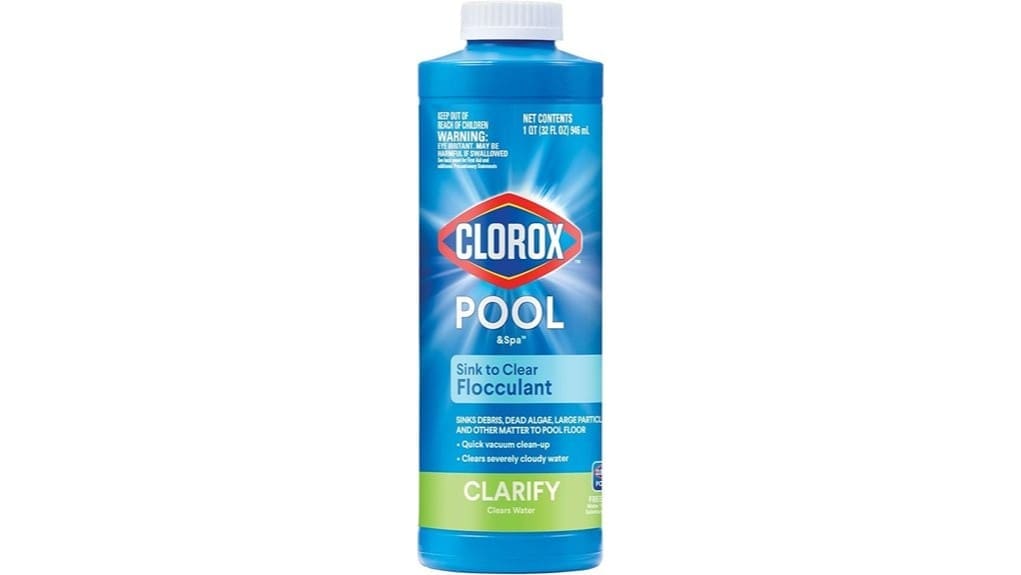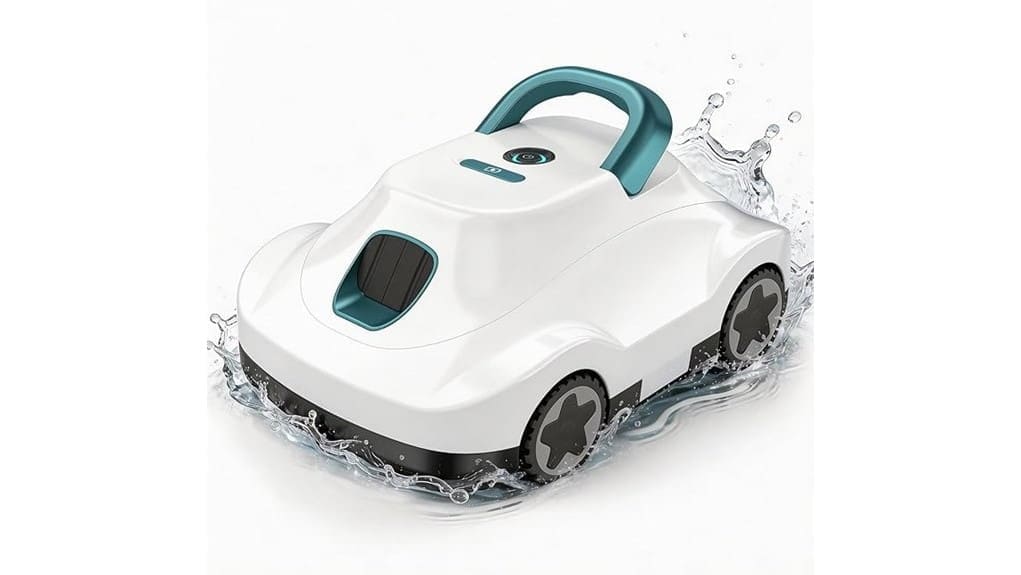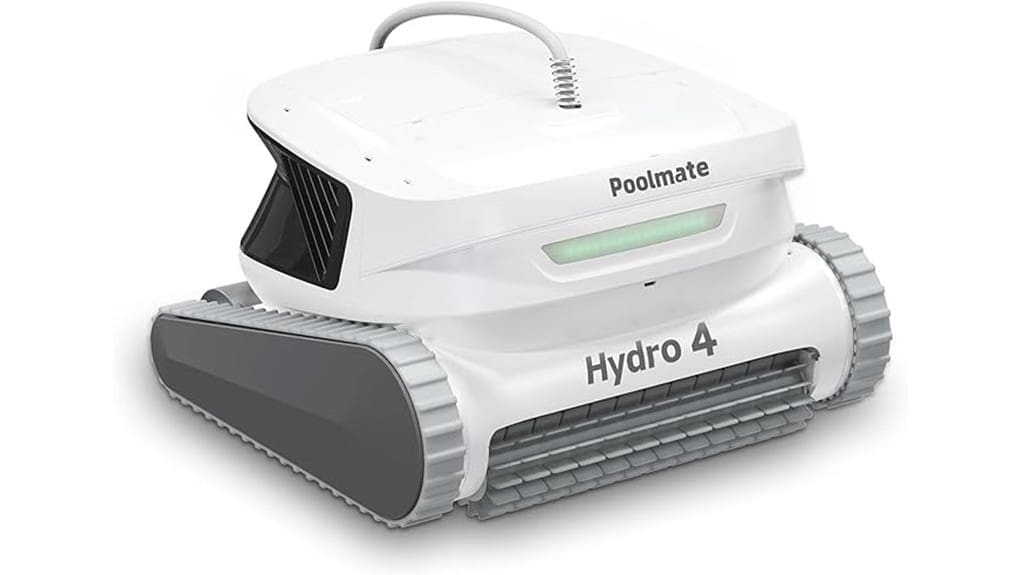
You’ll get powerful, hands-off cleaning with this dual-inlet robotic pool vacuum: 5,070 GPH suction, Waterline Glide for edge scrubbing, and a 3.5-hour runtime that usually finishes medium-to-large pools in one cycle. Dual filtration and a 4.1 L basket handle leaves, sand, and algae well while brushes break clumps apart. App controls, smart path planning, and gentle traction suit most surfaces. It costs more than simple suction cleaners, and there’s more to learn about performance nuances.
Some Key Takeaways
- Dual inlets plus 5,070 GPH suction deliver fast, reliable pickup of leaves, sand, and algae fragments across floors and walls.
- 3.5-hour runtime and smart path planning typically clean medium-to-large pools up to 1,614 sq. ft per charge.
- Waterline Glide Technology ensures snug edge contact for consistent scrubbing without scuffing on common pool surfaces.
- Dual filtration with 180-micron ultra-fine filter and 4.1 L basket reduces clogging and simplifies maintenance.
- App control and cloud features enable scheduling, though occasional latency may delay remote commands.
How This Dual-Inlet Robotic Pool Vacuum Performs in Real Pools
When you put this dual-inlet robotic vacuum into a real pool, it delivers strong, consistent cleaning across floors, walls, and the waterline thanks to its 5,070 GPH suction and Waterline Glide Technology; the 3.5-hour runtime and smart path planning mean it usually finishes medium-to-large pools in a single cycle while minimizing missed spots. You’ll notice reliable debris pickup and efficient wall climbs, with the dual filtration handling varied debris. Battery indicators are clear, so you won’t be surprised mid-cycle. App latency can occasionally delay remote commands, but scheduling and autonomous modes keep performance steady without constant supervision. It’s a great fit for homeowners who want to keep their pool pristine while enjoying outdoor spaces on their property.
Suction, Run Time, and Charging: What the Specs Mean for Weekly Cleaning
Having seen how the vacuum handles real pools, it’s worth examining what the 5,070 GPH suction, 3.5-hour runtime, and 3-hour charge time mean for your weekly cleaning routine. That suction and dual inlets shorten active cleaning, so one full charge covers most pools up to 1,614 sq. ft.; you’ll likely need one session per week for maintenance. Factor charging cycles into long-term cost: lithium-ion 14,400 mAh batteries resist degradation, but monitor battery lifespan and avoid full-depletion habits. Use runtime optimization—schedule app-controlled runs during low debris periods—and align sessions with your weekly schedule to keep pools consistently clean. This helps homeowners who value outdoor living maintain their spaces with minimal effort.
Debris Handling and Filtration Tested: Leaves, Sand, Algae, and Clumps
Plunge into how this robotic vacuum handles real-world messes: leaves, sand, algae, and clumps. You’ll find the dual inlets and 5,070 GPH suction pick up leaf accumulation quickly, scooping large debris into the 4.1 L basket while the 180-micron ultra-fine filter traps sand and algae fragments. Dual filtration reduces clogging; top-and-bottom access makes filter maintenance straightforward. Clumps break apart under brush action and get funneled in, though very dense tangles may need manual removal. Overall, performance balances high-capacity capture with easy upkeep, keeping your pool cleaner without constant intervention. For homeowners who enjoy outdoor spaces, regular vacuuming routines with a capable unit like this help maintain pool clarity and reduce manual labor pool maintenance.
Navigation, Waterline Cleaning, and Surface Compatibility in Practice
Although the robot maps your pool and adapts its path, you’ll notice how purposeful its movements are: the smart path planning minimizes missed spots and repeat passes, while Waterline Glide Technology keeps the unit snug against edges for consistent waterline scrubbing. You’ll see reliable edge detection when the cleaner slows and reorients at corners, preventing gaps. On vinyl, concrete, fiberglass, and tile it maintains traction without scuffing; material compatibility is strong across freeform and rectangular, in-ground and above-ground layouts. In practice, navigation is efficient, waterline cleaning thorough, and surface shifts smooth, with rare manual interventions. These features make it a solid choice for homeowners who value manual pool vacuums and enjoy maintaining their outdoor spaces.
Who Should Buy It and Quick Pros/Cons Compared to Alternatives
If you want a mostly hands-off cleaner that tackles floors, walls, and the waterline with long runtime and strong suction, this robot is a smart choice for mid-to-large residential pools. You should buy it if you value cordless operation, 3.5-hour runtime, adaptive navigation, and easy top/bottom filter access—ideal for pool owners who dislike manual cleaning. Tech enthusiasts will appreciate the app, cloud features, and smart path planning. Budget buyers might find the upfront cost higher than basic suction-side cleaners. Pros: long runtime, dual inlets, waterline tracking, large debris capacity. Cons: pricier than simple models, plastic build. Pool owners should also ensure their pump and filtration systems are well-maintained to get the best performance from robotic cleaners, especially when pump compatibility matters.
Some Questions Answered
Does It Work in Saltwater Chlorinated Pools?
Yes — it works in saltwater chlorinated pools. You’ll get full saltwater compatibility thanks to corrosion resistance in its materials, but you should rinse the unit after use and follow maintenance steps to protect metal contacts and filters. With proper care you’ll preserve battery life, seals, and top-and-bottom filter access. The app and smart path planning stay reliable; just avoid prolonged exposure to concentrated saline or neglecting the 2-year warranty guidelines.
Can It Climb Textured or Pebble-Finish Surfaces Reliably?
Yes — you’ll find it climbs textured and pebble-finish surfaces reliably. Its climbing performance combines strong surface grip and high suction, while navigation algorithms adjust routes to tackle angles and steps. In traction tests it maintained steady ascent and waterline access on vinyl, concrete and pebble finishes. You’ll still want occasional spot checks for heavy algae or loose aggregate, but overall it delivers dependable edge-to-floor cleaning.
Is There a Replacement Filter or Basket Available Separately?
Yes — you can get a replacement basket and aftermarket filters for this unit. You’ll find the 4.1 L replacement basket through the manufacturer and many third-party retailers; it fits the top-and-bottom access design. Aftermarket filters, including 180-micron ultra-fine options, are widely available but vary in fit and quality. You should compare material, pore size, and return policies to verify compatibility and maintain suction and debris capacity.
How Loud Is It During Operation (dB Level)?
You’ll hear it, but it’s not deafening — the noise level during operation measures around 55–65 dB, similar to a normal conversation. Its acoustic profile is dominated by steady motor hums and water flow; motor decibels peak near the higher end during heavy suction. Overall operation volume stays consistent thanks to brushless motors, so you can be nearby without discomfort, though it isn’t whisper-quiet.
Are Software Updates and Cloud Features Included Free?
Yes — you get free updates and basic cloud features included, and you can use remote control without extra fees. However, advanced cloud subscription options may be offered for added analytics or storage. You should evaluate whether those premium features justify recurring costs. Check the app’s data privacy terms closely so you know what’s collected, how it’s stored, and whether you can opt out or delete your usage data.