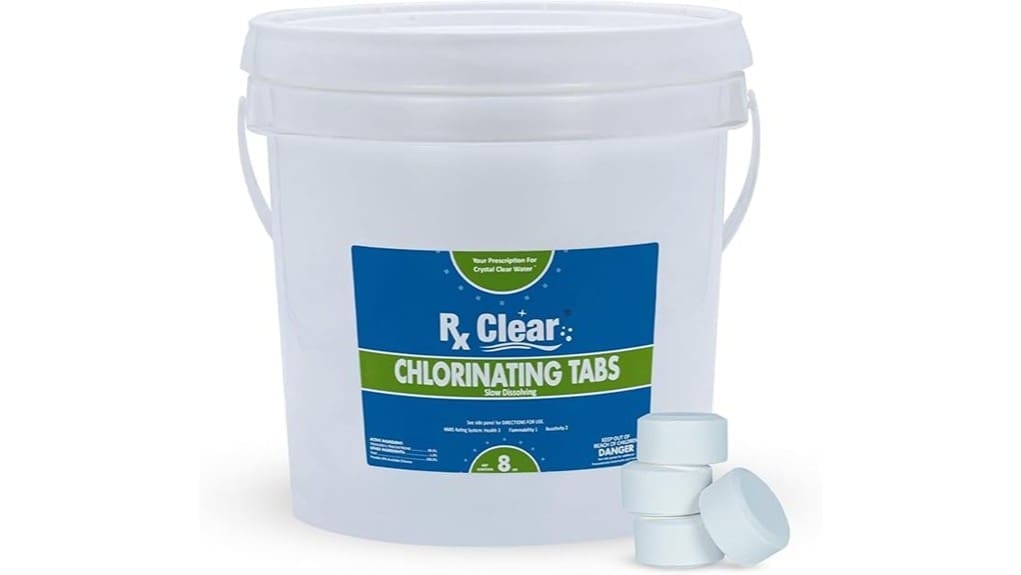
You’ll get reliable, slow‑dissolving 1″ tablets that steadily maintain free chlorine in spas, small pools, and floaters when used as directed. The stabilized, UV‑protected matrix releases chlorine predictably to limit spikes and extend residuals, and engineered porosity controls dissolution for consistent ppm delivery. Test free chlorine and pH regularly, use proper feeders, and store tablets dry and away from heat or children. Continue for detailed performance checks, dispense tips, and safety guidance.
Some Key Takeaways
- Compact 1″ stabilized tablets provide slow, predictable chlorine release ideal for small pools, spas, and compact feeders.
- Built-in UV stabilizer prolongs residual chlorine, reducing rapid degradation from sunlight compared to unstabilized products.
- Engineered porosity controls dissolve rate, minimizing concentration spikes and supporting steady free chlorine ppm over days.
- Best used with floaters or small feeders, routine testing, and occasional shock treatments for algae and bacteria control.
- Store dry, handle with gloves, avoid skimmer use, and follow label/MSDS for safe dosing and emergency procedures.
What Rx Clear 1 Chlorine Tablets Are and Who They’re For
As a compact, stabilized chlorine tablet formulated for slow, controlled release, Rx Clear 1″ Chlorine Tablets are designed to disinfect and control algae and bacteria in small pools, hot tubs, plunge pools, and compact dispensers. You’ll find these 1-inch, slow-dissolving tablets suit routine sanitization where measured dosing matters. They support swimmer safety by maintaining consistent free chlorine when used per label directions and integrated with testing and filtration. If you need alternatives, evaluate unstabilized shock treatments or liquid chlorine for rapid adjustment, or triclosan-free algaecides for targeted control, matching choice to system size and maintenance frequency. Consider regular shock treatments to keep your pool sparkling and maintain optimal water clarity.
How the Stabilized, Slow‑Dissolving Formula Works
When you drop an Rx Clear 1″ tablet into a floater or feeder, its stabilized, UV‑protected matrix releases chlorine steadily as water dissolves the tablet, maintaining free chlorine levels without large concentration spikes. You observe a controlled dissolution driven by the tablet microstructure: engineered porosity and binder distribution regulate surface area exposure. The built‑in stabilizer mechanism binds a fraction of free chlorine to reduce UV breakdown, prolonging residual efficacy. That combination yields predictable release rates you can model against pool volume and turnover. Follow label dosing and monitor residuals; empirical testing confirms steady sanitizer delivery and reduced peak concentrations. Homeowners should also consider pool turnover when calculating tablet placement and dosing.
Best Uses: Floaters, Feeders, Spas, and Small Pools
The steady, measured chlorine release described above makes these 1″ Rx Clear tablets particularly well suited for small, contained systems like floaters, compact feeders, spas, and above‑ground pools where maintaining a consistent free chlorine residual matters more than rapid shock dosing. You’ll place tablets in floaters or compact dispensers to deliver predictable ppm over multiple days. For spas and small pools, you’ll follow label directions and integrate tablets into regular maintenance schedules, testing free chlorine and pH frequently. This approach minimizes spikes, supports continuous bactericidal and algaecidal activity, and reduces manual dosing errors while preserving material compatibility. Homeowners can monitor their water using simple at‑home pool water test kits to ensure safe chemical levels.
Performance Checklist: Chlorine Strength, UV Protection, and Dissolve Rate
Because consistent sanitizer performance hinges on three measurable factors—available chlorine percentage, UV stabilizer effectiveness, and tablet dissolve rate,you should evaluate each against your pool’s needs and dispenser type. Assess chlorine potency by comparing available chlorine percentage to required ppm for your volume; higher potency shortens dosing frequency. Test sunlight resilience by measuring free chlorine decay after sun exposure to verify the UV protection claim. Measure tablet longevity and release consistency across your floater or feeder to confirm steady output and avoid spikes. Record dissolution time under typical circulation and adjust dispenser settings to maintain target residuals. Also consider your pool’s overall water chemistry and calcium hardness when choosing hardness increasers alongside chlorine tablets.
Safe Use Tips, Dispensing Advice, and Label Directions
If you’re preparing to add Rx Clear 1″ chlorine tablets to your pool or spa, read and follow the label directions exactly and use calibrated test strips or a digital meter to confirm residual chlorine before and after dosing. Handle tablets with gloves, keep them dry, and maintain safe storage away from heat, sunlight, combustibles, and children. Use designated floaters or automatic feeders sized for 1″ tablets; avoid dropping tablets directly into skimmers. Measure doses based on pool volume and target ppm. Keep a current Material Safety Data Sheet and clear emergency procedures posted, including eyewash, ventilation, and poison control contact info. Consider consulting a resource on pool opening chemicals for best practices and product selection.
Some Questions Answered
Can These Tablets Be Used in Saltwater Pools?
Yes — you can use them, but you’ll need to manage saltwater maintenance carefully. You’ll rely on the tablets for supplemental chlorination while your salt-chlorine generator produces most sanitizer. Monitor combined chlorine and stabilizer levels to avoid over-chlorination. Also inspect and maintain the cell regularly, since improper chemical balance can accelerate electrode corrosion. Follow label directions, test frequently, and integrate tablets into a thorough water care routine to protect equipment and water quality.
Are They Safe for Use With Pool Heaters?
Yes, you can use them with pool heaters if you follow label directions. Heater compatibility depends on proper dispersal: use floaters or feeders away from the heater intake to avoid concentrated contact. Observe temperature limits specified by your heater manufacturer and avoid exposing tablets directly to heat. Maintain routine testing and balanced chemistry to prevent corrosion or scale that can damage heaters. Inspect equipment regularly for signs of wear.
Do Tablets Leave Residue or Staining on Surfaces?
They generally won’t cause surface discoloration if you follow label directions and use proper dispensers. You should avoid letting tablet crumbs or intact tablets contact vinyl, painted, or metal surfaces for prolonged periods. Rinse any spills promptly, keep tablets in a dry, ventilated container, and use floater/feeder settings that prevent tablets from sitting against pool walls. Routine testing and balanced water chemistry further minimizes staining risk and residue buildup.
How Should Unused Tablets Be Stored Long-Term?
Store unused tablets in their original, sealed container with proper packaging to preserve stabilizer and prevent moisture. Keep the container in cool storage, away from heat, sunlight and incompatible chemicals. Use a dry, well-ventilated area elevated from floors to avoid damp. Check seals periodically and discard tablets that show caking or discoloration. Follow label instructions and local regulations for long-term storage and disposal to guarantee safety and effectiveness.
Are They Compatible With Bromine Systems?
No — they’re not bromine compatible for direct use; you’ll need a sanitizer conversion when switching. Chlorine tablets are formulated to release stabilized chlorine, which reacts differently than bromine. If you convert a bromine system, you’ll need to drain or neutralize residual bromine, thoroughly clean feeders, and follow manufacturer guidance to switch sanitizers. Test water frequently during changeover to confirm appropriate bromine levels and avoid chemical incompatibilities or overstabilization.