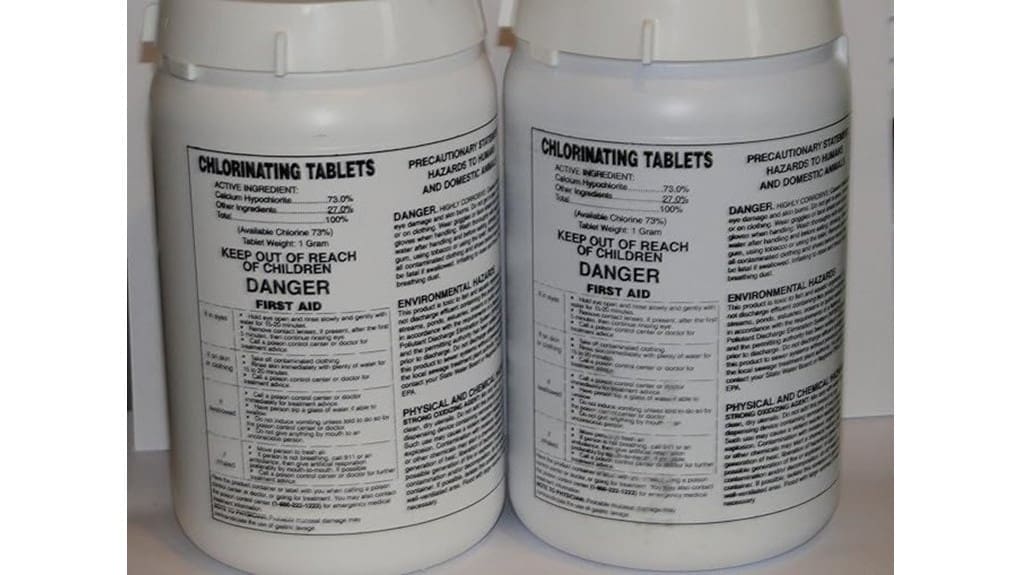
You’ll get two 64‑oz containers of 1/4″ pellets (73% calcium hypochlorite) that work predictably in dry‑pellet feeders like the PENTAIR LP‑3000. They dissolve to release hypochlorous acid for routine disinfection and algae control, with rapid free‑chlorine increases and stable residuals when dosed and monitored properly. Handle and store them dry, wear PPE, and avoid moisture or incompatible equipment. Keep initial feed rates low and test residuals; more usage, dosing, and safety details follow.
Some Key Takeaways
- Two sealed 64‑oz containers of 1/4″ pellets (73% calcium hypochlorite) provide bulk supply and reduced refill frequency.
- Designed for dry‑pellet feeders like PENTAIR LP‑3000; confirm equipment compatibility before use.
- Produces predictable free‑chlorine residuals within 30–60 minutes, aiding routine sanitization and algae control.
- Requires strict dry storage, PPE during handling, and moisture‑free hoppers to prevent degradation and hazards.
- Monitor residuals, pH, and combined chlorine; adjust feed rate gradually to maintain 1–3 ppm for algae control.
Quick Verdict: Is Chlorine Well/Pool Sanitizer Pellets (2X) Worth Buying?
While not flashy, these GBBC Chlorine Well/Pool Sanitizer Pellets deliver straightforward, reliable disinfection for chlorinators like the LAND-O-MATIC PENTAIR LP-3000 and similar systems. You’ll find 73% calcium hypochlorite pellets that fit dry-pellet feeders, offering predictable residuals and algae control within specified dosing limits. For routine pool maintenance you’ll appreciate consistent chlorine output and simple feed-rate adjustments. Handle and store per chemical storage best practices: dry, ventilated, separate from organics and acids. Two 64-ounce containers provide bulk supply, lowering refill frequency. If you need a no-nonsense oxidizer for compatible chlorinators, this is a practical choice. These pellets are ideal for homeowners who enjoy maintaining their outdoor spaces and performing regular shock treatments with pool shock for clear, safe water.
What’s Inside the Box and How These Pellets Work
Having covered overall value, let’s look at what you get in the box and how the pellets function. You receive two sealed 64‑ounce containers (128 oz total) of 1/4″ calcium hypochlorite pellets (73% active, 27% inert). Packaging overview: containers are rigid, screw‑top, with UPC/ASIN labeling and usage specs. Function: pellets release available chlorine on dissolution, maintaining free‑chlorine residuals and controlling algae; soluble hypochlorite yields hypochlorous acid that disinfects. Note safety precautions: store dry, away from organics and acids; handle with gloves and eye protection; keep containers tightly closed to prevent moisture ingress and degradation. These pellets are a common and effective option for homeowners preparing their pools during seasonal pool opening procedures.
How to Use the Pellets Safely With a PENTAIR LP-3000 or Similar Chlorinator
Because the LP-3000 and similar dry‑pellet chlorinators meter pellets directly into circulating water, you should load and adjust the feed rate carefully to maintain target free‑chlorine without exceeding the 14 mg/L potable‑water limit. Wear personal protective equipment—gloves, goggles, respirator—during handling and loading. Inspect hopper, feed screw, and seals for corrosion; perform routine chlorinator maintenance per manufacturer intervals. Set initial feed low, measure residuals after stabilization, and increment in controlled steps. Avoid moisture in the hopper; keep pellets dry. Lock housings and label systems. Document settings and maintenance actions for safety and regulatory compliance. Consider installing anti-entrapment devices as part of overall pool safety measures.
Real-World Performance: Sanitizing, Algae Control, Dosage Limits and Test Results
When you run these 73% calcium hypochlorite pellets through a PENTAIR LP-3000 or similar dry‑pellet chlorinator, they deliver rapid free‑chlorine increases and consistent residuals suitable for routine sanitizing and algae control when feed rates are set correctly. You’ll observe target free‑chlorine within 30–60 minutes; chlorine persistence follows expected decay curves driven by demand, temperature, and sunlight. For green or resistant blooms, increase feed incrementally while monitoring combined chlorine and pH. Don’t exceed potable limit 14 mg/L. Field strip tests showed effective control of common algae strains within 24–72 hours when residuals stayed above 1–3 ppm and circulation was adequate. Homeowners can pair routine algaecide use with proper skimming, filtration, and regular maintenance to keep outdoor pool areas inviting.
Buying Factors: Packaging, Value (2×64 Oz), Compatibility, Returns and Warranty
The field results above show these 73% calcium hypochlorite pellets perform reliably in LP‑3000‑style feeders, so now evaluate purchase logistics that affect overall cost and usability. You’ll receive two 64‑oz sealed containers (128 oz total), which provides bulk value while maintaining storage stability if unopened. Packaging is industrial-grade with child safety caps; inspect seals on arrival. Compatibility covers LAND-O-MATIC PENTAIR LP‑3000 and similar dry pellet chlorinators; verify feeder specs before buying. Returns follow Amazon’s voluntary 30‑day policy; warranty details require contacting the manufacturer/seller. Factor shipping weight, hazard handling, and local transport restrictions into total cost. Homeowners should also consider routine use of pool clarifiers to keep water clear and reduce overall chemical demand.
Some Questions Answered
Are These Pellets Safe for Use Around Pets and Livestock?
No — they’re not safe for direct pet safety or livestock exposure. You should prevent animals from contacting pellets, dust, or treated water exceeding 14 mg/L. If ingested or if concentrated dust contacts skin/eyes, rinse and get veterinary care. Use them only in closed chlorinators or secured treatment systems, follow label PPE and dilution limits, and monitor residual chlorine to keep potable water below the 14 mg/L maximum for safety.
How Long Is Each Container’s Shelf Life Unopened?
You’ll generally get about 3–5 years of storage life unopened for calcium hypochlorite pellets if stored cool, dry, and sealed; there’s no standardized expiration dating on many containers. Check the manufacturer/seller for a specific production or lot date and any stamped expiration dating. Keep them away from moisture, heat, and organics, and rotate stock. If pellets cake, discolor, or emit strong chlorine odor, discard per local hazardous-waste rules.
Do the Pellets Dissolve Completely Without Residue?
Yes — the pellets dissolve fully under normal chlorinator flow, leaving no gritty residue when dosed correctly. You’ll observe a consistent dissolution rate driven by pellet size and water agitation; calcium hypochlorite dissolves into active hypochlorous species and minor inert salts. With proper circulation and recommended dosing, you’ll maintain peak water clarity; localized high concentrations can produce transient particulates, so follow manufacturer flow and loading guidelines.
Can Pellets Be Used in Saltwater Pools or Systems?
No — you shouldn’t use them in saltwater systems. These calcium hypochlorite pellets aren’t formulated for saltwater compatibility and will raise calcium hardness and free chlorine rapidly. In salt chlorinator systems they’ll increase solid buildup and accelerate electrode corrosion on electrolytic cells. Use stabilized chlorine or sodium hypochlorite approved for saltwater pools; otherwise you’ll shorten cell life and risk scale and maintenance issues.
What Personal Protective Equipment Is Recommended During Handling?
You should wear Glove protection and Eye protection when handling pellets. Use chemical-resistant gloves (nitrile or neoprene) and sealed safety goggles or a face shield. Add a lab coat or coveralls and closed-toe shoes; avoid synthetic fabrics. Work in a well-ventilated area or use respiratory protection (NIOSH-approved respirator) if dust is present. Wash hands and contaminated clothing after use, and store pellets in a cool, dry, locked area away from combustibles.