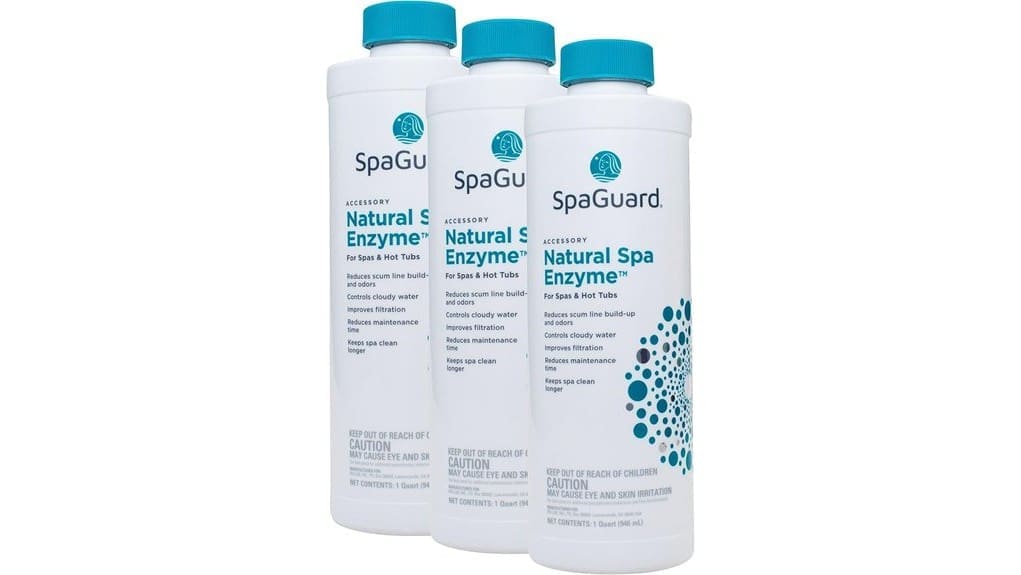
You’ll find SpaGuard Natural Spa Enzyme is a concentrated, non‑oxidizing enzyme formula that hydrolyzes lipids and proteins so oils, lotions and scum break into smaller, filterable fragments. It lowers organic load to reduce scum lines, cloudiness and odors while easing filter clogging and stabilizing sanitizer demand. Apply measured doses into circulating water daily or after shock; it’s compatible with common sanitizers and plumbing materials. Keep using it and you’ll see how maintenance and clarity improve.
Some Key Takeaways
- All‑natural enzymes break down oils, lotions, and proteins to reduce scum lines, cloudiness, and odors in spas and hot tubs.
- Safe with chlorine and bromine sanitizers and compatible with common plastics and plumbing materials.
- Daily measured dosing into circulation improves clarity and reduces filter clogging and maintenance frequency.
- Helps extend filter life and lowers cleaning and shock-treatment needs by converting organics into soluble fragments.
- Pack recommendations and dosing follow label: start after fill/shock, adjust for heavy bather load, store sealed and upright.
How SpaGuard Natural Spa Enzyme Works and What’s in the Bottle
Think of SpaGuard Natural Spa Enzyme as a targeted biological cleaner: its all‑natural enzyme formulation breaks down oils, lotions, greases and other organics into smaller, more filterable compounds, reducing scum lines, cloudiness and odors while lowering the organic load that sanitizers must handle. You’ll apply a measured dose; enzymes in the enzyme composition hydrolyze lipids and proteins, converting high-molecular-weight contaminants into soluble fragments. Bottle ingredients list clarifies noncorrosive, enzyme-based actives and inert carriers; there are no harsh oxidizers. The protocol is straightforward: dose per label, allow circulation, and rely on enzymatic action to aid filtration and sanitizer efficiency. These natural enzymes are ideal for homeowners who enjoy their outdoor spaces and want to keep water fresh and healthy.
Real-World Benefits: Scum-Line Control, Clearer Water, and Odor Reduction
When you add SpaGuard Natural Spa Enzyme to your spa, it attacks the oils and organic films that form scum lines, breaking them into smaller, filterable molecules so the pump and filter can remove them more efficiently. You’ll see measurable scum prevention as residues disperse rather than accumulate at the waterline. Water clarity improves because enzymes reduce particulate load and organic hazes that scatter light. Odor mitigation occurs as odor-causing organics are enzymatically degraded before anaerobic breakdown produces sulfides or amines. Overall, you’ll get reduced filter maintenance, more consistent sanitizer performance, and a cleaner, fresher spa environment. Using enzymes complements ozone pool care by reducing organic load so oxidizers and filtration systems perform better.
How to Use SpaGuard: Dosage, Timing, and Simple Maintenance Steps
Because enzymes work continuously, you should dose SpaGuard regularly to keep organic load low and filters operating efficiently. For startup routine, add the manufacturer’s recommended volume per quart count directly to circulating water after fill and sanitizer shock; this primes enzymes. Thereafter implement daily dosing: dispense a measured dose once per day into skimmer area or directly into circulating flow. Monitor water clarity and odor; adjust dose within label limits if heavy bather load persists. Combine with routine sanitizer checks and pH control. Store product sealed, upright, away from heat. Record dosing times to maintain consistent enzymatic activity and predictable results. Use enzymes as part of a regular maintenance schedule to help preserve your outdoor spa environment and support filter efficiency.
Filtration and Maintenance Impact: Filters, Cleaning Frequency, and Cost Savings
If you want to reduce filter maintenance and operating costs, SpaGuard’s enzymes actively break down oils and organic residues so your cartridge or sand filters trap fewer solids and stay effective longer. You’ll notice reduced filter clogging and extended filter lifespan because enzymes convert organics into soluble fragments that pass or are more easily backwashed. That lowers maintenance costs by reducing cleaning frequency, chemical shock treatments, and premature filter replacement. For best results, integrate enzymes into your regular dosing schedule and monitor differential pressure or flow rates; objective metrics let you quantify cleaning interval extensions and validate cost savings. Using enzymes is especially helpful for homeowners who want to Keep Your Pool Clean with the right filter cartridges and minimize time spent on upkeep.
Buying Guide: Pack Size, Compatibility, and When to Choose SpaGuard Over Alternatives
Having reduced filter wear and cleaning frequency with regular enzyme dosing, you’ll next weigh pack size, compatibility, and whether SpaGuard fits your maintenance program. Choose the Pack of 3 1 qt units when you want quarterly dosing reserves; package options match typical spa volumes and reduce reordering. Run a compatibility checklist: sanitizer type, material compatibility, and dosing schedule; SpaGuard’s all-natural enzymes are safe with common bromine/chlorine regimens and plastic/plumbing materials. Choose SpaGuard over harsher cleaners when you need ongoing organic load control, reduced scum-line formation, and improved sanitizer efficiency with minimal chemistry disruption. For homeowners focused on seasonal upkeep, consider how these enzymes complement pool opening chemicals to simplify spring startup and ongoing maintenance.
Some Questions Answered
Is Spaguard Safe for Acrylic Spa Surfaces?
Yes — you can use it on acrylic surfaces. The enzyme formula is formulated for acrylic compatibility and won’t attack the surface finish when used per directions. You should apply recommended dosages, avoid concentrated spills, and rinse any pooled product. Regular use helps break down oils without abrasive action, preserving gloss and integrity. For added safety, test a small hidden area and follow manufacturer instructions for both the spa and product.
Can Children or Pets Enter Water After Treatment?
Yes — after dosing per label and allowing normal circulation, you can let children and pets re-enter. The enzyme formulation poses minimal child safety and pet exposure risk once mixed and diluted in spa water. Still, wait the manufacturer’s recommended circulation/contact time, confirm sanitizer and pH are within safe ranges, and avoid ingestion or direct concentrated contact. Supervise children and pets in and around the spa at all times.
Does It Affect Bromine or Chlorine Test Readings?
No — the enzyme formula doesn’t cause significant bromine interference or chlorine masking in standard test kits. You’ll see sanitizer readings remain accurate because the enzymes target organic load, not free halogen levels. However, heavy organic reduction can indirectly change demand, so test before and after dosing to confirm residuals. If readings drop unexpectedly, adjust sanitizer dose and retest; the enzymes enhance sanitizer efficiency rather than chemically masking bromine or chlorine.
Is the Product Biodegradable and Eco-Friendly?
Yes — you’ll find it biodegradable and generally eco-friendly. The all-natural enzyme formula promotes a rapid biodegradation rate by enzymatically breaking down oils and organics into simpler compounds. Environmental toxicity is low; the product avoids harsh chemicals, minimizing aquatic toxicity risks when used as directed. You should still follow label disposal and dilution instructions to further reduce environmental impact and guarantee compliance with local wastewater guidelines.
How Should Leftover Product Be Stored After Opening?
Store leftover product upright in a cool dry location. After use, reseal cap tightly and guarantee the label bottle remains legible for safety and dosing info. Avoid temperature extremes, direct sunlight, and freezing to preserve enzyme activity. Keep container sealed between uses, upright to prevent leaks, and away from children and pets. Follow manufacturer instructions on the label bottle for shelf life and disposal recommendations.