You’ll get fast, predictable sanitation and oxidation from quick-dissolving sodium dichlor granules that raise free chlorine reliably and resist temperature-driven loss. The stabilized dichloroisocyanurate chemistry sanitizes and oxidizes organics in one step, mildly lowers pH, and minimizes foaming or chloramine spikes when dosed per label. Use measured additions to circulating water, monitor chlorine, pH, and CYA, and wear PPE; if you want specifics on dosing, compatibility, and alternatives, keep going.
Some Key Takeaways
- Fast-dissolving sodium dichlor granules provide combined sanitizing and oxidizing action for quick, reliable spa sanitation.
- Releases stabilized chlorine via dichloroisocyanurate, maintaining predictable free-chlorine residuals across spa temperatures.
- Mildly acidic chemistry slightly lowers pH over time, so pH monitoring and occasional adjustment are required.
- Effective at breaking down organics with minimal foaming or chloramine spikes when dosed per label.
- Not ideal for sensitive-skin users due to stabilized chlorine and potential halogenated byproducts; consider bromine or non-chlorine oxidizers.
Quick Verdict: Is Hot Tub Things Chlorine Granules Worth Buying?
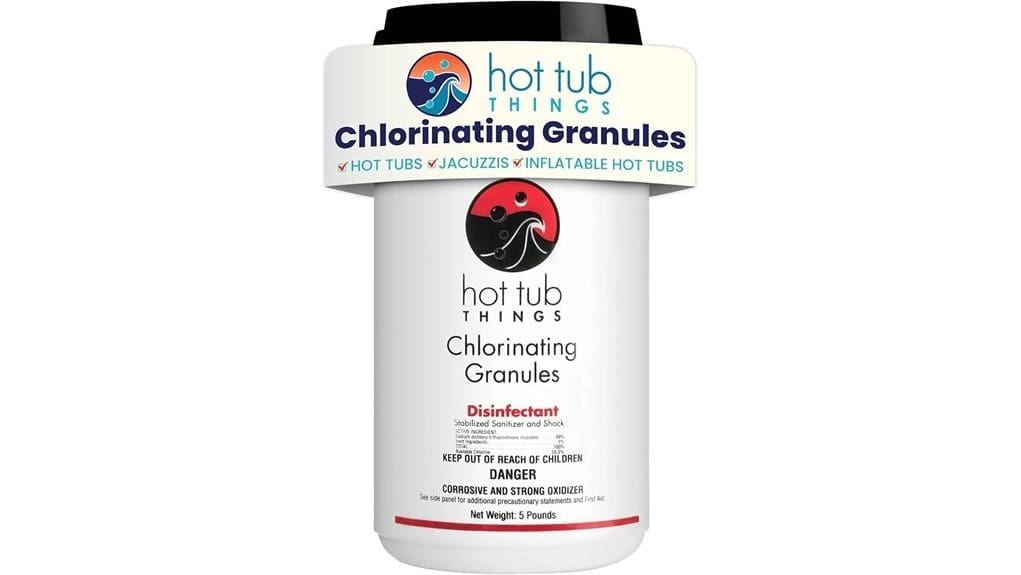
Cutting to the chase: Hot Tub Things Chlorine Granules deliver fast, reliable sanitation and oxidation in a single, quick-dissolving formula. You’ll get dual-action sodium dichlor that sanitizes and oxidizes without pre-dissolving, simplifying maintenance and reducing dosing errors. Performance stays stable across temperature ranges, so you’ll maintain clarity with fewer adjustments. In a cost comparison, upfront price is competitive given combined functions and reduced ancillary product needs. Consider environmental impact: stabilized chlorine can form halogenated byproducts, so use precise dosing and proper filtration to minimize discharge. Overall, you’ll find it efficient, predictable, and operationally economical for routine spa care. For homeowners looking to keep outdoor water features pristine, proper shock treatment practices help maintain water quality and reduce long-term maintenance.
What the Product Is and How Sodium Dichlor Works in Spas
Now that you know the quick verdict, here’s what the product actually is and how sodium dichlor functions in a spa: You’re looking at Hot Tub Things Chlorine Granules—sodium dichlor powder in a 5 lb, quick-dissolving formula. It delivers combined sanitizer and oxidizer action, neutralizing microbes and breaking down organics without pre-dissolving. Chemically, sodium dichlor releases stabilized chlorine (providing chlorine stabilization) via dichloroisocyanurate, limiting rapid degradation. It’s mildly acidic, so you’ll monitor pH impact: expect slight pH depression over time, requiring occasional adjustment. The product’s balance reduces chlorine loss across temperature changes, keeping spa maintenance straightforward and predictable. Regular testing with simple pool water test kits helps homeowners maintain proper sanitizer and pH levels.
Performance in Real Use: Sanitizing, Oxidizing, and Water Clarity Results
While you run routine cycles, you’ll notice the Hot Tub Things sodium dichlor granules sanitize and oxidize effectively without extra steps: free chlorine levels rise predictably after dosing, organic load breaks down quickly, and combined action keeps water visibly clear. You’ll observe rapid bacterial reduction measured by standard test strips and consistent residuals across typical hot tub temperatures. Organic oxidation proceeds without foaming or chloramine spike when used per label, reducing odors and scum. Clarity remains stable between maintenance doses, with particulate settling minimized. Overall, performance is reliable: dual-action chemistry delivers measurable sanitation, effective oxidation, and sustained visual water clarity. For homeowners maintaining outdoor spaces, using properly stabilized chlorine products like sodium dichlor helps maintain consistent chlorine levels for reliable sanitation.
How to Use It Safely and Effectively (Dosage, Dissolve, and Maintenance Tips)
Having seen how reliably the sodium dichlor granules sanitize and oxidize during routine cycles, you’ll want clear, practical guidance for dosing, dissolution, and ongoing maintenance to keep those results consistent. Measure per manufacturer dosing: use ppm targets and add granules to circulating water, not directly on surfaces. With quick-dissolving powder, pre-dissolving isn’t required, but you should dissolve small doses in a bucket if needed. Always wear precautionary gear; keep container storage cool, dry, sealed. For spills, follow immediate spill cleanup procedures. Perform regular stability testing (pH, chlorine, cyanuric acid) and log readings for predictive maintenance. Regular testing and proper use of pool test strips will help homeowners maintain clear, safe water and protect equipment.
Who Should Buy It and Alternatives to Consider Before Purchasing
If you maintain a hot tub or spa and prioritize fast, reliable sanitization with minimal fuss, Hot Tub Things Sodium Dichlor granules are a strong fit because they deliver combined sanitizer and oxidizer action in a quick-dissolving, single-product form that simplifies dosing and circulation-based application. You should buy if you want dependable microbial control, predictable chlorine stabilization across temperatures, and straightforward dosing without pre-dissolving. Consider alternatives if you have sensitive skin concerns (non-chlorine oxidizers or bromine systems) or prefer eco friendly packaging and lower chlorinated options. Evaluate system compatibility, cost-per-treatment, and local water chemistry before choosing. Homeowners opening outdoor pools and spas often rely on pool opening chemicals to ensure water is safe and balanced at the start of the season.
Some Questions Answered
Does This Product Have a Noticeable Scent After Dosing?
You won’t detect a strong scent after dosing; you’ll notice only a mild odor briefly as the sodium dichlor dissolves. The product’s quick-dissolving, dual-action formula minimizes lingering chlorine aromatics, so scent longevity is short-lived under normal circulation and filtration. You’ll find that proper water balance and adequate circulation further reduce any residual smell, maintaining a technically clean, low-odor environment that signals effective sanitizing without persistent olfactory presence.
Is the Plastic Container Recyclable or Reusable?
Yes — you can recycle or reuse the plastic container in many areas. Check local recycle options for the specific plastic code on the label; if accepted, rinse thoroughly first to remove residues. The container durability supports reuse for dry storage, tools, or non-potable supplies, but don’t repurpose for food or drink. Follow local disposal rules and hazardous-waste guidelines if the container still holds chemical residue to guarantee safe handling.
Will It Affect Hot Tub Cover Materials or Seals?
No, it won’t directly damage covers or seals when used as directed, but you should monitor for UV degradation and seal swelling if concentrations become excessive. You’ll avoid problems by dosing per instructions, keeping granules dissolved, and maintaining proper pH and chlorine levels. Prolonged high chlorine or spills can accelerate UV degradation of plastics and cause seal swelling or embrittlement, so rinse spills promptly and test water regularly to protect materials.
Is It Safe to Use With Floating Dispensing Systems?
Yes — you can use floating feeders; the quick-dissolving sodium dichlor granules are dispenser compatible when following manufacturer dosing. You’ll monitor stabilized chlorine levels, avoid overloading the feeder, and make certain the feeder materials resist oxidizers. Test water regularly and adjust placement to prevent granules contacting covers or seals directly. When you maintain recommended concentration and feeder maintenance, you’ll achieve consistent sanitization without compromising system components.
Can Pets Be Around the Spa Immediately After Treatment?
No, you shouldn’t let pets be around the spa immediately after treatment. Wait until chlorine levels return to normal and free chlorine stabilizes within recommended ranges to minimize pet exposure and skin irritation risk. Test the water with a reliable kit, circulate until readings are safe, and rinse any wet surfaces pets might contact. Following label directions and verifying residual oxidizer levels guarantees you’ll protect pets from chemical burns and respiratory irritation.