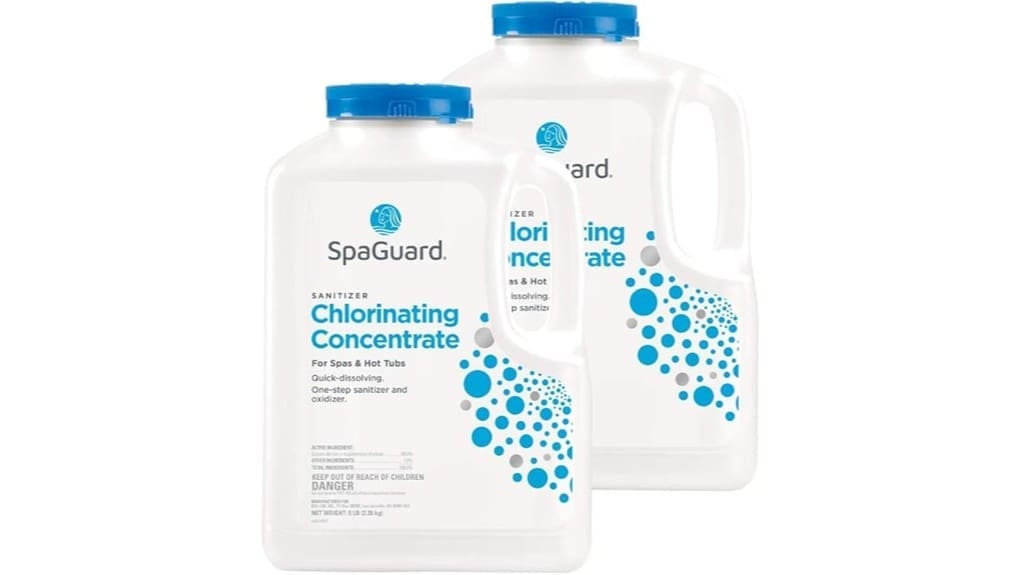
You’ll find SpaGuard Spa Chlorinating Concentrate is a fast‑dissolving, pH‑neutral granular chlorine designed for routine sanitizing and shock treatments in hot tubs and spas. You’ll add it with the pump running to avoid clumps and get predictable free chlorine residuals without shifting pH or stressing heaters. It’s suitable for homeowners and small operators who want reliable oxidizing power and simple dosing. Continue for practical dosing steps, safety checks, and alternative options.
Some Key Takeaways
- Fast-dissolving, pH-neutral granular chlorine designed for routine sanitation and shock treatments in hot tubs and spas.
- Predictable free chlorine residuals with minimal pH shifts, maintaining water chemistry and heater compatibility.
- Requires addition while pump runs to prevent clumping and ensure rapid, complete dissolution.
- Effective for both maintenance dosing and shock; circulate 30–60 minutes and retest before reuse.
- Stored dry and sealed; compare cost per pound to dichlor or bromine alternatives for budget or preference.
What SpaGuard Spa Chlorinating Concentrate Is and Who It’s For
Designed for routine sanitation and shock treatments, SpaGuard Spa Chlorinating Concentrate is a quick-dissolving, pH-neutral granular chlorine formulated for hot tubs and spas; you’ll use it to maintain sanitary water and to super-chlorinate when needed. You’ll find its technical profile suits operators who require predictable oxidizing power without altering water chemistry. Directions mandate adding while the pump runs for rapid dissolution and immediate activity. User demographics include residential owners, small commercial operators, and service technicians needing a compact, reliable sanitizer. You’ll appreciate its ease of dosing, compatibility with balanced spa systems, and proven effectiveness within SpaGuard’s quality controls. Homeowners who enjoy outdoor spaces will find this product especially useful for keeping pools and spas clean with minimal fuss and consistent chlorine levels.
How the 5 Lb Granular Formula Performs in Real Spas
When you add the 5 lb SpaGuard granular formula to a running spa pump, it dissolves quickly and delivers measurable free chlorine levels without noticeably shifting pH, so you get rapid sanitization and predictable residuals for routine dosing or shock treatments. You’ll notice fast dissolution speed due to uniform grain size, which prevents clumping and pockets of undissolved product. Measured free chlorine remains stable, indicating reliable sanitizer longevity between maintenance doses. The formulation is pH-neutral and engineered for heater compatibility, avoiding scaling or corrosion under normal conditions. Overall, performance is consistent, controllable, and suited to regular spa sanitation protocols. Homeowners can conveniently monitor sanitizer levels with simple test kits to keep their outdoor pools and spas safe.
Step-by-Step: How to Use and Shock Your Spa Safely
Having confirmed the 5 lb granular formula dissolves quickly and holds stable free chlorine and pH, you’ll now follow a precise procedure for routine dosing and shock treatments to keep water safe and equipment protected. Start with pre shock testing: measure free chlorine, combined chlorine, pH, and total alkalinity; record values. Run an equipment checklist: functioning pump, filter condition, and skimmer clear. For routine dosing, add specified grams per gallon with pump on for full dissolution. For shock, calculate dose to raise free chlorine to target ppm, add gradually, circulate 30–60 minutes, retest, and reopen when levels are safe. Many homeowners find that scheduling regular shock treatments improves water clarity and safety by preventing buildup of contaminants and maintaining stable free chlorine.
Pros, Cons, and Common User Issues (Dissolving, Smell, pH Impact)
Although the SpaGuard granular formula dissolves quickly under proper circulation, you should still be aware of a few practical pros, cons, and recurring user issues—particularly dissolution, odor, and pH interactions. You’ll benefit from fast dissolving time and reliable chlorination for routine and shock treatments; the pH-neutral design minimizes adjustment needs. Cons include potential local clumping if added without pump flow and transient chlorine smell immediately post-feed. Odor concerns usually stem from high free chlorine after shocking, not the product itself. To avoid problems, dissolve with pump on, measure chlorine before use, and store bags dry and sealed. Many homeowners find that following best opening practices makes the process faster and reduces common issues.
Should You Buy It? Price, Alternatives, and Final Recommendation
After considering dissolution behavior, odor, and pH effects, you can evaluate whether SpaGuard Spa Chlorinating Concentrate fits your needs by weighing cost, alternatives, and practical value. You’ll find the 5 lb bags (pack of 2) delivers reliable, fast-dissolving sanitation suitable for routine chlorination and shock. For a clear price comparison, divide cost per pound against competitors’ granular chlorine and dichlor alternatives; SpaGuard often sits mid-range but offers pH-neutral benefit. If you prioritize quick dissolution and minimal pH impact, buy it. If budget or non-chlorine preference dominates, explore bromine, mineral systems, or cheaper chlorine brands as buying alternatives. Many homeowners also use natural enzyme treatments alongside chlorine to help maintain clear water and reduce chemical use.
Some Questions Answered
Is This Product Safe for Use With Metal Components and Covers?
Yes — you can use it with metal components and covers when following directions. Corrosion testing shows the pH-neutral, quick-dissolving formula minimizes corrosion risk versus harsher chlorines. You should add granules with the pump running to guarantee complete dissolution and avoid high localized concentrations that could attack metal or fabric. For cover compatibility, rinse and ventilate covers occasionally and store chemicals separately to maintain cover integrity and extend component life.
What Is the Shelf Life Once a Bag Is Opened?
Once opened, expect about 6 to 12 months of opened longevity if you store the granules in a cool, dry, airtight container. You’ll retain residual potency best by minimizing moisture and air exposure; humidity degrades available chlorine and reduces effectiveness. Keep bags sealed, use desiccants, and avoid heat. If granules clump, test chlorine level before use—significant clumping usually signals reduced residual potency and warrants replacement.
Can It Be Used With Bromine or Saltwater Systems?
You shouldn’t mix it directly with bromine; chlorine will inactivate bromine chemistry, so avoid simultaneous dosing—bromine compatibility is limited. For saltwater interaction, chlorine-based granules will sanitize in salt systems but can react with generated chlorine levels and corrosion-prone components, so monitor residuals and equipment. Always follow manufacturer guidelines: add while the pump runs, test sanitizer levels frequently, and avoid combining dosing regimens to maintain stable, effective sanitation.
Are There Special Storage Temperature Requirements?
Yes — you should control storage conditions and adhere to temperature limits. Store in a cool, dry, well-ventilated area away from heat sources and direct sunlight; keep bags sealed and off the floor. Maintain temperatures between 40°F and 85°F (4°C–29°C) where possible to preserve stability. Avoid freezing and temperatures above limits that can degrade or promote off-gassing. Follow local regulations for oxidizer storage and segregation from incompatible materials.
Is This Product Safe for People With Chlorine Sensitivities?
No — you shouldn’t assume it’s safe for people with chlorine sensitivities. Chlorine can cause skin reactions and respiratory irritation even from quick-dissolving granular products. You should avoid direct contact and make certain good ventilation during and after dosing, run the pump to disperse and dilute, and consider non-chlorine sanitizers if sensitivity persists. Test at low concentrations and consult a physician for severe reactions or chronic respiratory issues.