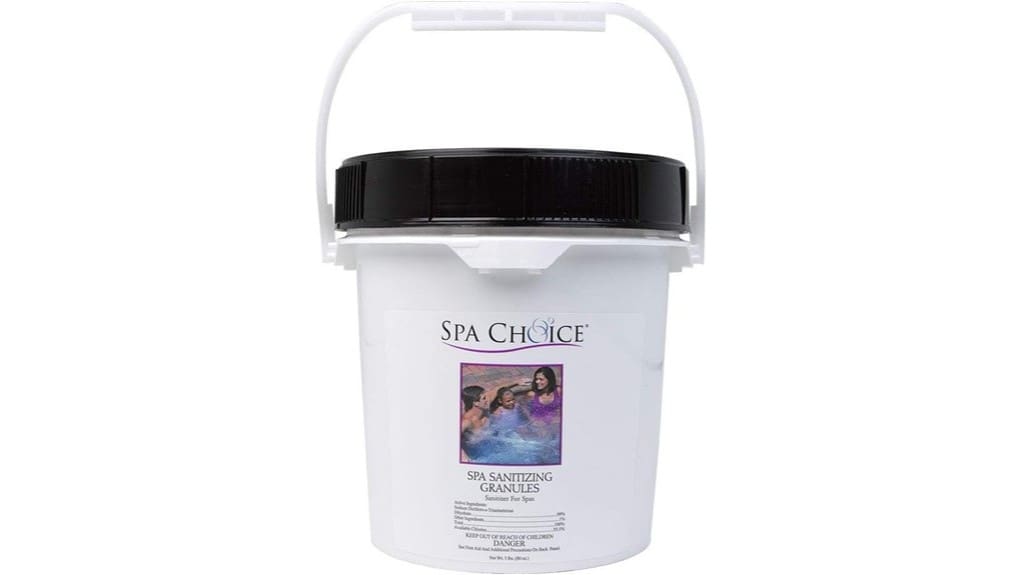
You’ll find SpaChoice Premium Granules are a fast‑dissolving, cost‑effective chlorine sanitizer that’ll kill bacteria, control algae, and clear cloudy spa water when you keep free available chlorine at 4–5 ppm for start‑up and maintain recommended residuals for routine use. You should test and balance pH and alkalinity, run circulation during dosing, and store granules cool and dry to avoid degradation. If you want specifics on dosing, safety, and compatibility, keep going for details.
Some Key Takeaways
- Fast-dissolving chlorine granules that reliably kill bacteria and control algae when free available chlorine (FAC) is maintained at recommended levels.
- Initial dosing: 6 teaspoons per 500 gallons; raise FAC to 4–5 ppm for start-up, with re-entry prohibited above 3 ppm.
- Works best with pH 7.2–7.8, proper alkalinity, active circulation, and regular FAC testing to avoid overshooting sanitizer levels.
- Pros: cost-effective, quick dissolution, USA-made, and clear dosing guidance; cons: requires careful handling and frequent testing.
- Compatible with routine spa maintenance when equipment, seals, and filters are checked, and oils or fragranced products are avoided.
What SpaChoice Granules Are and Who Should Use Them
SpaChoice Premium Spa Sanitizing Granules are a fast-dissolving chlorine sanitizer formulated to kill bacteria, control algae, and destroy contaminants in hot tubs and spas. You’ll find granules useful if you manage a residential or commercial spa and need a proven chlorine option that dissolves completely. Use it when you want measurable control of microbial load and algae, provided you follow recommended water chemistry and testing. It supports good spa etiquette by reducing odor and visible contamination, and it fits routine maintenance scheduling—drain intervals and dosing checks—so users can safely plan occupancy and compliance with manufacturer guidelines. These granules are a practical choice for homeowners who value maintaining a sparkling pool and safe backyard water feature.
How to Dose SpaChoice for Start-Up and Routine Spa Treatment
When you’re preparing a spa for initial use, start with a precise dosage: add 6 teaspoons of the granules per 500 gallons of water, running the circulation system as you dissolve them so the sanitizer disperses evenly. For initial dosing, test free available chlorine (FAC) and repeat additions until you reach 4–5 ppm, noting re-entry is prohibited above 3 ppm. For routine treatment, use maintenance dosing guided by test results, aiming to keep FAC within recommended levels and pH 7.2–7.8. Run circulation, test frequently, and adjust granule additions conservatively to avoid overshooting target sanitizer concentrations. Many homeowners also find it helpful to consult pool opening resources when planning seasonal start-up.
Performance: Algae Control, Bacteria Kill, Dissolution, and Water Clarity
Although you won’t see instant results like shock treatments, the granules deliver a reliable chlorine residual that controls algae growth when maintained at recommended FAC levels (4–5 ppm for start-up, lower for routine). You’ll notice rapid dissolution in circulating water, producing consistent available chlorine that supports bacterial efficacy against common spa pathogens when pH and alkalinity are within range. Regular dosing prevents algae resistance by keeping residuals steady rather than episodic spikes. With proper testing and circulation, the product clears cloudy water and maintains water clarity while destroying contaminants. Objective measurements—FAC, pH, TA—confirm performance; follow dosing guidance. For homeowners looking to maintain outdoor water features, consistent dosing and following chlorine tablet tips will help keep pools and spas sparkling and safe.
Compatibility, Safety, and Maintenance Tips for Hot Tubs and Equipment
Because sanitizers interact with equipment and chemicals, you should confirm compatibility and follow safety protocols before adding the granules. Check manufacturer guidance for chemical compatibility with seals, heaters, and liners. Run the circulation system and conduct an equipment inspection for leaks, worn fittings, or clogged filters. Test and adjust pH, alkalinity, and cyanuric acid to specified ranges before dosing. Add granules as directed, avoid introducing oils or fragranced products that reduce efficacy or cause foaming, and retest free available chlorine regularly. Drain and refill per usage frequency, and document maintenance to prevent equipment corrosion and guarantee sanitizer performance. Also, consider using pool test strips regularly to monitor water balance and sanitizer levels for clearer, safer water.
Verdict: Pros, Cons, and When to Buy SpaChoice Premium Granules
If you want a straightforward, cost‑effective chlorine sanitizer for spas, SpaChoice Premium Granules delivers reliable disinfection and quick dissolution while meeting typical water‑chemistry requirements. You’ll get effective algae and bacteria control, clear dosing guidelines, fast dissolution, and USA manufacturing at a modest price. Cons: it’s an active chlorine product that needs careful handling, regular testing, and compatibility checks to avoid foaming or equipment reactions. Consider long term storage stability and packaging sustainability when buying—store sealed, cool, dry, and check UPC/ASIN for authenticity. Buy if you prioritize proven chlorine performance and simple maintenance for routine spa care. Many homeowners also pair sanitizers with filter powder to improve overall water clarity and filtration efficiency.
Some Questions Answered
Are Spachoice Granules Safe for Use With Saltwater Hot Tubs?
Yes — you can use SpaChoice granules in saltwater hot tubs, but you should take precautions. The product is chlorine granules effective as a sanitizer, yet salt systems raise saltwater compatibility concerns: elevated chlorine and salt can accelerate electrode corrosion in salt generators and metal components. You should monitor free available chlorine, keep cyanuric acid under 150 ppm, follow manufacturer guidance, and test chemistry frequently to minimize corrosion and equipment issues.
Can These Granules Be Used With Swim Spas and Exercise Pools?
Yes — you can use these granules in a swim spa or resistance pool if you follow dosing and water chemistry guidelines. Keep circulation running, test frequently, and target proper free chlorine (4–5 ppm start-up, maintain safe operational levels). Watch pH (7.2–7.8), alkalinity, and calcium hardness, and avoid exceeding cyanuric acid limits. Consult equipment manufacturers about compatibility with jets, heaters, and materials before regular use.
Do Spachoice Granules Affect Spa Cover Materials?
They generally won’t harm spa cover materials if you maintain proper chemistry and avoid direct, concentrated contact; cover compatibility depends on keeping pH 7.2–7.8 and FAC below recommended re-entry limits. Prolonged high chlorine, splashes, or residual granules can cause material discoloration or premature wear. You should rinse covers after heavy use, store them away from splashes, and consult the cover manufacturer for specific compatibility guidance.
Are There Fragrance-Free or Hypoallergenic Versions Available?
Yes — you can find fragrance free options and hypoallergenic formulations among spa sanitizers, though SpaChoice’s granules are standard chlorine without added fragrances. Look for products labeled “fragrance free” or “hypoallergenic formulations” and check ingredient lists for minimal additives. Verify with manufacturers and retailers, review test data for irritant-free claims, and maintain recommended chlorine/pH ranges to reduce irritation. Patch-test if you have sensitive skin.
What Is the Shelf Life Unopened and After Opening?
Unopened, you can expect about 2–3 years if stored cool, dry, and sealed; after opening, use within 6–12 months under the same storage conditions. Proper storage conditions slow breakdown; exposure to heat, moisture, or contaminants accelerates degradation. Degradation products may include chlorinated byproducts and loss of available chlorine, reducing effectiveness. Test residual chlorine regularly and discard if granules cake, change color, or produce off-odors.