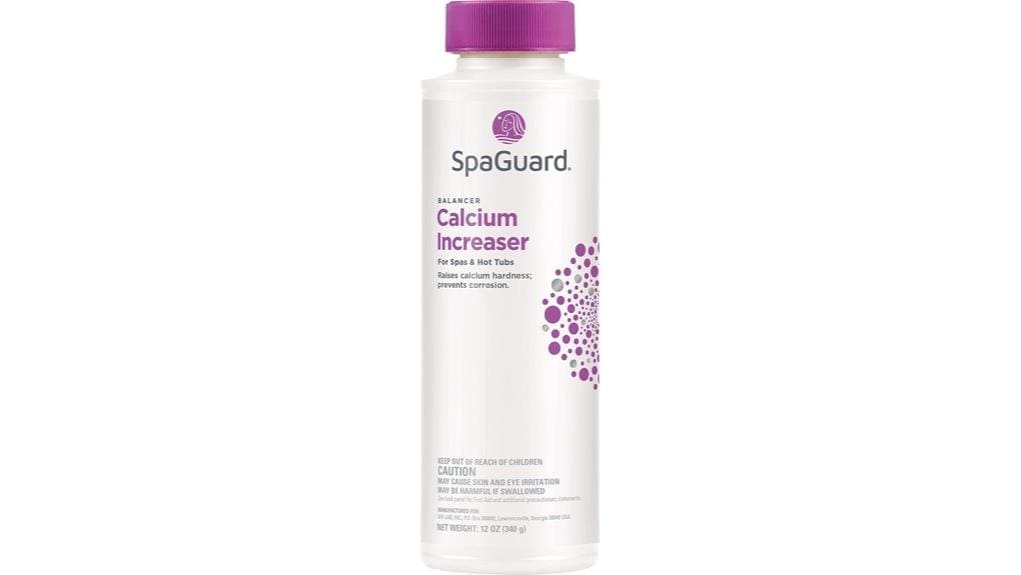
You’ll get a precise, dealer-backed 12‑oz granular formula that raises spa calcium predictably—about 25 ppm per tablespoon per 100 gallons—so you can hit the recommended 200–400 ppm to protect plumbing and surfaces. Granules dissolve in hours when mixed and added near returns with pumps running, improving clarity without immediate scaling if dosed incrementally. Test before and 4 hours after dosing, store dry, and compare per‑ounce cost; keep going for full dosing and maintenance guidance.
Some Key Takeaways
- Raises spa calcium reliably: ~+25 ppm per tablespoon per 100 gallons, reaching recommended 200–400 ppm for protection.
- 12‑ounce granular jar (model BIO42257) offers precise, controlled dosing ideal for technicians and budget-conscious owners.
- Granules dissolve within hours when pre-dissolved and added near return jets with pumps running.
- Best used incrementally: test before dosing, retest after 4 hours, and adjust to avoid local spikes or scale.
- Small jar size means repeat purchases; compare per-ounce cost to bulk options and keep stored dry and cool.
Quick Verdict and Who This Product Is Best For
While you want straightforward results, SpaGuard Calcium Hardness Increaser delivers a precise, controlled way to raise spa calcium to the recommended 200–400 ppm range. You’ll appreciate consistent, measurable adjustments that protect plumbing, jets, and surfaces from corrosion or etching. As a spa owner, you’ll find the 12‑ounce granular format efficient for targeted dosing; it raises calcium without causing scaling when used correctly. The product suits technicians, community-minded hot-tub owners, and the budget shopper who values reliable performance and dealer-backed support. Expect predictable outcomes, clear dosing guidance, and compatibility with routine water care protocols. This product is ideal for homeowners who want to keep pool water balanced and maintain healthy outdoor spaces.
Key Specs at a Glance: Size, Dosing, and Target Hardness
To move from verdict to specifics, here are the hard numbers you need: the bottle contains 12 ounces of granular formula (model BIO42257, ASIN B007ZUD2IU) and is dosed at 1 tablespoon per 100 gallons to raise calcium hardness by about 25 ppm. You’ll target a stable 200–400 ppm for spas; below ~100 ppm risks corrosion. The container dimensions and 8.4-ounce weight make it compact for shelf or bathroom aesthetics without dominating space. You’ll store unused product dry during seasonal storage. Dosage math is straightforward, so you’ll feel confident maintaining balanced hardness with predictable increments. Many homeowners pair clarifiers and hardness adjustments to keep clear pool water and spa surfaces looking their best.
Real-World Performance: Raising Hardness, Clarity, and Scale Control
Typically, you’ll see predictable increases in calcium hardness when dosing SpaGuard Calcium Hardness Increaser—about 25 ppm per tablespoon per 100 gallons—allowing you to correct low levels without overshooting. You’ll notice a steady raising speed; hardness rises reliably within hours as the granules dissolve. Water clarity improves as you reach the 200–400 ppm target, reducing cloudiness linked to corrosive low hardness. Scale control remains effective when you avoid rapid overcorrection; the formulation raises hardness without promoting immediate scale formation. For long term stability, maintain routine testing and incremental adjustments so you and your fellow spa users enjoy consistent, protected water. Pools and spas also benefit from properly maintained equipment like pool pump motors to keep circulation optimal.
How to Dose SpaGuard Calcium Increaser Safely (Step-by-Step)
Because accurate dosing prevents damage and maintains water balance, start by testing your spa’s calcium hardness and total water volume so you can calculate how much SpaGuard Calcium Hardness Increaser to add. Determine target hardness (200–400 ppm) and current level; use the guideline 1 tablespoon per 100 gallons ≈ +25 ppm to compute dose. Adjust for water temperature—warm water dissolves granules faster; add in small increments if hot. Dissolve granules in a bucket of spa water, pour near return jets with pumps running. Retest after 4 hours. Record readings to improve measure accuracy and repeat dosing only as needed. Maintaining proper pH along with calcium helps ensure clearer, safer water and protects spa surfaces.
Pros, Cons, Price Considerations, and Buying Tips
While small and easy to store, SpaGuard Calcium Hardness Increaser delivers a precise, controllable way to raise calcium levels without promoting scale when dosed correctly. You get reliable increments (1 tbsp/100 gal ≈ +25 ppm), clear guidance for water chemistry targets (200–400 ppm), and brand support. Cons: single 12 oz jar limits volume needs and requires repeat purchases; granular format needs careful distribution to avoid local spikes. Price varies—compare per-ounce cost versus bulk alternatives and factor dealer support. Buy when your maintenance schedule shows low hardness; keep testing strips and document doses for consistent results and shared user confidence. Store pool chemicals in a cool, dry, well-ventilated area away from direct sunlight and incompatible substances to maintain effectiveness and safety safe storage.
Some Questions Answered
Is This Safe for Use With Saltwater Hot Tubs?
Yes—you can use it in saltwater hot tubs, but monitor levels closely. You’ll maintain salt compatibility by keeping calcium hardness in the 200–400 ppm range; low hardness risks electrode corrosion and system etching. Dose 1 tablespoon per 100 gallons to raise hardness about 25 ppm, retest after equilibration, and adjust gradually. You’ll protect metallic components and enjoy balanced water when you follow these measured, community-accepted practices.
Can It Be Mixed With Other Spa Chemicals Immediately?
Yes — you shouldn’t mix it directly with other products; wait before adding additional chemicals. For compatibility timing, add the calcium increaser to circulating water, allow full dissolution and at least 15–30 minutes of filtration, then test levels. This minimizes chemical interactions and local concentration spikes that cause precipitation or reaction. You’ll avoid problems and feel confident in safe handling by following the dosing guideline and testing before introducing other treatments.
How Long After Dosing Can I Use the Spa?
You can usually use the spa after 15–30 minutes, but prioritize wait time and pre use testing to confirm calcium and sanitizer levels. For swimmer safety, make sure filtration has circulated dissolved granules and temperature impact is stable; warmer water speeds dissolution. Test calcium hardness and free sanitizer before entering. If levels are outside recommended ranges or water looks cloudy, wait longer and retest until readings fall within safe, comfortable parameters.
Is It Safe for Acrylic and Inflatable Spa Surfaces?
Yes, it’s safe for acrylic and inflatable spa surfaces when used as directed. You should follow surface compatibility guidelines and avoid over-concentration; dilute and distribute the granular product per dosing instructions. SpaGuard recommends material testing on a small hidden area before broad use to confirm no adverse reaction. You’ll feel confident maintaining calcium hardness while protecting finishes; consult manufacturer support if you need further assurance or warranty details.
Does It Affect Foam or Sanitizer Efficiency?
No, it won’t directly cause foam reduction nor significant sanitizer interaction when you dose correctly. You’ll raise calcium hardness without introducing surfactants that create foam, and stable calcium levels won’t neutralize chlorine or bromine at recommended levels. You should still monitor foam sources (lotions, detergents) and sanitizer residuals after dosing. If you notice changes, adjust shock or use a defoamer; keep community testing and sharing results for consistent care.