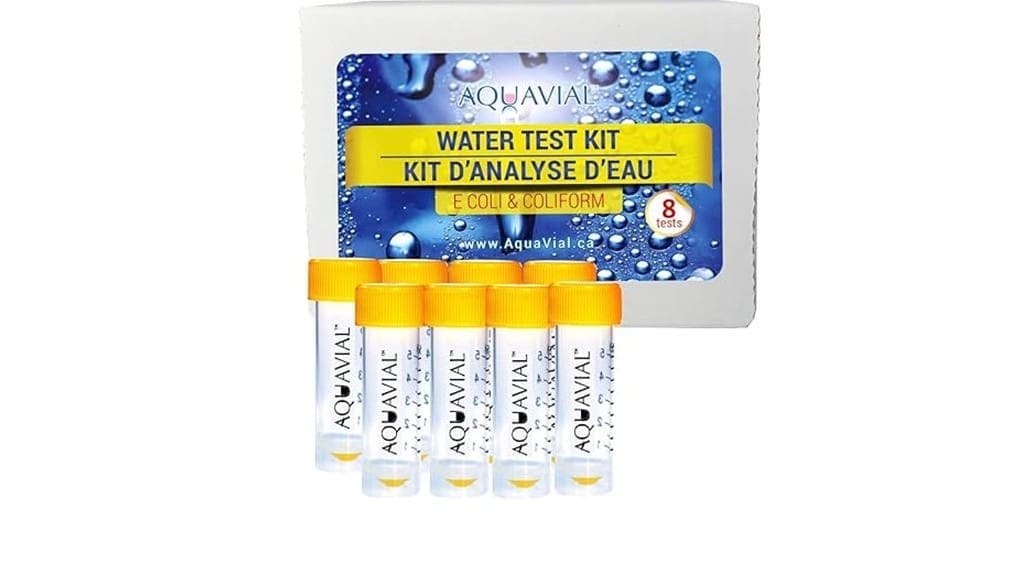
You’ll get eight sealed colorimetric tubes that detect E. coli and coliforms down to ~1 CFU/mL for quick, field-ready screening. You pour a sample to the mark, cap, incubate, and compare the yellow/pink color change to the chart. Sensitivity is high but real-world accuracy depends on sampling, temperature, and turbidity; treat positives as presumptive and confirm with a lab. It’s cost-effective for routine checks and logs — keep going to see operational tips and limits.
Some Key Takeaways
- Eight individually sealed colorimetric tubes enable fast, single-use field screening for E. coli and coliforms.
- Sensitive detection down to ~1 CFU/mL, giving early warning of very low contamination levels.
- Results interpreted by yellow (safe) or pink (coliforms/E. coli) color change after specified incubation.
- Real-world accuracy depends on sampling, incubation temperature, and turbidity; replicate tests improve confidence.
- Useful and cost-effective for routine/home screening, but positives are presumptive and need lab confirmation for reporting.
Quick Verdict: Is the 8-Pack Water Testing Kit Worth Buying?
Although simple in design, this 8-pack water testing kit gives you fast, reliable screening for E. coli and coliforms, making it a practical choice for routine monitoring of drinking water, wells, showers, pipes, pools, and hot tubs. You’ll get sensitive, colorimetric detection down to 1 CFU/ml with clear yellow/pink interpretation, two-year shelf life, and DIY or professional applicability. In a cost comparison, it undercuts lab analysis for routine checks while preserving traceable results suitable for preliminary assessments. For regulatory compliance, it’s useful for screening and documentation but shouldn’t replace certified laboratory confirmation when regulations require formal reporting. Perfect for homeowners who enjoy their outdoor spaces, it complements other digital pool testers used for maintaining pool and spa water quality.
How the Kit Works and What’s Included
Start by removing a tube from the sealed foil pouch and pour the sample water into the provided test tube to the marked fill line; the kit includes eight individually sealed colorimetric tubes, a color comparison chart, sterile caps, and brief instructions. You cap the tube, incubate per instructions, and monitor the testing mechanism: a reagent embedded in the tube undergoes a enzymatic color change in presence of coliforms/E. coli. You compare resulting hue to the chart to classify results. Pack contents are compact for field or home use, with stable reagents, single-use tubes, and minimal ancillary equipment required. These kits are designed for homeowners who enjoy outdoor spaces and need simple pool water safety checks.
Real-World Sensitivity and Accuracy (Down to 1 CFU/mL)
When you test with this kit, its reported sensitivity down to 1 CFU/mL means it can detect very low levels of E. coli and coliforms that many field kits miss, but real-world accuracy depends on sample handling, incubation conditions, and matrix effects; improper filling, temperature deviations, or high turbidity can reduce detection probability and produce false negatives or ambiguous color shifts. You should expect performance to vary with source water composition and operator technique. Field variability raises uncertainty margins; replicate tests improve confidence. False positives are uncommon but can occur with cross-contamination or atypical organics. Treat single positive results as presumptive, confirm with lab culture. This kit pairs well with simple maintenance logs to help track test conditions and results over time.
Step-by-Step Use, Interpretation, and Common Troubleshooting
Before you begin testing, gather the kit, clean sampling container, timer, and the included color chart, and verify the kit’s expiration date and storage conditions. Collect a representative sample collection by flushing source water, filling tubes without bubbles, and sealing immediately. Start the timer per protocol; note ambient temperature. After incubation, perform result timing precisely—compare tube color to the chart at the specified minute. Yellow = safe; pink = E. coli/coliform present. Troubleshoot: repeat test if color is ambiguous, make certain tubes weren’t contaminated, verify timer accuracy, and confirm storage conditions. Contact manufacturer for persistent inconsistencies. Regular testing and proper maintenance help homeowners keep their pool water clear and safe.
Who Should Buy It and Alternatives to Consider
Having reviewed the sampling and interpretation steps, you’ll next decide whether this 8-pack E. coli/coliform kit fits your needs. You should buy it if you’re a homeowner needing routine screening of wells, showers, pipes, pools or hot tubs, want rapid colorimetric results to 1 CFU/ml, and prefer a two-year shelf life for occasional testing. It’s suitable for DIY and preliminary professional checks; use homeowner guidance for sampling consistency. If you need confirmatory testing, higher-throughput labs or quantitative PCR services are better. Consider commercial alternatives—multi-parameter kits or lab services—when regulatory documentation or broader analyte panels are required. This kit pairs well with a pool logbook to keep records of tests and treatments.
Some Questions Answered
Can This Kit Detect Viruses or Other Pathogens Besides Bacteria?
No — you won’t detect viruses or complex pathogen differentiation with this kit. It targets bacteria (E. coli and coliforms) via colorimetric reaction to ~1 CFU/ml sensitivity. Virus detection requires molecular or immunological assays (PCR, antigen tests) that identify viral genomes or proteins; those methods enable true pathogen differentiation among viral species. Use this kit for rapid bacterial screening and pursue laboratory testing if you need virus-specific or broader pathogen identification.
Are the Test Tubes Reusable After a Test?
No, the test tubes aren’t intended to be reusable after a test. You’ll preserve test tube longevity by treating them as single‑use consumables to avoid cross‑contamination and degraded sensitivity. For cleanup methods, rinse used tubes with disinfectant then autoclave or discard according to biohazard guidelines; do not rely on household cleaning to restore original performance. Follow manufacturer disposal and safety instructions to maintain accurate results and laboratory safety.
Do Temperature or Storage Conditions Affect Shelf Life?
Yes. You’ll need to control storage temperature and maintain packaging integrity to preserve the 2-year shelf life. Elevated temperatures or temperature cycling can degrade reagents and reduce sensitivity; cold extremes may also impair performance. Keep kits sealed in original packaging, away from direct sunlight and humidity, and store within the manufacturer’s recommended temperature range. If packaging integrity is compromised, discard or verify performance before use to avoid false results.
Is There a Recommended Disposal Method for Used Tests?
Yes. You should treat used tests as biological waste and follow local safe disposal rules and biohazard guidance: cap tubes, place them in a sealed plastic bag, and dispose with household trash only if permitted by local regulations. For higher-risk samples or where regulations require, use biohazard sharps or waste containers and submit to licensed medical waste disposal. Document disposal method if required by your facility’s compliance procedures.
Can Results Be Digitally Logged or Integrated With Apps?
Yes. You can manually record results via mobile logging by photographing tubes and entering readings; many apps support cloud sync for timestamped records. The kit itself lacks built-in wireless sensors, so you’ll rely on smartphone capture or third-party lab apps that map color to concentration using the provided chart. Maintain consistent lighting and distance for accurate digitization, and export CSVs from cloud-synced services for audit trails and compliance.