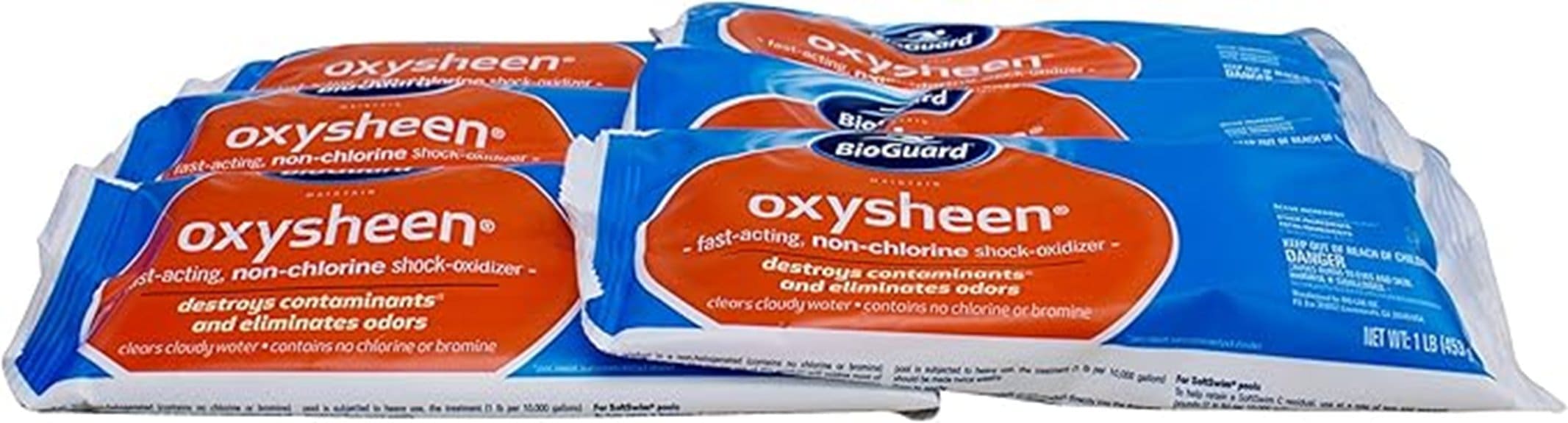
You’ll get a fast, non‑chlorine oxidizer that clears oils, sweat and other organics, cuts chloramine odor, and restores clarity without high free‑chlorine spikes. Oxysheen dissolves quickly, works immediately with filtration to polish water, and lets swimmers return in about 15 minutes when levels are normal. It preserves your sanitizer reserve, reduces eye and skin irritation, and suits sensitive‑skin pools—but it’s not a sanitizer replacement; keep reading for full use and alternatives.
Some Key Takeaways
- Oxysheen is an oxygen-based, non-chlorine shock that quickly oxidizes organics and restores pool clarity without free chlorine spikes.
- Fast-dissolving powder shows visible clarity improvement within minutes and typically clears clouds within an hour with proper filtration.
- Reduces chlorine demand and chloramine odor, making pools smell less “chloriney” and easing skin and eye irritation.
- Allows swimmer reentry about 15 minutes after treatment if water tests normal; follow label dosing and circulation guidelines.
- Not a sanitizer replacement—use for organic removal and sensitive-skin pools; stabilized chlorine remains necessary for residual disinfection.
Quick Verdict: Is BioGuard Oxysheen Worth Buying?
While it’s not a universal solution, BioGuard Oxysheen delivers a reliable, non-chlorine oxidizing boost that quickly clears organic contaminants and restores pool clarity. You’ll find it effective at removing oils, perspiration residues, and organics that tax sanitizers, reducing chlorine demand and odor. In a value comparison against similar oxygen-based shocks, Oxysheen’s fast-dissolving powder and pack-of-six format offer predictable dosing and lower per-treatment cost. Expect rapid return-to-swim times and gentler chemistry suited for sensitive skin. For routine maintenance you’ll appreciate consistent performance; assess long term efficacy by tracking sanitizer usage and clarity over multiple treatment cycles. Many homeowners use shock treatments to keep pools sparkling between regular cleanings.
How Oxysheen Works and Why Non‑Chlorine Shock Matters
Because Oxysheen uses an oxygen-based oxidizer rather than elemental chlorine, it breaks down organic contaminants—body oils, lotions, sweat, and other nitrogenous wastes—by oxidizing their molecular bonds into smaller, more soluble compounds that your filter and sanitizer can remove. You’ll see rapid reduction in combined organic load via a controlled oxidation mechanism that avoids free chlorine spikes. That preserves sanitizer reserve, reduces chloramine formation, and minimizes eye and skin irritation. For swimmer safety, Oxysheen permits reentry quickly without residual bleaching or elevated chlorinous fumes. Use as directed for targeted shock dosing to maintain clear, low-odor water. Homeowners should also consider regular testing and proper dosing to keep overall pool chemistry balanced with stabilizer management.
Real‑World Performance: Clarity, Odor Control, and Soak Time
When you dose BioGuard Oxysheen as directed, it dissolves rapidly and produces a measurable improvement in visual clarity within minutes and complete cloud‑break in most pools within an hour, depending on filtration turnover and organic load. You’ll observe restored water clarity as Oxysheen oxidizes organics that scatter light. Odor elimination is prompt; volatile organic compounds are oxidized, reducing chloramine‑like smells without adding chlorine. Soak time is minimal—active oxidation occurs immediately, with residual polishing during filtration cycles. Results depend on load and circulation: higher organic loads or low turnover extend clarity recovery. Measurements: turbidity and free oxidizer levels confirm performance. Homeowners preparing pools for winter should follow pool winterizing best practices to protect equipment and water quality.
How to Use Oxysheen Safely and Get Fastest Results
To get the fastest, safest results, measure and dose Oxysheen precisely per label instructions and add it to circulating water away from swimmers; the powder dissolves rapidly, so distribute it evenly around the deep end or return jets while the pump runs to guarantee immediate oxidation and uniform concentration. For pool preparation, test and adjust pH (7.2–7.6) and total alkalinity first. Use calibrated scoops for dosing accuracy based on volume. Keep swimmers out during application; swimmer re entry is allowed after 15 minutes per product data, provided levels test normal. Follow manufacturer guidance for storage safety: cool, dry, sealed containers. For best overall results, consider using digital pool testers to verify chemical levels quickly and accurately during the process, especially when measuring pH and alkalinity.
Alternatives and Who Should (or Shouldn’t) Choose Oxysheen
Although Oxysheen suits pools needing a gentle, fast-acting oxidizer, you should consider alternatives if you require persistent sanitization, algae control, or budget-priced bulk treatment. If you manage a public or heavily used pool, choose stabilized chlorine or biguanide systems for residual sanitizer and algae prevention. For sensitive skin concerns, Oxysheen and other chlorine alternatives (oxygen-based oxidizers) minimize irritation but won’t replace residual disinfectants. If cost per treatment and long-term microbial control matter, pick granular chlorine, liquid bleach, or stabilized shock. Use Oxysheen when you need rapid organic removal, quick clearance, and compatibility with sensitive skin. For eco-conscious pool owners, consider products and practices that support greener outdoor living to reduce environmental impact and chemical load.
Some Questions Answered
Is Oxysheen Safe for Pools With Saltwater Chlorinators?
Yes — you can use Oxysheen with a salt system, and it’s generally cell compatible because it’s an oxygen-based, non-chlorine oxidizer. You shouldn’t expect electrode corrosion from Oxysheen itself, but monitor salinity and pH to avoid conditions that accelerate corrosion. Rinse or backwash per manufacturer guidance to minimize mineral buildup on the cell. Follow dosing instructions and check your chlorinator’s manual for any specific restrictions.
Can Oxysheen Be Used in Hot Tubs or Spas?
Yes — you can use Oxysheen in hot tubs and spas with caution. For hot tub compatibility, confirm manufacturer guidelines and avoid overdosing: dissolve and distribute recommended fraction of a 1 lb unit suitable for spa volume. You’ll get effective organic oxidation without chlorine bleaching, aiding spa maintenance and reducing sanitizer demand. Don’t use while people are soaking; wait recommended contact time and retest sanitizer and pH before reuse.
Does Oxysheen Affect Pool Plaster or Liner Warranties?
Generally no—you won’t void plaster or liner warranties using Oxysheen when applied per label; warranty implications depend on manufacturer terms and documented surface compatibility. You should follow dosing, dilution, and return-to-swim instructions, keep records, and consult your pool or liner manufacturer’s warranty policy. If unsure, get written confirmation from the surface supplier. Improper use or chemical misuse, not Oxysheen’s intended application, is what typically jeopardizes warranties.
Is Oxysheen Environmentally Friendly and Biodegradable?
Yes. You’ll find Oxysheen has a low environmental impact compared to chlorinated shocks; its oxygen-based oxidizer breaks down to benign byproducts (oxygen and simple salts). Its biodegradation rate is rapid because it oxidizes organic contaminants rather than persisting as chlorinated organics. You should still follow label dilution and disposal instructions to minimize localized oxygen demand and protect aquatic life; proper use keeps environmental effects minimal.
Can Oxysheen Be Stored Long-Term Without Losing Effectiveness?
Yes — you can store Oxysheen long-term without significant loss of effectiveness if you maintain shelf stability and packaging integrity. Keep sealed, dry containers away from heat, sunlight, and moisture; avoid cross-contamination. Stored under recommended conditions, oxygen-based oxidizers retain activity for months to years depending on humidity and temperature. Inspect packaging for compromise before use; dispose of product if caking, discoloration, or foul odor indicate degradation.