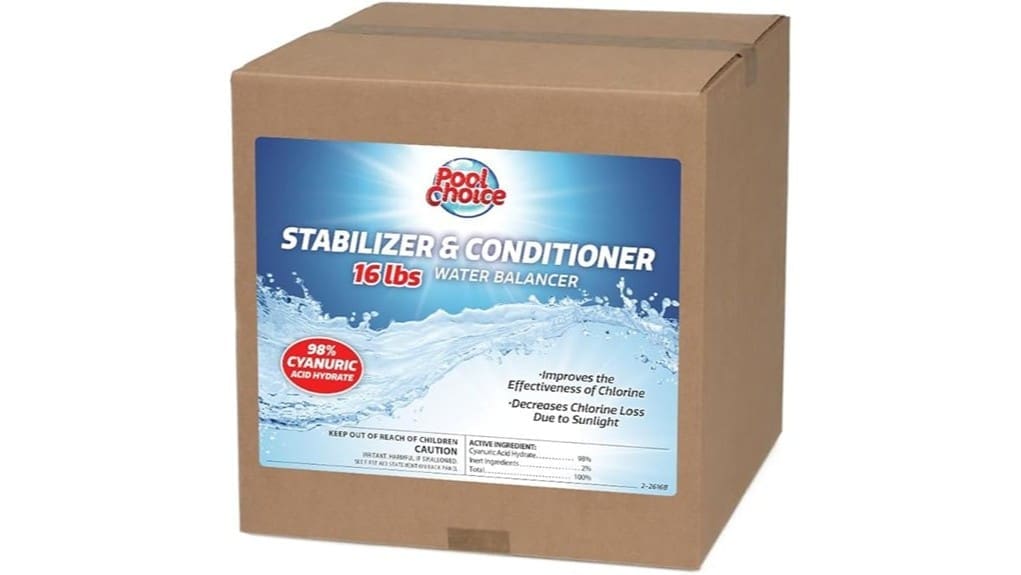
You’ll find SpaChoice 16‑lb Pool Stabilizer a concentrated cyanuric acid granule that’s cost‑effective if you run an outdoor pool and want to cut sunlight-driven chlorine loss. It raises and maintains CYA reliably, can trim chlorine use by about 25% when dosed per the chart, and comes in a heavy-duty container with warranty options. Handle and premix carefully, target 40–100 ppm CYA, and you’ll see steadier residuals—keep going to get dosing tips and safety steps.
Some Key Takeaways
- Concentrated 16-lb cyanuric acid granules that stabilize chlorine and extend disinfecting life for outdoor pools.
- Dosing guideline: 6 oz raises CYA 10 ppm per 5,000 gallons; starter dose 4 oz per 1,000 gallons for untreated pools.
- Typical target CYA 40–100 ppm yields steadier chlorine, reduced sunlight loss, and up to ~25% chlorine savings.
- Safety: pre-dissolve in warm water, add via skimmer with pump running, wear gloves and eye protection.
- Pros: cost-effective bulk packaging and clear dosing; cons: heavy size may be excessive and overdosing risks reduced chlorine activity.
What SpaChoice 16‑Lb Pool Stabilizer Is and Who It’s For
As a concentrated cyanuric acid granule, the SpaChoice 16‑pound Pool Stabilizer quickly raises and maintains your pool’s stabilizer level to protect chlorine from sunlight and extend its disinfecting life. You get a 16‑lb granular product that’s designed to cut chlorine loss, improve chlorine effectiveness, and reduce consumption up to about 25%. It’s aimed at outdoor pool owners seeking Pool longevity, reliable Sun protection, and improved Swimmer comfort through steadier chlorine residuals. You’ll appreciate clear Chemical compatibility guidance and dosing charts for safe use. Opt for this if you want efficient stabilization without complex treatment routines. Many outdoor pool owners also use phosphate removers to maintain water clarity and reduce algae risk, making phosphate removal a helpful complement to stabilizer use.
How to Dose SpaChoice Cyanuric Acid for Your Pool Size
To dose SpaChoice cyanuric acid correctly, first determine your pool’s exact volume and current stabilizer level with a reliable test kit so you can calculate how much product to add. Use the guideline: 6 ounces raises CYA 10 ppm per 5,000 gallons. Enter your volume and target ppm into a dosage calculator or compute manually to find ounces required. For new or untreated pools, add 4 oz per 1,000 gallons to reach starter levels. Add slowly to the skimmer or premix, run the pump 24 hours, and re-test. Factor seasonal adjustments—increase CYA slightly in high-sun months; reduce cautiously if over 100 ppm. Homeowners who use shock treatments regularly should maintain proper CYA levels to protect chlorine from rapid breakdown in sunlight, especially when enjoying outdoor spaces.
Real Results: Chlorine Savings, Stabilization, and Performance Tips
Although you might expect only modest gains, users typically see real chlorine savings and steadier sanitation once cyanuric acid is in the 40–100 ppm range; by cutting sunlight-driven chlorine loss you can lower routine chlorine consumption by up to ~25% while maintaining effective disinfection. You’ll notice improved chlorine retention and sunlight resistance that reduce shock frequency. Monitor levels so chemical balance stays optimal; over-stabilizing can blunt free chlorine activity. For best pool longevity, measure cyanuric acid with a reliable test kit and adjust incrementally. Combined with regular filtration and maintenance, SpaChoice delivers measurable performance improvements without guesswork. Proper dosing and periodic testing help maintain optimal cyanuric acid levels for long-term pool health.
Safety, Mixing, and Application Checklist (Skimmer, Premix, Filter)
Now that you know how cyanuric acid stabilizes chlorine and reduces shock frequency, you’ll want a clear, safety-first checklist for adding SpaChoice to your pool. Follow this safety checklist: wear gloves and eye protection, keep chemical away from acids, and work in a well-ventilated area. Mixing guidance: pre-dissolve measured granules in warm water (small batches), stir until clear, then add to skimmer while pump runs. Make certain filter is clean before adding, recirculate 24 hours to dissolve fully, and retest CYA after 24–48 hours. Target 40–100 ppm; maintain chlorine 2.0–4.0 ppm and pH 7.4–7.6. Cyanuric acid also helps prevent chlorine from breaking down too quickly in sunlight, extending its effectiveness when used properly with proper pH levels.
Is It Worth Buying? Price, Packaging, Warranty, and Buying Pros/Cons
Curious whether the SpaChoice 16-Pounds Premium Pool Stabilizer is a smart buy? You’ll find value if you need concentrated cyanuric acid for consistent chlorine protection. In a price comparison it’s competitively priced per ounce versus smaller packages, delivering economy for larger pools. Packaging durability is solid — heavy-duty container holds 16 lb securely, minimizing spills during storage and dosing. Warranty and returns: manufacturer warranty via customer service plus Amazon’s 30-day return window offer reassurance. Pros: cost-effective, effective stabilization, clear dosing. Cons: bulk size may be excessive for small pools; handle and store carefully to avoid overdosing. Proper storage and handling are important to keep your pool sparkling and maintain chlorine effectiveness.
Some Questions Answered
Does Spachoice Stabilize Saltwater Pools Effectively?
Yes — you can use this product in saltwater pools; it provides saltwater compatibility by adding cyanuric acid that protects chlorine generated by the salt system. You’ll see stabilizer longevity as chlorine lasts longer and consumption drops. Dose carefully to reach 40–100 ppm, recirculate 24 hours, and monitor with a reliable test kit. Don’t over-stabilize; maintain chlorine 2.0–4.0 ppm and pH 7.4–7.6.
Can Cyanuric Acid Be Overdosed and How to Lower Levels?
Yes — you can overdose cyanuric acid, causing cyanuric buildup that reduces chlorine effectiveness. You should test frequently; testing frequency should increase after additions. To lower high CYA, partially drain and refill the pool to dilute levels, or use a reverse osmosis service for faster reduction. Avoid adding more stabilizer until tests show safe range (40–100 ppm), and maintain regular testing frequency to prevent recurrence.
Is This Product Safe for Kiddie or Inflatable Pools?
Yes — you can use it, but exercise caution for child safety and strict dosage guidance. You’ll avoid over-concentrating cyanuric acid by calculating volume accurately and using the recommended small-dose rates for kiddie or inflatable pools. Dissolve slowly, recirculate if possible, and test stabilizer and chlorine before letting kids in. Keep levels within 40–100 ppm, maintain chlorine 2.0–4.0 ppm, and supervise children at all times.
Will It Affect Pool Plaster or Vinyl Liners Long-Term?
No, it shouldn’t cause plaster discoloration or liner stretching when you follow dosing and maintain proper chemistry. Cyanuric acid itself’s inert; problems arise from imbalanced chlorine, pH, or high stabilizer buildup. You’ll avoid issues by testing regularly, keeping CYA 40–100 ppm, maintaining chlorine 2.0–4.0 ppm and pH 7.4–7.6, and ensuring good filtration. Excessive CYA over time can reduce chlorine effectiveness, so monitor and adjust.
Can I Mix Spachoice With Other Pool Chemicals Simultaneously?
You shouldn’t mix SpaChoice with other pool chemicals simultaneously because chemical interactions can cause reactions or reduce effectiveness. Instead, stagger application timing: add the cyanuric acid slowly into the skimmer or premixed in warm water, run the pump, then wait 24 hours before adding sanitizers, shock, or pH adjusters. Test stabilizer and chlorine levels first, make sure the filter’s clean, and follow label directions to avoid overdosing or unwanted reactions.