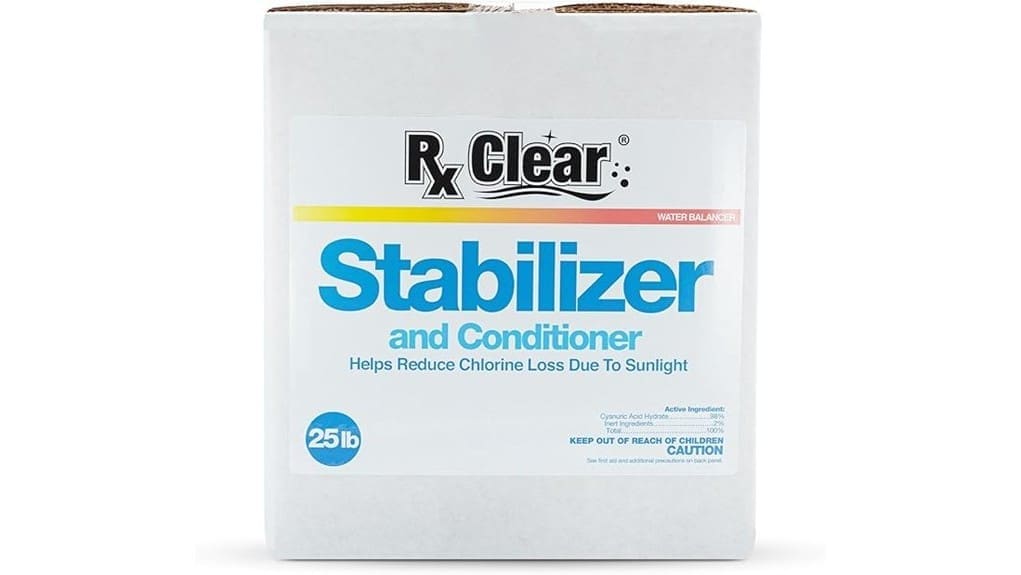
Rx Clear is a fast‑dissolving, 100% cyanuric acid stabilizer that binds UV energy to slow chlorine photolysis and keep free chlorine steady in outdoor pools. You’ll dose by replaced water volume (about 2 lb/10,000 gal ≈ +20 ppm CYA), target 30–50 ppm, and add powder to the skimmer with circulation for 24–48 hours before retesting. It reduces midday boosts and improves perceived water quality; continue for detailed dosing, performance data, and tradeoffs.
Some Key Takeaways
- Rx Clear is a fast-dissolving 100% cyanuric acid powder designed to stabilize outdoor pools and reduce chlorine loss from sunlight.
- Typical dosing: 2 lbs per 10,000 gallons raises CYA ~20 ppm; target range recommended 30–50 ppm.
- Apply measured powder to a clean skimmer with circulation on for 24–48 hours, then retest and adjust.
- Benefits include longer-lasting free chlorine, fewer midday boosts, improved odor and perceived clarity.
- Main downside: overuse causes high CYA requiring dilution/drainage; test weekly to avoid over-stabilization.
What Rx Clear Stabilizer Is and How 100% Cyanuric Acid Benefits Your Pool
Although it’s a simple powder, Rx Clear Stabilizer delivers 100% cyanuric acid to protect your pool’s chlorine from UV degradation. You’ll apply a fast-dissolving, pure cyanuric acid formula that binds UV energy, slowing free chlorine photolysis and preserving sanitizing capacity. The product’s stabilizer chemistry is straightforward: cyanuric acid acts as a sunscreen for hypochlorous species, enabling consistent residuals during peak sunlight. You’ll measure and dose based on replaced water volume, circulate to distribute, and monitor levels with a reliable test kit. Proper use improves chlorine efficiency and directly contributes to pool longevity by reducing frequent shock and treatment cycles. Regular testing with simple test kits helps homeowners maintain the ideal cyanuric acid and chlorine balance for effective sanitation.
Who Should Use This Product and Recommended Target Levels (30–50 Ppm)
If you manage an outdoor pool and want to keep chlorine effective during strong sunlight, Rx Clear is for you; aim for a cyanuric acid (CYA) level of 30–50 ppm to balance UV protection without over-stabilizing. You should use Rx Clear if you run outdoor residential or commercial pools, experience rapid chlorine decay, or host sensitive skin swimmers who need stable disinfection with minimal chlorine spikes. Maintain 30–50 ppm CYA to extend chlorine life while preserving sanitizer efficacy. Implement a weekly testing routine to verify CYA, free chlorine, and pH. Adjust only after test confirmation to avoid over-stabilization. This product works well as part of a natural enzyme approach to pool care for homeowners who enjoy their outdoor spaces.
How to Dose and Apply Rx Clear (Quick Calculator and Step‑By‑Step Instructions)
When you’re ready to stabilize your pool, accurately calculate the amount of Rx Clear needed based on the water you replaced (not total capacity) and your target CYA level—30–50 ppm is recommended; use the chart or quick calculator below to convert gallons to ounces/pounds. Use calculation shortcuts: 2 lbs per 10,000 gallons raises CYA ~20 ppm. Test CYA, determine gallons replaced, compute dose. With a clean filter, add measured powder directly to the skimmer for rapid dissolution; maintain continuous circulation 24 hours. Re-test CYA after 24–48 hours and adjust incrementally. Document doses and skimmer placement for future dosing. Maintaining proper pool pH and using a pool pH decreaser helps keep water clearer and safer.
Performance Review: UV Protection, Chlorine Longevity, and Real‑World Results
After you’ve measured and added the correct dose of Rx Clear and allowed 24–48 hours of circulation for uniform distribution, you can evaluate how well it protects chlorine from UV breakdown and sustains measurable free chlorine. You’ll observe reduced sunlight degradation rates versus unstabilized controls: free chlorine decays slower during peak sun, keeping residuals within the 2.0–4.0 ppm target longer. In practical use, this translates to fewer midday boosts and steadier sanitizer performance. Track CYA and FC with reliable tests; swimmer perception often improves as water clarity and odor decline, confirming stabilized chlorine is working as intended. Maintaining proper stabilizer levels also helps keep your pool balanced and protects equipment and surfaces.
Pros, Cons, and Buying Advice (When to Choose Rx Clear vs. Alternatives)
Although you’ll get consistent UV protection and longer-lasting chlorine with Rx Clear, weigh its concentrated cyanuric acid formula against your pool’s maintenance needs and testing routine. Pros: precise dosing, fast-dissolving powder, predictable stabilization, supports 30–50 ppm targets, compatible with standard chlorine systems. Cons: overuse raises CYA; reversing high levels requires dilution/drainage; handling 25-lb powder needs care. Buying advice: choose Rx Clear when you need accurate, seasonal stabilization and have reliable testing. Consider alternatives if frequent partial water changes or lower initial CYA suit you. Compare price comparison, availability, and environmental impact—high-concentration CYA increases disposal considerations. Also consider pairing phosphate removers to protect water quality and reduce the need for extra chlorine, especially if you manage pool phosphate levels.
Some Questions Answered
Is Rx Clear Safe for Vinyl and Plaster Pool Surfaces?
Yes — you can use it safely; it’s vinyl compatible and won’t harm plaster integrity when dosed correctly. You’ll maintain recommended cyanuric acid levels (30–50 ppm) and follow the 2 lbs per 10,000 gallons guideline, adding via the skimmer with circulation. You should test CYA before dosing, avoid over-stabilization, and monitor pH and chlorine residuals to preserve vinyl liners and plaster surfaces while optimizing chlorine efficiency.
Can I Use Rx Clear With Saltwater Chlorine Generators?
Yes — you can use Rx Clear with saltwater chlorine generators. Its 100% cyanuric acid provides saltwater compatibility by stabilizing chlorine produced by the generator, reducing UV loss and improving sanitizer efficiency. You should monitor cyanuric acid regularly with a reliable test kit and add per dosage chart. Maintain generator maintenance schedules, clean cells, and avoid over-stabilizing (30–50 ppm target) to preserve effective chlorine production and system performance.
How Often Should I Retest Cyanuric Acid Levels During Summer?
You should test cyanuric acid weekly testing during summer and after heavy use, and perform post rainfall checks since dilution can lower CYA. Aim for 30–50 ppm; if levels drift, retest within 48–72 hours after adjustments. Use a reliable test kit, record results, and recalibrate dosing based on water replacement or splash-out. If you use a salt chlorine generator, monitor more frequently during hot, sunny periods.
Does Rx Clear Affect Algaecide or Clarifier Performance?
No — Rx Clear won’t directly impair algaecide compatibility or clarifier interactions when used at recommended cyanuric acid levels. You’re adding 100% cyanuric acid to stabilize chlorine; it doesn’t chemically deactivate common algaecides or polymer clarifiers. Still, you should test CYA and chlorine first, maintain recommended levels, and follow manufacturer instructions for algaecide/clarifier dosing. High CYA can reduce chlorine efficacy, so adjust sanitizer to preserve treatment performance.
Is This Product Safe to Handle Without Gloves or a Mask?
You shouldn’t handle it without wear protection or respiratory precautions. Cyanuric acid powder can irritate skin, eyes and lungs, so you’ll want gloves, eye protection and a dust mask or respirator when pouring or mixing. Work outdoors or in a well‑ventilated area, avoid breathing dust, and wash hands after contact. If you get it on skin or in eyes, rinse thoroughly and seek medical advice if irritation persists.