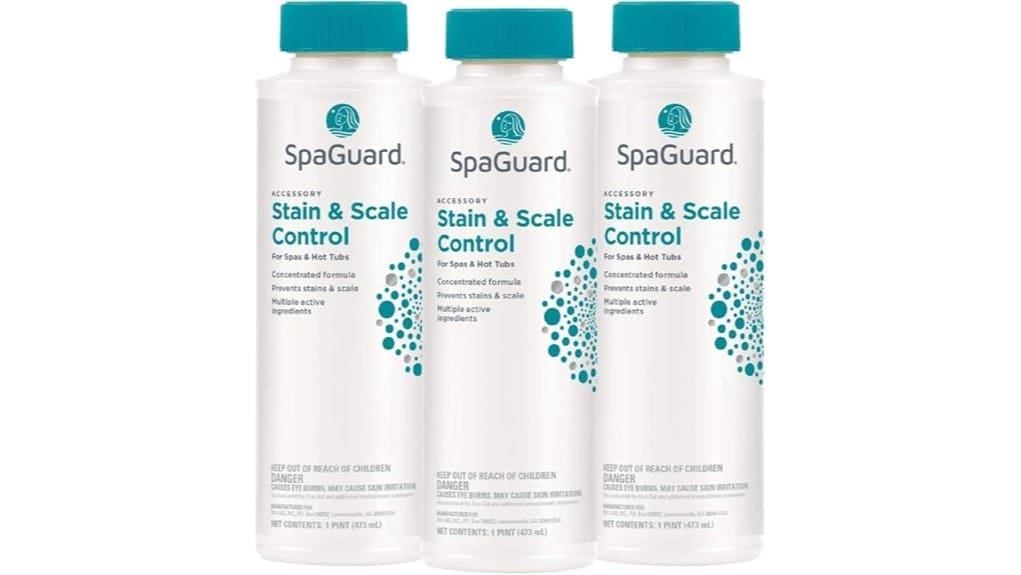
You’ll like SpaGuard Stain & Scale Control if you own a spa or manage rentals and want a low-effort weekly fix for cloudy water, metal stains, and early scale. It chelates calcium, iron, copper, and manganese so deposits stay dissolved and get caught by your filter. Add the pint dose to clean, circulating water, run the pump, and check pH; repeated use prevents buildup. It’s concentrated and cost-effective — keep going to see detailed tips and results.
Some Key Takeaways
- Concentrated chelating formula effectively sequesters calcium, iron, copper, and manganese to prevent stains and scale.
- Weekly dosing (add to clean, circulating water; run pump 30+ minutes) keeps filters capturing bonded particulates.
- Regular use reduces early scale, metal discoloration, and protects heater, shell, and plumbing from deposits.
- Sold as a three-pack of 1‑pint bottles; concentrated formula offers reasonable cost per treatment for routine maintenance.
- Best results when pH/alkalinity are balanced and product is paired with phosphate removers for clearer water.
What SpaGuard Stain & Scale Control Is and Who Should Use It
When you want to prevent stains and scale without fuss, SpaGuard Stain & Scale Control is a concentrated liquid treatment that bonds to calcium and metal ions so your filter can remove them; it’s built for spa and hot tub owners who see cloudy water, metal staining, or recurring scale on surfaces and equipment. You’ll appreciate its clear value: chemical bonding targets calcium, iron, copper, manganese, reducing scale and staining while protecting equipment. It’s aimed at pragmatic user demographics—homeowners, rental operators, and small commercial facilities—who want a weekly, low-effort maintenance step that keeps water clear and filters functioning. This product pairs well with phosphate removers to help maintain overall water clarity and prevent nutrient-driven algae growth.
How It Works: Active Ingredients and What It Removes
Because it binds directly to calcium and common metal ions, SpaGuard Stain & Scale Control works by sequestering those minerals so your filter can remove them rather than letting them precipitate or stain surfaces. You get a concentrated liquid that uses a chelation mechanism to hold calcium, iron, copper and manganese in solution, preventing scale and discoloration. Metal sequestration keeps particles from forming deposits on shell, heater and plumbing, and clarifies cloudy water caused by metal ions. For consumers, that means less scrubbing, fewer clogs and protection for equipment—an efficient preventive and corrective option for routine spa care. Many homeowners also find it complements regular algaecide and sanitizer routines by reducing metal-caused staining and equipment wear while helping maintain clear water.
How to Use It Safely and Effectively in Your Spa (Dosage, Timing, Circulation)
To use SpaGuard Stain & Scale Control safely and effectively, add the recommended dose directly to clean, circulating spa water and run the pump for at least 30 minutes so the product can disperse and bind metals and calcium. You’ll dose weekly or after major water changes; follow label instructions for pint concentrate to avoid overdosing. Check pH and alkalinity first—proper balance improves performance and reduces chemical compatibility issues with other treatments. Use seasonal timing: dose more during heavy use or spring fill when metals and scale risk rise. After circulation, inspect filters and resume normal sanitizer routine. Homeowners who enjoy outdoor spaces should consider pairing stain and scale control with regular chlorine tablet maintenance to keep water clear and safe; see our guide on chlorine tablet maintenance for best practices.
Performance in Real Life: Stain Removal, Scale Prevention, and Filter Impact
Having followed the dosing and circulation steps above, you’ll notice SpaGuard Stain & Scale Control starts working quickly to tackle metal stains and early scale formation. In routine use you’ll see faded metal discoloration within a few cycles and reduced crusting along jets and surfaces. It excels at stain prevention when applied weekly and after water changes. You’ll also find filters stay cleaner longer; bonded metals and calcium package into particulates the filter captures, improving filtration efficiency. For stubborn, long-standing stains or heavy hard water you may need repeated applications, but everyday maintenance benefits are clear and measurable. Regular use also contributes to maintaining sparkling pool water that enhances outdoor enjoyment.
Value Verdict: Price, Packaging (1 Pint × 3), Pros, Cons, and Final Recommendation
While the three-pack 1‑pint bottles might look pricey at first, you’ll appreciate the concentrated formula stretches further than many competitors, so cost per treatment is reasonable for routine maintenance. You’ll find favorable price comparison against single‑use alternatives when factoring longevity. Packaging durability is solid — sturdy bottles and secure caps reduce leaks during storage and shipment. Pros: effective stain and scale control, concentrated dosing, trusted brand. Cons: upfront cost, small bottles might be awkward for heavy users. Recommendation: buy the 3‑pack if you maintain a spa regularly; it’s cost‑effective and reliable for ongoing protection. Pools often require regular chemical balancing to prevent stains and scaling, so consistent use of preventive products like this can support long‑term maintenance.
Some Questions Answered
Is It Safe for Vinyl or Acrylic Spa Covers?
Yes — you can use it without harming vinyl or acrylic spa covers when applied properly. You’ll preserve vinyl durability and avoid discoloration by keeping product off the cover and rinsing any splashes promptly. For cover cleaning, use mild soap and water rather than harsh chemicals. Check chemical compatibility with your cover’s manufacturer and maintain UV protection by using a cover when not in use to reduce chemical and sun exposure.
Can It Be Mixed With Chlorine Shock Treatments?
Yes — it’s chemically compatible with chlorine, but you should stagger dosing. You can add Stain & Scale Control and allow the pump to run for 30 minutes, then wait before shocking, or shock first and wait until free chlorine returns to normal before adding the sequestering treatment. Prioritize treatment timing to avoid interference with oxidation. This approach protects surfaces, lets filtration remove metals, and preserves shock effectiveness.
Will It Affect Spa Water pH or Alkalinity Readings?
No, it won’t cause major pH fluctuations or persistent Alkalinity drift when used as directed. You’ll sometimes see a slight, temporary change in pH or alkalinity readings right after application, but circulating the water for 30 minutes and retesting stabilizes levels. If you already have unstable chemistry, additive buildup can exaggerate drift, so you’ll want to correct pH and total alkalinity beforehand and monitor weekly to keep readings steady.
Is It Biodegradable and Eco-Friendly When Drained?
Yes — it’s generally designed to be low-impact when drained, but you shouldn’t assume full biodegradable certification without checking the label or MSDS. You’ll want to confirm any biodegradable certification and aquatic toxicity data from the manufacturer. If those documents show low aquatic toxicity and biodegradable components, you can drain per local guidelines. If information’s absent, treat waste cautiously and follow municipal disposal rules to avoid harming waterways.
Does It Leave Any Residue on Spa Heater Elements?
No — it won’t leave a measurable surface film on your heating element when used as directed. You’ll see mineral bonding action that keeps calcium and metals suspended for filtration, preventing silica build up and scale on heater surfaces. If you overdose or don’t circulate properly, tiny residues could accumulate, so stick to recommended dose, run the pump 30 minutes, and rinse filters regularly to protect the heating element.