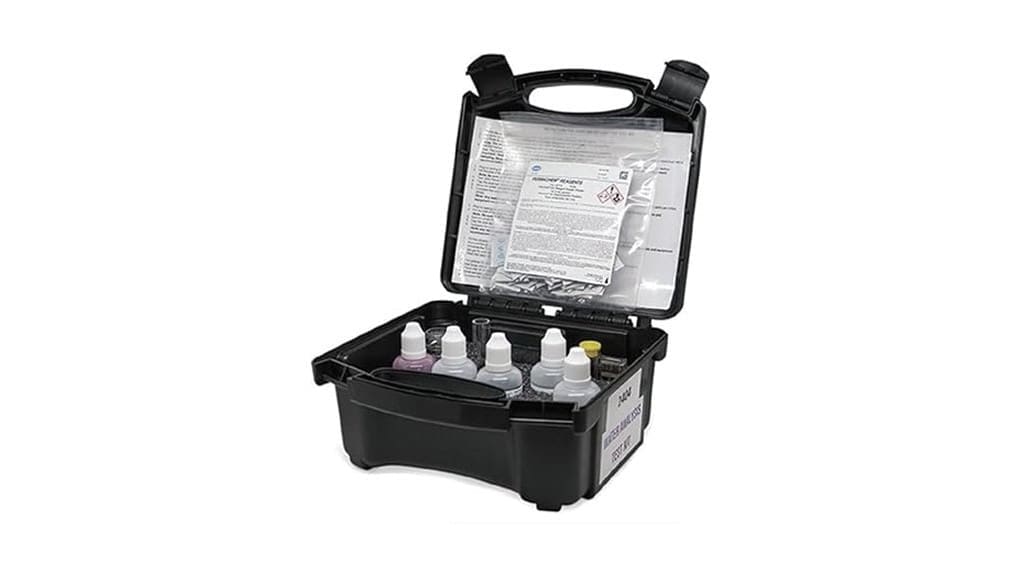
You’ll get a portable, multi-parameter kit that measures hardness, iron, pH, chlorine and TDS with field-ready accuracy and straightforward steps. You’ll find a rugged case, calibrated vials, reagents, handheld TDS meter and color charts for quick comparisons. Results align closely with lab benchmarks for routine diagnostics when you follow calibration and storage guidance. It’s ideal for on-site maintenance and post-repair checks, but not for regulatory lab work—scroll on for full details.
Some Key Takeaways
- Comprehensive multi-parameter kit tests hardness, iron, pH, chlorine, and TDS for quick field water characterization.
- Readings align closely with lab benchmarks for routine diagnostics, providing reliable, actionable results for technicians and homeowners.
- Portable, well-equipped kit includes reagents, sample vials, TDS meter, and color charts for straightforward on-site testing.
- Limitations include reagent shelf life, sensitivity to environmental conditions, and not suitable for regulatory or heavy lab analysis.
- Recommended for routine maintenance, troubleshooting, and post-repair verification where portability and speed matter.
What the Spectrum Deluxe Kit Tests and Who It’s For
Because clear diagnostics start with the right measurements, the Pro Products Spectrum Deluxe Kit gives you precise field tests for hardness, iron, pH, chlorine, and total dissolved solids (TDS). You’ll use it to characterize any water source quickly and methodically, establishing baseline chemistry for wells, municipal supplies, or treatment outputs. The kit’s multi-parameter format lets you prioritize tests based on system issues and determine appropriate testing frequency for routine maintenance or post-repair verification. You’ll follow consistent sampling and simple procedures to obtain repeatable readings, enabling clear decisions about diagnostics, corrective actions, and documentation for homeowners or service professionals. For homeowners maintaining outdoor water features, regular testing with reliable tools helps keep pool water clear and prevent common problems.
Quick Summary: Real-World Accuracy and Field Performance
When you test on-site with the Pro Products Spectrum Deluxe Kit, you’ll get fast, reliable readings that align closely with laboratory benchmarks for common field parameters—hardness, iron, pH, chlorine, and TDS—so you can make confident service decisions without unnecessary retesting. You’ll observe real world precision across routine samples; deviations from lab results stay within operational tolerances for diagnostic work. User feedback highlights straightforward sample handling and consistent outputs under varied conditions. Field robustness shows in durable components and stable reagents, reducing repeat tests. Overall, the kit delivers dependable, actionable data for technicians and homeowners in practical settings. This makes it a great addition to any homeowner’s toolkit for maintaining pool water quality and enjoying outdoor spaces.
Step-by-Step Kit Walkthrough: What’s Included and How to Use Each Test
Although the kit is compact, it includes everything you need for on-site water diagnostics: a durable carrying case, reagent bottles and sachets for hardness, iron, pH, chlorine and TDS, color comparison charts, calibrated sample vials, a dropper and pipette set, a handheld meter for TDS (with batteries), spare cuvettes, and a concise instruction manual with quick-reference test procedures. You collect a sample, note sample storage time, and run pH first using indicator or probe. Follow reagent steps for chlorine, hardness, and iron, matching colors to charts. Use the TDS meter after performing calibration checks. Record results and dispose reagents per instructions. Homeowners can maintain safe pool water by routinely testing and adjusting chemicals with simple test kits.
Pros, Cons, and Common Troubleshooting During On-Site Testing
Since you’re relying on the kit for actionable water diagnostics, it’s important to weigh its clear advantages against practical limitations and know how to handle common on-site issues. You’ll appreciate portability, multi-parameter coverage, and rapid result interpretation, but be aware of limited reagent shelf life and sensitivity to environmental factors. Follow maintenance tips: store reagents cool, replace expired reagents, and perform frequent calibration checks. Use safety reminders: wear gloves and avoid ingesting samples. Prevent sample contamination by rinsing bottles and using fresh sampling points. If readings conflict, repeat tests, verify calibration, and note site conditions before reporting. Homeowners who enjoy their outdoor spaces should integrate regular testing into seasonal maintenance plans and monitor pool chemistry as part of routine care.
Should You Buy It? Use Cases, Alternatives, and Final Buying Recommendation
If you need a portable, all-in-one solution for routine diagnostics and on-site verification, the Spectrum Deluxe kit delivers the core measurements most pros and homeowners require—hardness, iron, pH, chlorine, and TDS—with quick, field-capable accuracy. You’ll find it ideal for residential maintenance, troubleshooting treatment systems, and verification after repairs. For heavy laboratory work or regulatory sampling, choose bench instruments instead. Perform a cost comparison against single-parameter meters and multi-kit bundles; the Deluxe often wins on convenience and price per test. Check warranty details before purchase, and buy if you value portability, speed, and reliable field readings. It’s especially useful for maintaining pools and outdoor living spaces where automatic pool vacuums complement regular water testing.
Some Questions Answered
Are Replacement Reagents Available Separately?
Yes — replacement availability exists for most reagents used in the kit. You can purchase original-brand reagents or pursue third party sourcing when originals are unavailable or pricier. You’ll want to verify compatibility, expiration dates, and lot consistency before swapping sources. Order through authorized distributors for guaranteed matches, or validate third party reagents against known standards to maintain accuracy and field-ready performance.
How Long Do Test Reagents and Strips Last Unopened?
Unopened reagents and strips typically last 1–3 years; check expiration dating on each container. You should store them in cool, dry conditions away from direct sunlight and extreme temperatures since temperature sensitivity can reduce shelf stability. Keep seals intact and follow manufacturer storage conditions for best accuracy. If packaging is damaged or exposed to heat/humidity, discard early. Record receipt dates and rotate stock to monitor remaining usable life.
Is There a Calibration-Certification Option for Professionals?
Yes — you can obtain a professional calibration option for the kit. You’ll request professional calibration and receive an accuracy verification package or certificate from the manufacturer or authorized lab. That service confirms instrument performance against standards, includes documentation for compliance, and outlines recalibration intervals. You’ll follow their procedure for sample checks, traceable standards, and recordkeeping to maintain reliable, defensible field results.
Can Results Be Logged Digitally or Exported?
Yes — you can log results digitally and export them. You’ll use the kit’s mobile logging feature to capture readings on-site, timestamp entries, and annotate samples. From the app you’ll perform cloud export to sync data with your account, share CSV or PDF reports, and integrate with service records. You’ll review, filter, and back up datasets reliably, ensuring repeatable documentation for troubleshooting, maintenance, and professional reporting.
Are Safety Data Sheets (SDS) Provided for Reagents?
Yes — you’ll receive SDS documents for the reagents. You’ll use them to meet regulatory compliance and support proper hazard communication during handling, storage, and disposal. Review the SDS for composition, hazards, first aid, PPE, and spill response before field use. Keep copies accessible in vehicles and job sites, and make certain staff are trained to follow the SDS instructions to maintain safe, compliant testing practices.