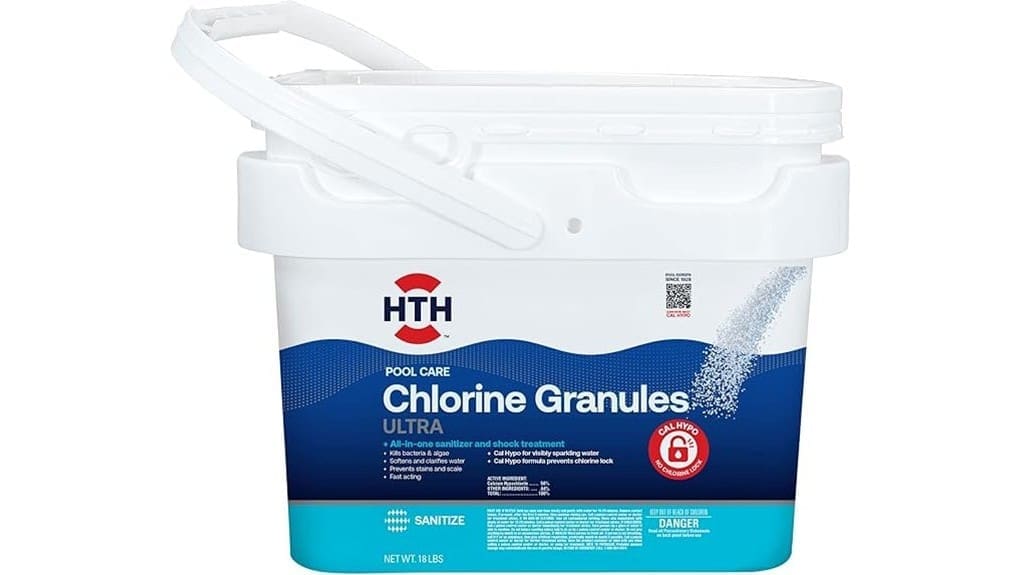
You’ll find HTH Chlorine Granules Ultra is a concentrated cal‑hypo shock that rapidly raises free available chlorine without adding cyanuric acid, so you can hit breakpoint quickly for algae and organic oxidation. You’ll dose measured granules into deep water with the pump running, confirm 1–4 ppm FAC before reentry, and brush and filter to clear debris. It’s cost‑efficient for seasonal opens and shock treatments; keep following for detailed dosing, safety, and comparison guidance.
Some Key Takeaways
- Concentrated cal‑hypo shock delivers rapid free chlorine increases without adding cyanuric acid (CYA).
- Works for sanitizing, shocking, and clarifying green water when broadcast with pump running.
- Best for seasonal openings/closings and budget‑minded owners needing high‑strength shock.
- Requires measured dosing, full dissolution, and testing to confirm 1–4 ppm FAC before reentry.
- Safe use needs gloves/eye protection, dry scoops, no mixing with acids, and routine filter/brush maintenance.
Quick Verdict: Who HTH Chlorine Granules Ultra Works Best For
If you want a concentrated, Cal-Hypo based sanitizer that both shocks and maintains chlorine without adding cyanuric acid, HTH Chlorine Granules Ultra is a strong fit. You’ll appreciate its high available chlorine content and predictable dose-response for rapid FAC increases. Use it if you’re a budget conscious owner who needs multi-action performance—sanitizing, shocking, and clarifying—in one 18 lb package. It suits seasonal swimmers who open and close pools, enabling quick shock treatments without stabilizer buildup. Follow measured dosing, apply with pump running, wait for full dissolution, and confirm 1–4 ppm FAC before reentry for safe, controlled maintenance. For guidance on safe application and pool maintenance, consult shock treatment tips to ensure correct dilution and handling.
What’s Inside: Key Ingredients, How Cal‑Hypo Differs From Stabilized Chlorine
Because HTH Chlorine Granules Ultra is built on calcium hypochlorite (cal‑hypo), you get a high‑available‑chlorine oxidizer that delivers rapid free available chlorine (FAC) without introducing cyanuric acid (CYA) into your water. The formulation’s primary active is cal‑hypo; inert fillers control dissolution. You’ll appreciate clear labels for Cal‑hypo handling: keep dry, avoid mixing with acids, use protective gloves and eye protection. Unlike stabilized chlorine (trichloroisocyanuric acid), this product won’t raise CYA, so you avoid overstabilization and chlorine lock. Stabilizer differences matter for dosing frequency, long‑term CYA buildup, and shock decisions in routine maintenance. Homeowners who buy pool chlorine supplies online can find tablets, granules, and safety gear to support proper handling and storage, including pool chlorine products tailored for outdoor spaces.
Real‑World Performance: Sanitizing, Shocking, and Clearing Green Water
Typically, you’ll see rapid free available chlorine (FAC) increases when you dose HTH Chlorine Granules Ultra, because its calcium hypochlorite delivers high available chlorine that oxidizes organics and kills bacteria and algae efficiently. You’ll observe fast shock speed: FAC spikes within hours, enabling breakpoint chlorination for effective algae elimination. Treat green water by broadcasting granules with pump on, then monitor FAC and pH; settled debris requires brushing and vacuuming. Odor reduction follows organic oxidation, measurable within the first 12–24 hours. Clarity timeline: expect visible improvement by 24 hours and full clearing with filtration and repeat dosing as needed. Many homeowners find these practices help maintain their pools when enjoying outdoor spaces on their property, especially for routine summer maintenance.
How to Use It Safely and Test Results You Should Expect
After you see the rapid FAC spike and initial clearing described above, handle and apply HTH Chlorine Granules Ultra with measured procedures to protect yourself and the pool. Follow a safety checklist: wear gloves and eye protection, use a dry scoop, keep granules away from combustibles, and avoid mixing with other chemicals. Broadcast granules in deep water with pump running, brush settled material, and wait for complete dissolution. Use a testing schedule of twice-weekly HTH 6-Way Test Strips until stable. Expect FAC between 1–4 ppm for safe entry; after shock you’ll observe a rapid FAC peak, then decline to maintenance range within 24–48 hours. Keep your pool filter maintained and running to ensure peak clarity after treatment.
Buy vs. Alternatives: Cost, Pool Types, and Final Recommendation
When comparing HTH Pool Care Chlorine Granules Ultra to alternative chlorinators, consider its calcium hypochlorite formulation, per-pound available chlorine, and lack of cyanuric acid so you can avoid CYA buildup and chlorine lock in pools with variable stabilizer needs. You’ll perform a price comparison by calculating cost per available-chlorine ounce versus stabilized trichlor or liquid bleach. For application compatibility, it suits vinyl, concrete, plaster, and salt systems when dosed per label; avoid direct surface contact. Buy HTH if you need high-strength shock without added CYA and efficient multi-action treatment; choose alternatives for routine maintenance where stabilizer addition is desired. It is intended for homeowners who want to enjoy their outdoor pool areas and prepare their pools effectively for the season, especially when using pool opening chemicals.
Some Questions Answered
Can I Mix These Granules With Other Pool Chemicals Directly?
No — you shouldn’t mix these granules directly with other pool chemicals. Calcium hypochlorite has serious chemical incompatibilities with acids, cyanuric acid sources, and ammonium compounds, risking hazardous reactions, chlorine gas, or fire. Follow handling precautions: add granules to water with the pump running, distribute evenly, avoid contact with other chemicals, use dry scoops and PPE, wait for full dissolution, then test and adjust other treatments per label directions.
How Long Is the Unopened Package Shelf Life?
Unopened packages typically have an expiration timeline of about 3 to 5 years if stored properly. You should keep the container sealed, dry, cool, and away from direct sunlight; ideal storage conditions are 50–77°F (10–25°C) with low humidity and good ventilation. Avoid temperature extremes and contamination. Inspect granules for caking or discoloration before use, and follow manufacturer guidance on the label for specific expiration dates and storage conditions.
Are These Granules Safe for Pets Around the Pool Area?
Yes — but you’ll need precautions. These chlorination granules are caustic; pet safety requires keeping pets away during application and until granules fully dissolve and FAC is 1–4 ppm. Prevent pet exposure to undissolved granules or splashed water, and use behavioral training to keep animals off treated areas. If exposure occurs, follow first aid: rinse skin/eyes with water, seek veterinary care for ingestion or persistent symptoms.
Do Granules Leave White Residue on Vinyl Liners?
You won’t typically see white spotting on vinyl liners if you apply granules correctly and follow dosing instructions. Use a clean, dry scoop to distribute granules evenly in deep water with the pump running, brush any settled granules before they dissolve, and wait to test FAC. Proper water balance and regular testing aid staining prevention and minimize residue formation; overapplication or undissolved granules can cause local white spots or damage.
Is This Product Approved for Commercial/Public Pools?
No — it’s not specifically certified for commercial/public pool use. You’ll need to verify commercial certification and regulatory compliance with local health authorities and the manufacturer. Commercial/public pools often require documented NSF/ANSI or local regulatory approvals and facility-specific chemical management plans. Check manufacturer paperwork, safety data sheet, and any NSF listings; obtain written confirmation of suitability and dosing protocols before deploying in regulated public/commercial settings.