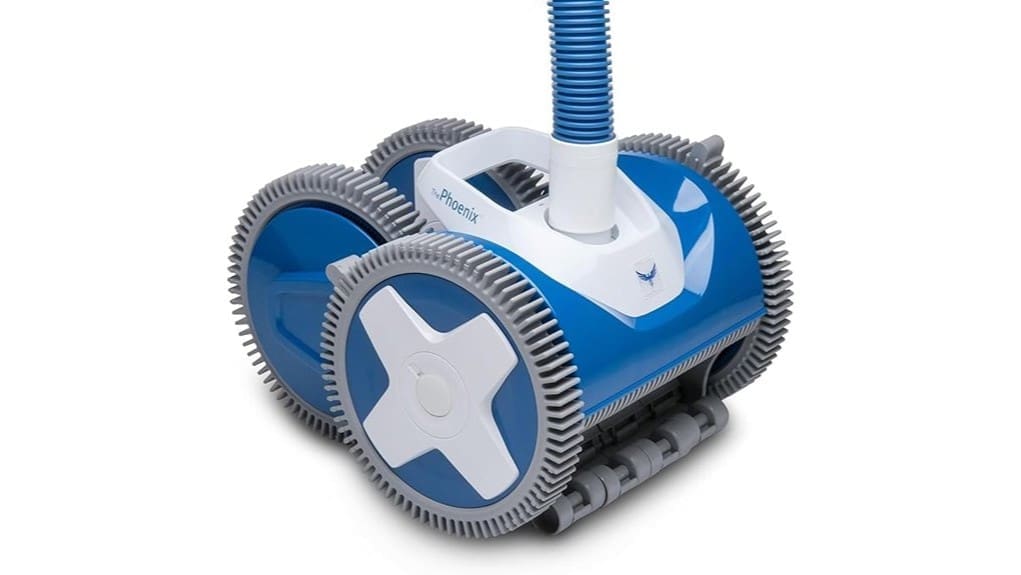
You’ll get a low-maintenance, mechanically driven suction-side cleaner that uses your pump’s suction to clear leaves, grit, and fine sand while offering replaceable parts and predictable four-wheel navigation. It connects to your skimmer, steers via internal valves and cams, and needs correct throat/hose matching for peak suction. Tires give good traction on plaster, vinyl, and fiberglass but wear with heavy use. If you want setup, maintenance, and performance details, keep going for more specifics.
Some Key Takeaways
- Reliable suction-side cleaner that uses pump-generated hydraulic suction and mechanical steering for predictable coverage without electronics.
- Best for budget-conscious owners wanting replaceable parts, easy maintenance, and lower long-term costs.
- Effective on leaves, grit, and fine sand when throat and hose are matched to pump flow; heavy leaf loads may reduce performance.
- Rubber tire treads and raised front treads provide good traction on plaster, vinyl, and fiberglass and help climb slopes.
- Owners should monitor throat adjustment, tire tread wear, and seals, and use manual vacuuming for steps and corners.
Quick Verdict: Who the Hayward Phoenix 4X Is Best For
Although it runs mechanically without electronics, the Phoenix 4X suits pool owners who want a robust, low-maintenance suction-side cleaner that reliably removes dirt, leaves, and fine debris. You’ll find it appropriate if you need dependable, no-frills operation: budget buyers will appreciate the mechanical simplicity and replaceable parts lowering lifetime cost. You’ll also value its traction, obstacle handling, and interchangeable throat for consistent suction in family pools with varying debris types. It’s not for those seeking smart scheduling or full-coverage guarantees; instead, you’ll get efficient, predictable cleaning performance with straightforward installation and minimal oversight. The Phoenix 4X is an ideal choice for homeowners who enjoy maintaining outdoor spaces and want a reliable pool-cleaning solution.
How the Phoenix 4X Works and Key Specs You Need to Know
When you connect the Phoenix 4X to your pool’s skimmer, the unit uses hydraulic suction from the pump to self-propel across surfaces, scrubbing and vacuuming debris with durable rubber-tread wheels and a configurable throat for optimized flow. You’ll rely on proven hydraulic mechanics: pump vacuum creates differential pressure that drives internal valves and oscillating steering cams, enabling mechanical, non-electronic navigation and consistent suction. Key specs: 11.1 x 13.4 x 8.3 inches, 19 lb, plastic housing, interchangeable throats, raised front treads, tread wear markers. Maintenance focuses on throat adjustment and monitoring tire longevity to sustain performance. For homeowners looking to simplify upkeep, pairing the cleaner with quality telescoping poles and compatible attachments can make pool maintenance faster and safer with telescoping pole options.
Real-World Performance: Suction, Traction, Navigation, and Debris Pickup
Having covered how the Phoenix 4X generates motion and maintains flow, we’ll now assess how that design performs on actual pool surfaces. You’ll find suction consistency solid across flow ranges when the throat and hose setup match pump output; fine debris and sand move reliably into the skimmer. Traction is effective: rubber tire treads grip plaster, vinyl, and fiberglass, enabling climbs and obstacle negotiation. Mechanical steering yields predictable coverage patterns, reducing missed zones. Debris pickup handles leaves and grit without clogging when maintained. Tread wear markers support tire longevity planning; replace tires before traction loss compromises cleaning efficiency. This model is well-suited for homeowners who want reliable cleaning for their outdoor living spaces.
Pros, Cons, and Common Issues From Owners
Because owner feedback concentrates on practical use, you’ll see clear patterns in the Phoenix 4X’s strengths and limitations: reliable suction and traction on varied surfaces, predictable mechanical steering, and effective debris pickup are the main pros, while sensitivity to proper throat/hose matching, occasional tire wear requiring replacement, and limited performance on extremely heavy leaf loads are the primary cons and recurring issues reported. You’ll appreciate consistent cleaning and straightforward clog troubleshooting procedures, but monitor tire longevity via tread wear markers. Check hose compatibility carefully to avoid performance loss. Some users note seal degradation over extended seasons, typically requiring part replacement. For homeowners prioritizing simple maintenance and parts availability, the Phoenix 4X pairs well with many standard pool vacuum hoses.
Which Pools the Phoenix 4X Is Right For and Setup, Maintenance, and Replacement Tips
Although suited to a wide range of in-ground pools, the Phoenix 4X performs best in standard to large residential pools with smooth to moderately textured surfaces (gunite, plaster, vinyl, fiberglass) where a suction-side cleaner can access adequate pump flow and head pressure. You’ll install it on systems with compatible skimmer or dedicated suction ports; verify flow and intermittent debris load. Perform seasonal maintenance: inspect throats, check tread wear markers, clean debris, and store indoors over winter. Replace cartridges and worn tires per manufacturer intervals; use tire rotation to equalize wear. Follow pump run-time guidelines to optimize coverage and prolong component life. Many homeowners find manual vacuums helpful for targeted cleaning of steps and tight corners with manual pool vacuums.
Some Questions Answered
Does It Require a Booster Pump for Optimal Suction?
No, you don’t strictly need a booster pump; the unit’s suction-side design and interchangeable throats provide adequate suction optimization for most setups. However, if your pool has low suction pressure, long plumbing runs, or heavy debris loads, installing a booster pump improves booster necessity and guarantees consistent performance. You should measure system flow, verify filter cleanliness, and consult manufacturer specs—adding a booster only when diagnostics show insufficient suction for reliable coverage and mobility.
Can It Clean Vinyl Liners Without Damaging Them?
Yes — you can use it on vinyl liners without damaging them if you follow a vinyl safe technique and perform regular liner friendly maintenance. Its rubber treads and raised front help prevent scraping, but you should check tread wear markers, guarantee proper suction setting, and remove large debris first. Inspect the liner periodically for stress points, replace worn tires promptly, and follow manufacturer guidelines to maintain peak, gentle operation and coverage.
Are Replacement Tires and Throats Sold Separately?
Yes — you can buy replacement tires and throat kits separately. You’ll source OEM or compatible replacement tires designed to match the Phoenix tread dimensions and wear markers, and throat kits that include interchangeable throats for optimized suction. Confirm part numbers with the manufacturer or authorized dealers to guarantee fitment. Keep receipts and verify warranty/return terms when purchasing spare parts to maintain performance and compatibility.
Is It Compatible With Variable-Speed Pool Pumps?
Yes — you can use it with variable-speed pumps. You’ll need to adjust pump speed settings to provide sufficient suction for reliable propulsion and cleaning; too-low speeds may reduce drive and vacuum performance. Test different pump speed settings to identify the best flow that maintains self-propelled motion and thorough debris pickup. Monitor cleaner movement and debris pickup, then fine-tune pump speed settings for consistent coverage without cavitation or poor traction.
What Is the Typical Warranty Coverage Length?
Typical warranty duration is one year. You’ll get coverage specifics from the manufacturer: defects in materials and workmanship are generally covered for 12 months from purchase; wear items (tires, throats) and damage from misuse, improper installation, or normal wear are usually excluded. You’ll need proof of purchase for claims. Check Hayward’s warranty document for exact terms, transferability, and authorized-service procedures before filing a claim.