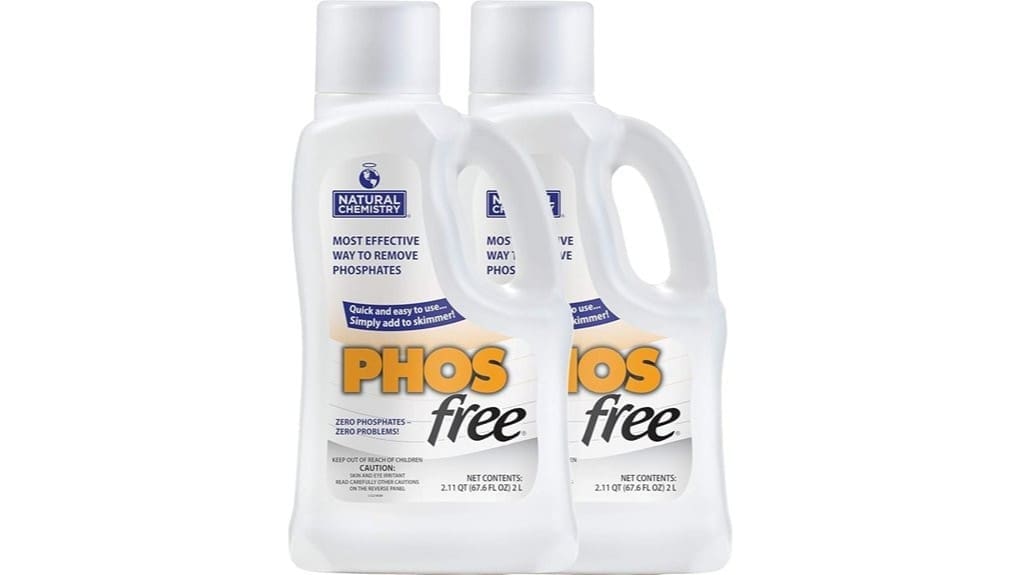
You’ll find Phosfree 2L drops phosphates fast and clears cloudiness you can see within a few filtration cycles. It uses lanthanum to bind phosphate, works through the skimmer, and your filter catches the insoluble complexes—so you’ll cut algae food and help sanitizers work better. It’s easy to dose, reduces maintenance, and can coat filters briefly, so backwash as needed. Costs vary by pack size and use; keep testing after 24–48 hours to guide retreatment and learn more.
Some Key Takeaways
- Effectively lowers phosphates to near-zero within a few filtration cycles, helping prevent algae growth.
- Uses lanthanum compounds added via the skimmer to bind phosphates into filter-trappable insoluble complexes.
- Produces noticeable water clarity improvements quickly, though filters may develop a mild coating.
- Simple 2L dosing: calculate pool volume, add to skimmer with pump running, retest after 24–48 hours.
- Consider cost-per-treatment, retreat frequency, and environmental/disposal guidance when evaluating value.
Quick Verdict: Does Natural Chemistry Phosfree 2L Deliver on Clarity and Phosphate Removal?
Yes — Natural Chemistry Phosfree 2L delivers noticeable clarity improvements and effectively cuts phosphate levels. You’ll see clearer water quickly and reduced clouding, which helps algae prevention by removing the nutrient algae need. It’s straightforward to use and lowers phosphate to near-zero, so your sanitizer works better and maintenance drops. Consider environmental impact: reducing phosphates limits downstream nutrient loads, but you’ll want to follow dosing and disposal guidance to avoid local effects. Overall, you’ll get reliable clarity gains and simpler upkeep; it’s an efficient phosphate control option if you prioritize clear water and responsible use. Proper product selection for pool phosphate removers helps homeowners maintain outdoor spaces effectively.
How Phosfree Works in Your System (Lanthanum Action, Skimmer Application, Filter Coating)
Having seen how Phosfree improves clarity and cuts phosphates, here’s how it actually works in your system: lanthanum compounds in the formula bind phosphate molecules quickly, forming tiny insoluble complexes that your filter can capture, and you apply it simply through the skimmer so treated water flows directly across the filter media. You’ll notice lanthanum chemistry acts fast and targets phosphate specifically, reducing nutrient load without widespread chemistry shifts. The complexes form a fine coating on media which can boost capture efficiency, but you’ll need routine filter maintenance to remove accumulated solids and preserve flow and long-term performance. For homeowners who enjoy outdoor spaces, regular skimmer and filter upkeep helps keep the system running smoothly and prolongs equipment life, especially when treating with phosphate removers like Phosfree; see our tips for skimmer maintenance.
Real-World Performance: Clarity, Phosphate Levels, and Filter Impact
When you treat your pool with Phosfree, you’ll usually see phosphate readings drop to near-zero within a few filtration cycles and water clarity improve noticeably as your filter captures the lanthanum–phosphate complexes. You’ll notice quicker recovery from cloudiness and reduced algae prevention workload because phosphate—an algae food source—is removed. Filters pick up complexes efficiently, slightly improving flow and media life; you should monitor for mild filter coating. Consistent use supports nutrient cycling control and contributes to long term stability of water chemistry. Consider runoff and disposal practices to minimize environmental impact, but overall real-world performance is reliable and maintenance-light. Natural enzymes for pools can complement phosphate removal by helping break down organic matter and supporting water quality.
How to Use the 2L Bottle Effectively : Dosing, Timing, and Troubleshooting
After you’ve seen clearer water and lower phosphate readings, you’ll want to use the 2 L Phosfree bottle in a way that maximizes pickup by your filter and avoids overuse. Measure pool volume, consult a dosing calculator and add the recommended dose to the skimmer while pump runs. Start with conservative dosing, retest phosphates after 24–48 hours, and repeat only as needed. For heavier load or seasonal adjustments (spring openings, algae season) increase frequency modestly. If clouding or filter strain appears, pause dosing, backwash, and reduce dose. Keep records so you refine timing and avoid waste. Regular maintenance and using clarifiers can further ensure clear pool water and prolong filter efficiency.
Value Check and Alternatives: Price, Pack Size, and Comparable Phosphate Removers
Although the Phosfree 2L twin pack offers strong performance, you should weigh cost-per-liter, typical dosing rates, and how often you’ll need to retreat before deciding if it’s the best value for your pool. Do the math: estimate annual phosphate treatments based on your pool size and algae risk, then run a price comparison with single 1L bottles or concentrate options. Consider alternative brands that use different active chemistries or pricing—some competitors charge less per liter but need higher doses. If you value ease, proven lanthanum efficacy and reduced maintenance, the twin pack can still be economical. Homeowners who enjoy outdoor spaces should also factor in seasonal usage and local water sources when planning treatments for pool maintenance.
Some Questions Answered
Is Phosfree Safe for Fish and Aquatic Plants?
Yes — you’ll find Phosfree generally safe for fish and aquatic plants when used as directed. It reduces phosphates to near-zero levels without harming organisms in typical “safe ranges.” You should monitor plant tolerance, especially for sensitive species, and avoid overdosing. Apply via the skimmer and let your filter media do the work; test phosphate and observe livestock for 24–72 hours after treatment to guarantee no adverse effects.
Can Phosfree Be Used in Saltwater Pools or Only Freshwater?
Yes — you can use Phosfree in saltwater pools; it’s saltwater compatibility is generally good, though you’ll want to confirm dosage for saline systems. You’ll get reduced phosphates and clearer water, and it’ll work through your filter media for ongoing treatment. For marine usage or high-salinity spas, check manufacturer guidance and monitor water chemistry closely to avoid imbalances and make certain safe conditions for swimmers and equipment.
Does Phosfree Affect Pool pH or Require Chemical Balancing?
No, Phosfree won’t directly change your pool’s pH; it works via lanthanum binding and doesn’t cause significant ph neutralization. You should still monitor pH and alkalinity impact, though, because removing phosphates can alter water chemistry indirectly. Check and adjust alkalinity and pH as part of routine maintenance after treatment. You’ll find balancing remains necessary to keep sanitizers effective and filters performing efficiently.
How Often Should I Replace Filter Media After Regular Phosfree Use?
You’ll typically replace filter media based on condition, not strict time: replace frequency is usually every 1–3 years depending on use, contamination and media type. Phosfree’s lanthanum binds phosphates and can coat media, which may shorten media lifespan if buildup’s heavy; inspect media annually, backwash regularly, and replace when flow drops or cleaning no longer restores performance. Keep records to judge actual media lifespan for your system.
Is Phosfree Compatible With Algaecides and Clarifiers?
Yes — you can use Phosfree with most algaecides and clarifiers, but watch chemical interactions and treatment timing. You’ll avoid problems by adding Phosfree first via the skimmer, letting it circulate and bind phosphates, then applying algaecide or clarifier after circulation. That sequencing prevents interference and maximizes clarity and filter performance. If you’re unsure, check product labels or test a small dose to confirm compatibility before full treatment.