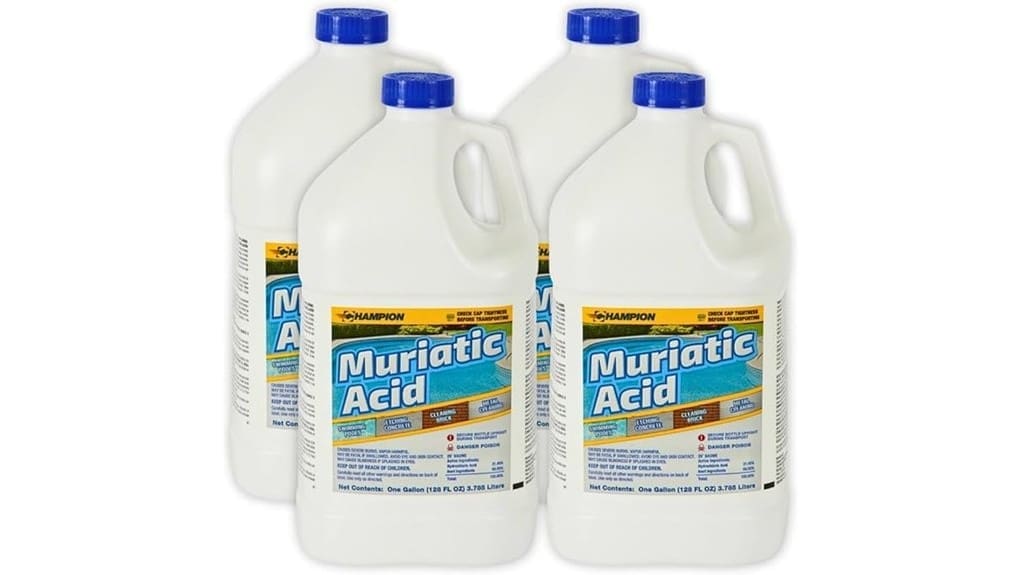
You’ll find Champion’s 4‑gallon muriatic acid gives concentrated, predictable pH reduction and targeted alkalinity control when you dose carefully and test regularly. It lowers pH toward the 7.2–7.6 range reliably, but doesn’t replace proper total‑alkalinity management. It dissolves light calcium deposits quickly and requires repeated short applications for heavy scale; vinyl needs cautious contact. Use full PPE, add slowly to circulating deep water, and neutralize overcorrection with bicarbonate—keep reading for detailed guidance.
Some Key Takeaways
- Concentrated muriatic acid reliably lowers pool pH to the 7.2–7.6 range when dosed per testing protocols.
- Effective for targeted calcium scale removal on plaster and grout with short, repeated applications; avoid prolonged vinyl contact.
- Does not replace total alkalinity management; TA must be adjusted separately for long-term pH stability.
- Requires strict safety: chemical-resistant gloves, splash goggles, apron, add slowly to circulating deep water.
- Best for DIYs and pros needing cost-effective, high-concentration acid, provided proper storage, dosing, and regulatory compliance.
Champion Muriatic Acid at a Glance: What This 4‑Gal Product Claims
Take a close look: Champion’s 4‑gallon muriatic acid is positioned as a concentrated pH reducer and alkalinity controller designed for pools and spas, claiming to bring pH into the recommended range and stabilize total alkalinity to prevent fluctuations that compromise sanitizer efficacy. You’ll use it for targeted pH adjustment, dose-calculated to lower high pH and maintain chemical equilibrium. The label also asserts efficacy in calcium scale removal, supporting surface restoration without abrasive methods when applied per instructions. You should follow safety protocols, measure water chemistry before and after dosing, and avoid overcorrection that can harm surfaces or equipment. For ongoing pool health, consider regular testing and treatment with chlorine tablets to keep sanitizer levels consistent.
How Champion Performs for pH and Alkalinity Control in Real Use
Having reviewed Champion’s claims, let’s look at how it actually performs when you’re balancing pool pH and total alkalinity. You’ll find dosing predictable: measured additions lower pH reliably, letting you reach the 7.2–7.6 target without overshoot when you follow testing protocols. pH stability between treatments depends on initial alkalinity and buffering; Champion reduces pH but doesn’t substitute for proper TA management. For Alkalinity recovery after acidification, gradual partial neutralization with soda ash or sodium bicarbonate restores TA while preserving pH. In practice, you’ll need iterative testing and controlled additions to maintain long-term chemical balance. Many homeowners who enjoy their outdoor spaces also use shock treatments and other maintenance products to keep pools sparkling, so consider integrating Champion into a broader shock treatment routine.
Calcium Scale Removal Test: Effectiveness, Speed, and Surface Safety
While you’ll see clear visual improvement on localized calcium deposits, the test focused on quantifying how quickly Champion dissolves scale and whether it alters common pool surfaces; we applied measured volumes to chips of heavy calcium buildup on plaster, tile grout, and vinyl to track dissolution rate and surface effects. You’ll find Champion removes thin-to-moderate deposits within minutes under direct contact; dense, aged scale required repeated short applications. Surface compatibility was acceptable for plaster and grout at tested dilutions, though prolonged contact on vinyl caused slight matte changes. Note application timing matters — brief, controlled exposure minimized surface impact while maximizing dissolution efficiency. For homeowners using sand-filtered systems, proper water chemistry management with sand filter media helps reduce future scale buildup and extends time between acid treatments.
Safe Handling, Dosing, and Common Troubleshooting for Pools & Spas
When you handle muriatic acid for pools and spas, always assume it’s corrosive and plan dosing and storage to minimize exposure and chemical interactions. You must wear appropriate personal protective equipment—chemical-resistant gloves, splash goggles, and an acid-resistant apron—and work outdoors or in ventilated areas. Measure dose based on pool volume and current pH; add acid slowly to deep water while circulating to disperse concentration. Follow storage guidelines: original container, upright, cool dry ventilated cabinet away from alkalies and organics. If pH drops too far, neutralize with sodium bicarbonate; for cloudy water or scale recurrence, recheck alkalinity and dosing accuracy. Homeowners preparing for seasonal opening should also consider essential pool opening chemicals and steps to ensure a sparkling start.
Who Should Buy It and How It Compares to Other Muriatic Acids
If you need a reliable, concentrated acid for routine pH reduction, alkalinity control, and targeted calcium scale removal in residential or commercial pools and spas, this 4‑gallon muriatic acid is appropriate; it suits DIY owners, service technicians, and facility managers who follow strict dosing and safety protocols. You should buy it if you’re a pool manager or DIY owner needing predictable strength, bulk supply, and documented handling guidance. Compared with consumer-grade bottles, it offers higher concentration and better cost-per-gallon but demands professional-level precautions. Choose based on your ability to store, dose accurately, and comply with local chemical regulations. For safe storage and handling, always follow pool chemical storage best practices such as cool, ventilated areas away from incompatible materials.
Some Questions Answered
Is Champion Muriatic Acid Safe to Store Indoors Long-Term?
No, you shouldn’t store it indoors long-term. You can keep muriatic acid inside temporarily if you guarantee good indoor ventilation and maintain container integrity, but prolonged indoor storage increases corrosion, fume buildup, and risk to occupants. Store the 4-gallon container in a cool, well-ventilated, non-living area on a corrosion-resistant tray, away from metals, incompatible chemicals, and ignition sources. Regularly inspect seals and replace compromised containers immediately.
Can This Product Be Used on Vinyl Pool Liners?
No — you shouldn’t apply it directly to vinyl pool liners. Muriatic acid is aggressive; vinyl compatibility is limited and direct contact can etch or degrade the liner. You can use controlled, heavily diluted applications for pH adjustment in the pool water, but avoid pouring or scrubbing acid onto the liner. For liner maintenance, test pH/alkalinity frequently, follow dilution and safety procedures, and consult manufacturer guidance before spot treatments.
Does It Affect Metal Fixtures or Pool Ladders?
Yes — if you use it improperly, you’ll risk metal corrosion and ladder pitting. You should dilute and disperse muriatic acid per instructions, avoid direct contact with metal fixtures or ladders, and circulate thoroughly before reintroducing swimmers. Rinse exposed metal after treatment and monitor pH and alkalinity to prevent prolonged low pH. Use corrosion-resistant hardware or protective coatings when frequent acid treatments are required.
Is Champion Compatible With Natural Pools or Saltwater Systems?
Yes — it’s usable, but with caution. You’ll find saltwater compatibility generally acceptable for pH reduction and calcium scale removal, yet you’ll need to monitor chloride corrosion risk on metal fittings. For natural ecosystem impact, avoid direct dosing into natural pools or sensitive habitats; dilute and neutralize runoff, and follow dosing guidelines to prevent harm to aquatic life and microbial balances. Test frequently and adjust slowly to protect system stability.
What Is the Shelf Life After Opening the Container?
You should treat the storage duration after opening as about 1–2 years if kept sealed, cool, and dry; expect gradual loss of strength thereafter. Monitor for degradation signs: cloudiness, sediment, discoloration, or a weaker pH-lowering effect during dosing. Store upright in original container, tightly closed, away from heat and metals, and follow safety instructions. If any degradation signs appear, dispose per local hazardous-waste rules.